 Save
Save The kitchen smelled like roasted garlic and melted cheese when my sister walked in and asked what I was making. I held up a golden disc of cauliflower crust and watched her eyebrows shoot up in disbelief. She'd sworn off pizza after going gluten-free, but one bite of this buffalo cauliflower version changed everything. The spicy sauce, the bubbly mozzarella, the crunch of green onions, it tasted like comfort with a kick. Now she asks me to make it every time she visits.
I made this for a small dinner party once, and my friend who usually avoids anything labeled healthy kept reaching for another slice. She didn't realize it was cauliflower until I told her later, and even then, she just shrugged and said it tasted too good to care. That night taught me that bold flavors can win over anyone, even the skeptics. The buffalo sauce does all the talking, and the crust just quietly does its job without stealing the show.
Ingredients
- Cauliflower: The star of the crust, it becomes tender and mild when processed into rice-like bits, then binds beautifully with eggs and cheese once you squeeze out every drop of moisture.
- Eggs: They hold the crust together and give it structure, acting like glue so the pizza doesn't crumble when you pick up a slice.
- Mozzarella cheese (for crust): This melts into the cauliflower mixture and creates a stretchy, cohesive dough that bakes up golden and crisp on the edges.
- Parmesan cheese: A little bit adds a sharp, nutty flavor that makes the crust taste more complex and less like plain vegetables.
- Dried oregano: It brings that classic pizza herb flavor, warming up the crust with a hint of earthiness.
- Garlic powder: Just enough to add a savory background note without overpowering the buffalo sauce that comes later.
- Salt and black pepper: They season the crust so it tastes intentional and not bland, balancing out the mild cauliflower.
- Buffalo sauce: The bold, tangy, spicy heart of this pizza, it coats the crust and gives every bite that signature buffalo wing punch.
- Mozzarella cheese (for topping): It melts into a bubbly, golden blanket that stretches with every slice and cools down the heat just a little.
- Green onions: They add a fresh, crisp bite and a pop of color that cuts through the richness of the cheese and sauce.
- Celery: Optional but traditional, it brings a crunchy, refreshing contrast that echoes classic buffalo wing platters.
- Blue cheese: For those who love the tangy, funky flavor that pairs perfectly with buffalo sauce, though you can skip it if it's not your thing.
- Fresh parsley: A bright green garnish that makes the pizza look as good as it tastes and adds a hint of freshness at the end.
Tired of Takeout? 🥡
Get 10 meals you can make faster than delivery arrives. Seriously.
One email. No spam. Unsubscribe anytime.
Instructions
- Prep the oven and pan:
- Preheat your oven to 220°C (425°F) and line a baking sheet with parchment paper so the crust doesn't stick. This high heat is what gives the crust its crispy edges and golden color.
- Rice the cauliflower:
- Pulse the cauliflower florets in a food processor until they look like grains of rice, then transfer to a clean kitchen towel and squeeze hard to remove as much water as you can. The drier the cauliflower, the crispier your crust will be.
- Mix the crust dough:
- In a large bowl, combine the cauliflower, eggs, mozzarella, Parmesan, oregano, garlic powder, salt, and pepper, stirring until everything sticks together into a thick, moldable dough. It should hold its shape when pressed.
- Shape the crust:
- Scoop the mixture onto your prepared baking sheet and press it into a round or rectangle about 1 cm thick, keeping the edges slightly thicker so they crisp up nicely. Aim for even thickness so it bakes uniformly.
- Bake the crust:
- Slide the pan into the oven and bake for 20 minutes, or until the crust is firm and golden brown around the edges. This first bake sets the structure so it can hold the toppings.
- Add the buffalo sauce:
- Take the crust out and brush or drizzle buffalo sauce all over the top, spreading it evenly to the edges. Don't be shy, this is where the flavor lives.
- Top with cheese and veggies:
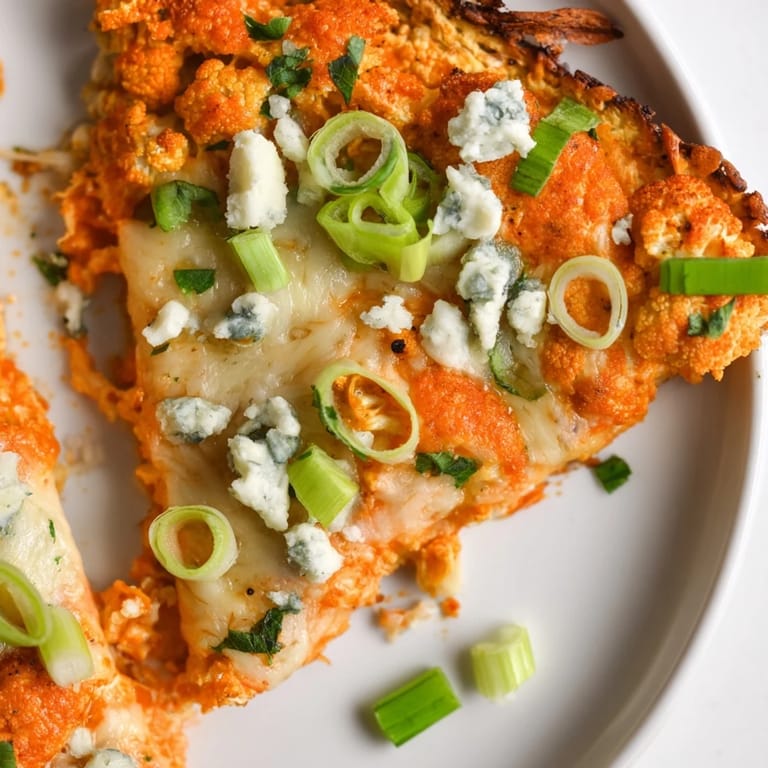
- Sprinkle the shredded mozzarella over the sauce, then scatter green onions, celery, and blue cheese if you're using them. The cheese will melt and hold everything together.
- Bake again:
- Put the pizza back in the oven for 8 to 10 minutes, just until the cheese is melted, bubbly, and starting to turn golden in spots. Keep an eye on it so it doesn't burn.
- Rest and garnish:
- Let the pizza rest for 5 minutes so the cheese sets a little, then sprinkle fresh parsley on top if you like. Slice it up and serve it hot.
 Save
Save One evening, I brought this pizza to a potluck and set it down next to a table full of traditional pies. People hesitated at first, but after the first person tried a slice and nodded approvingly, the whole pan disappeared in minutes. A guy who'd been skeptical came back and said he'd never thought cauliflower could taste that good. That's when I realized this wasn't just a substitute pizza, it was something people genuinely wanted to eat again and again.
Choosing Your Cauliflower
Pick a cauliflower head that feels heavy and has tight, creamy white florets without brown spots. Freshness matters here because older cauliflower holds more water and can taste slightly bitter. I've found that medium to large heads work best since you need enough volume to create a sturdy crust. If your cauliflower has a lot of leaves, save them for roasting later, they're surprisingly delicious when crisped up with olive oil and salt.
Adjusting the Heat
Buffalo sauce varies wildly in spice level depending on the brand, so taste yours before spreading it on the crust. If it's too hot, mix in a spoonful of melted butter or a drizzle of honey to mellow it out without losing that tangy kick. I once used an extra-hot sauce without thinking and had to serve the pizza with a side of ranch just to cool things down. Now I always do a quick taste test first, and I keep extra sauce on the side for anyone who wants more heat.
Storing and Reheating
Leftover slices keep well in an airtight container in the fridge for up to three days, though the crust softens a bit as it sits. To bring back some of that crispy texture, reheat slices in a hot oven or a skillet over medium heat rather than the microwave. I've also frozen baked crust (before adding toppings) and pulled it out later to top and bake fresh, which works surprisingly well for meal prep. Just wrap it tightly in plastic and foil, and it'll stay good for about a month.
- Let the pizza cool completely before storing so condensation doesn't make the crust soggy.
- Reheat in a 200°C (400°F) oven for about 8 minutes to restore crispness.
- If freezing, label the date and use within a month for the best texture and flavor.
 Save
Save This pizza has become my go-to when I want something that feels indulgent but doesn't leave me feeling heavy afterward. It's bold, satisfying, and always sparks conversation, whether people know it's cauliflower or not.
Recipe FAQs
- → How do I prevent a soggy cauliflower crust?
The key is removing excess moisture from the riced cauliflower after processing. Wrap it tightly in a clean kitchen towel and squeeze firmly to expel as much liquid as possible. This step is crucial for achieving a crispy, firm crust.
- → Can I make this ahead of time?
Yes, you can prepare the cauliflower mixture up to 24 hours in advance and refrigerate it. You can also bake the crust ahead and store it in an airtight container for 2-3 days, then add toppings and finish baking before serving.
- → What's the best way to achieve extra crispiness?
After baking the final pizza with melted cheese, broil it for 1-2 minutes under high heat. Watch carefully to prevent burning. This creates a more pronounced crispy texture on the crust edges and charred spots on the cheese.
- → How can I adapt this for a vegan diet?
Substitute the eggs with flax eggs (1 tablespoon ground flaxseed mixed with 3 tablespoons water per egg) and use plant-based mozzarella and Parmesan alternatives. Verify that your buffalo sauce contains no animal products before using.
- → What are good serving suggestions?
Serve with additional buffalo sauce for dipping, chilled celery sticks on the side, or ranch dressing as a cooling accompaniment. A fresh green salad complements the spicy, rich flavors perfectly.
- → Can I customize the toppings?
Absolutely. While green onions and buffalo sauce are essential to the flavor profile, you can adjust the cheese blend, add jalapeños for extra heat, swap blue cheese for ranch dressing, or include diced red onions and cilantro for variation.