 Save
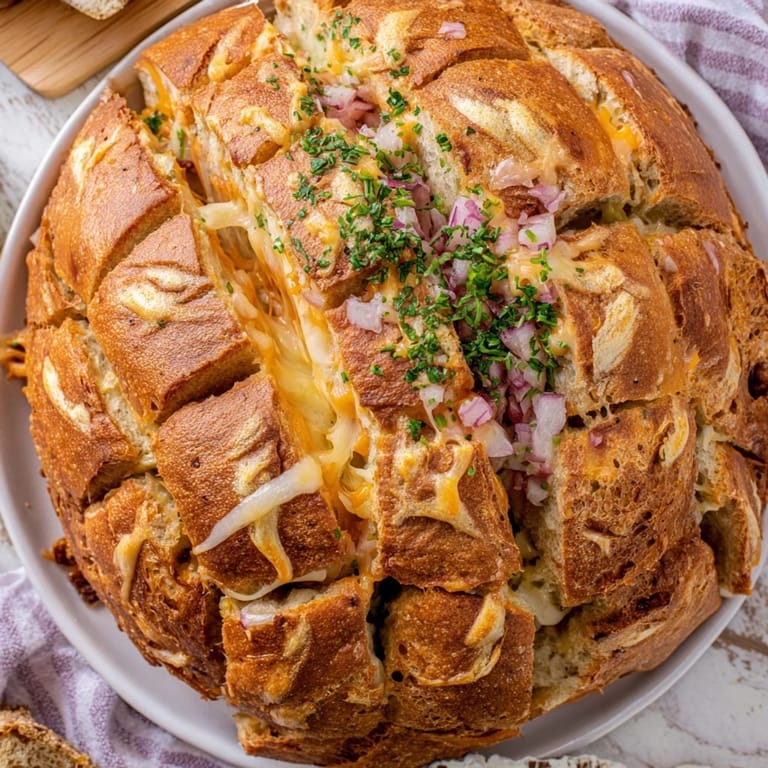
Save I was standing in my kitchen on a Sunday afternoon, staring at leftover sourdough from the farmers market, when my neighbor knocked with unexpected guests. I had twenty minutes and a fridge full of cheese. What came out of the oven that day wasn't planned, but it disappeared faster than anything I'd made in months. The crust crackled, the cheese stretched between every pull, and someone actually licked their fingers.
The first time I brought this to a potluck, I watched a grown man stand over the tray guarding it with a napkin until his wife came back from the bathroom. No one believed I hadn't spent hours on it. I've made it for game nights, holiday dinners, and one particularly stressful Tuesday when I just needed melted cheese to fix everything.
Ingredients
- Large round sourdough loaf: The thicker the crust, the better it holds up to butter and cheese without getting soggy, and sourdough's tang plays perfectly against all that richness.
- Unsalted butter, softened: Let it sit out for thirty minutes so it spreads easily into every crevice without tearing the bread.
- Garlic cloves, finely minced: Fresh garlic is nonnegotiable here, the jarred stuff turns bitter in the oven and lacks that sharp, sweet punch.
- Fresh parsley and chives: They cut through the butter and add little bright green flecks that make it look like you care, which you do.
- Mozzarella, cheddar, and Parmesan: Mozzarella melts into stretchy pools, cheddar adds sharpness, and Parmesan crisps up on the edges into salty little bites of gold.
- Salt and black pepper: Just enough to wake everything up without overpowering the garlic.
Tired of Takeout? 🥡
Get 10 meals you can make faster than delivery arrives. Seriously.
One email. No spam. Unsubscribe anytime.
Instructions
- Preheat and Prep:
- Set your oven to 180°C and line a tray with parchment so cleanup is just crumpling paper and tossing it. This is not the recipe where you want to scrub baked cheese off a pan later.
- Cut the Bread:
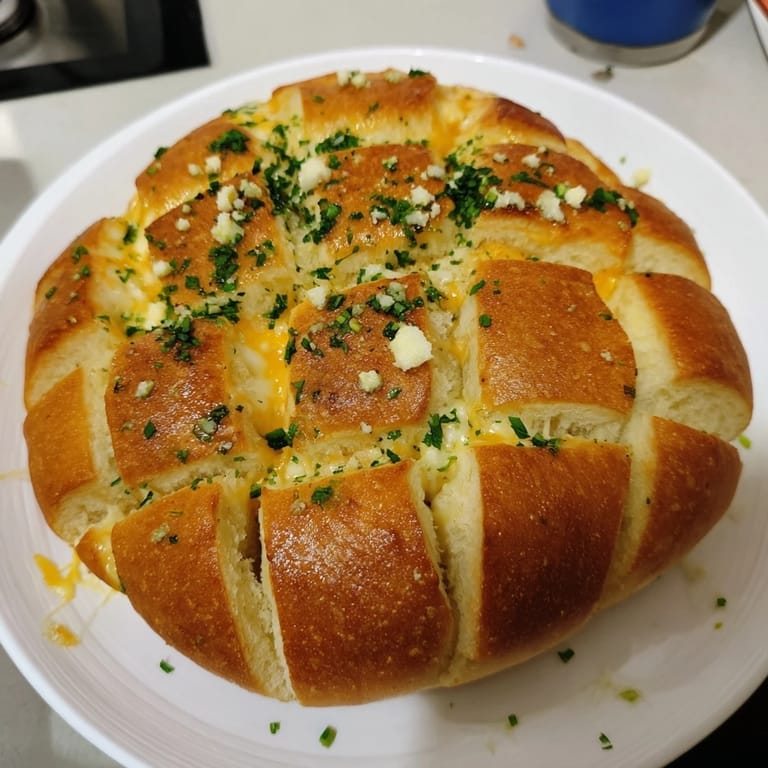
- Use a serrated knife and slice diagonally every 2 cm, stopping just before you hit the bottom crust. Turn the loaf 90 degrees and repeat so you have a checkerboard of cuts that stay connected at the base.
- Make the Garlic Butter:
- Mash together the soft butter, garlic, parsley, chives, salt, and pepper until it looks like a chunky, fragrant paste. Taste it, if you want more garlic, add it now.
- Butter the Bread:
- Gently pull apart each section and spread or brush the garlic butter into every single cut, getting messy is part of the process. Don't be shy, this is where all the flavor lives.
- Stuff with Cheese:
- Shove the shredded mozzarella, cheddar, and Parmesan into the cuts, pressing gently so it stays put. Some will fall out, just tuck it back in or eat it as a chef's reward.
- Bake Covered:
- Wrap the loaf loosely in foil and bake for 15 minutes so the inside gets gooey without the top burning. The foil traps steam and melts everything into one cohesive, cheesy mass.
- Finish Uncovered:
- Pull off the foil and bake another 8 to 10 minutes until the cheese bubbles and the peaks turn golden brown. Watch it closely, the line between perfect and burnt is thin.
- Serve Hot:
- Bring it to the table on the tray, let people pull it apart with their hands. Forks are optional, fingers are traditional.
 Save
Save I once made this on a camping trip using a cast iron skillet over coals, and it tasted like the best thing I'd ever pulled off in the woods. My friend still talks about it every time we pack for a trip. It's the kind of recipe that turns into a story people retell.
Choosing Your Bread
Round sourdough is classic, but I've used oval Italian loaves, even a sturdy whole wheat boule when that's what I had. The key is a thick, crusty exterior that won't collapse under butter and heat. Soft sandwich bread will turn to mush, and baguettes are too narrow to hold enough cheese. Go for something with structure and chew.
Cheese Swaps and Combinations
Gruyère makes it fancy and nutty, Monterey Jack keeps it mild and creamy, and a little crumbled feta adds salty tang if you're feeling adventurous. I've mixed in pepper jack for heat and fontina for extra melt. The only rule is to use at least one cheese that stretches and one that adds flavor, the rest is up to your fridge and your mood.
Storing and Reheating
Leftovers rarely happen, but if they do, wrap the bread tightly in foil and keep it in the fridge for up to two days. Reheat it in a 160°C oven for about 10 minutes, covered, so it doesn't dry out. The microwave will make it rubbery and sad, so don't do that to yourself.
- You can freeze the unbaked, stuffed loaf for up to a month and bake it straight from frozen, adding 10 extra minutes.
- If the top browns too fast during reheating, tent it with foil until the inside is warm.
- Day old pull apart bread, reheated and served with soup, is one of life's quiet pleasures.
 Save
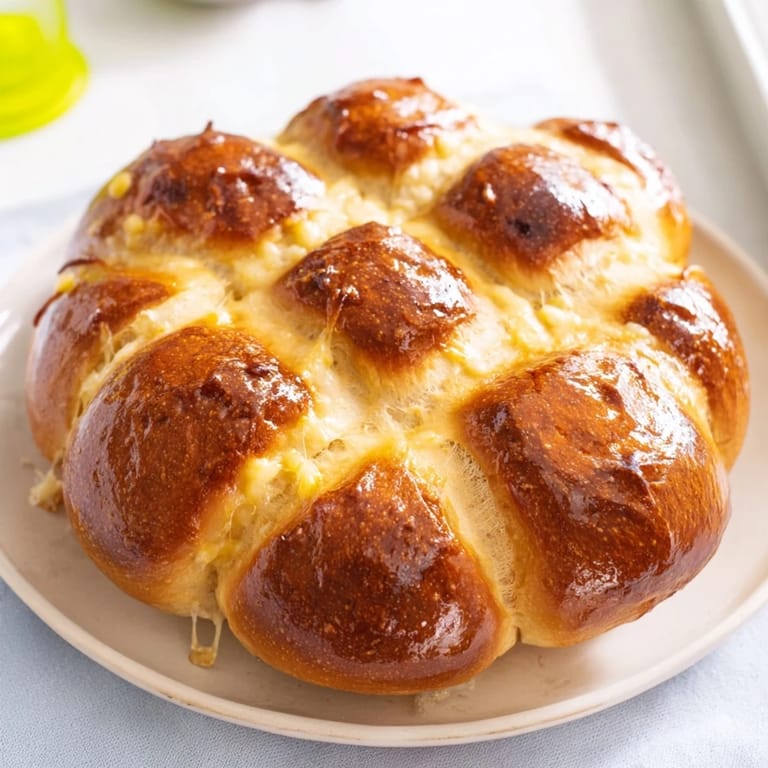
Save This bread has saved more last minute gatherings than I can count, and it's never let me down. Make it once, and it'll become the thing people ask you to bring every time.
Recipe FAQs
- → How do I cut the bread for stuffing?
Use a serrated knife to make diagonal slices 2 cm wide, cutting almost through but not all the way, then rotate and repeat to form a crosshatch pattern.
- → Can I use different cheeses?
Yes, Gruyère or Monterey Jack can be swapped in to vary the flavor profile while keeping the creamy texture.
- → What herbs complement the garlic butter best?
Fresh parsley and chives add bright, mild herbal notes that balance the richness of the cheese and butter.
- → How is the bread baked to achieve the perfect texture?
Wrapping the loaf loosely with foil allows cheese to melt and bread to steam gently, finishing uncovered creates a golden, bubbly top.
- → How can leftovers be reheated without drying out?
Reheat in a low oven to maintain moisture and melt the cheese again without crisping the bread too much.