 Save
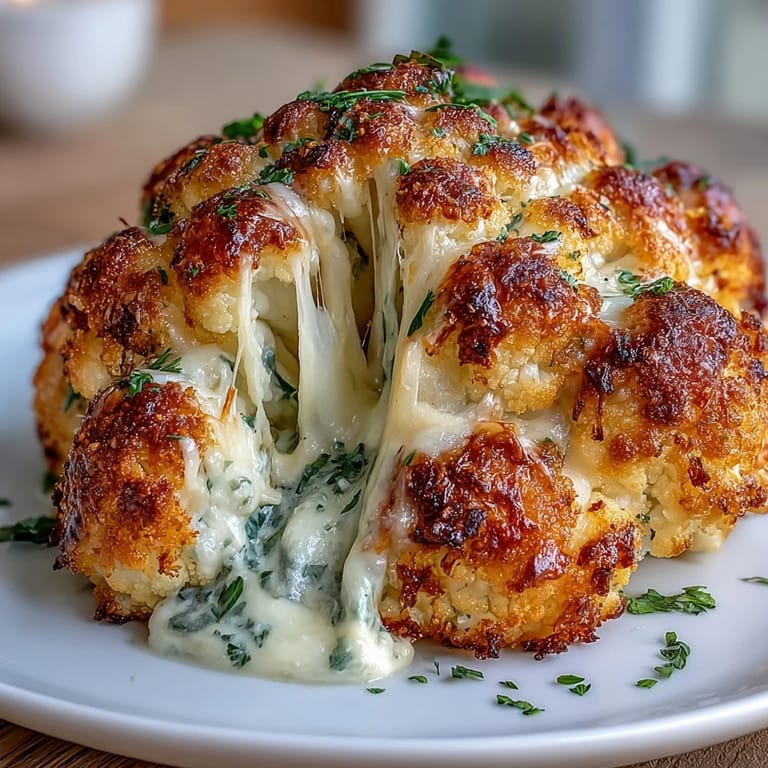
Save There's something magical about watching a whole cauliflower transform from a humble vegetable into a show-stopping centerpiece. I discovered this dish while experimenting with ways to make vegetarian dinners feel more exciting, and it changed everything—suddenly, my guests were asking for seconds of a vegetable they'd normally push around their plate. The golden, bubbling cheese filling peeking through roasted florets felt like I'd unlocked some secret kitchen technique, even though it's surprisingly forgiving to make.
I'll never forget serving this to my skeptical brother-in-law who claimed he 'didn't do vegetables.' He cut into a wedge, and the melted cheese oozed out so beautifully that he went quiet for a moment—then asked for the recipe. That's when I knew this dish had real power, the kind that converts even the most devoted meat-and-potatoes people.
Ingredients
- Cauliflower, 1 large head (about 1 kg): Look for a head with tightly packed florets and minimal brown spots; the leaves protect it during cooking and add rustic charm when left on.
- Olive oil, 1 tbsp: This gets brushed on the exterior to help it brown evenly, so don't skip it or use a substitute.
- Salt and black pepper: Season generously both on the cauliflower and throughout the filling for depth.
- Cream cheese, 150 g, softened: Soft cream cheese blends into a silky filling; take it out of the fridge 30 minutes before you start.
- Shredded mozzarella, 100 g: This melts beautifully and stretches as it cooks, creating those irresistible pockets of warmth.
- Grated Parmesan, 50 g: It adds a sharp, nutty note that keeps the filling from tasting one-dimensional.
- Fresh chives, 2 tbsp, chopped: Don't use the powdered version; fresh chives brighten everything and add a subtle onion sweetness.
- Garlic clove, 1, minced: Garlic grounds the filling in reality—without it, the cheese feels almost too mild.
- Smoked paprika, ½ tsp: This is the secret ingredient that makes people ask what spice they're tasting.
- Ground nutmeg, ¼ tsp: A whisper of nutmeg with cheese feels unexpectedly elegant and is worth measuring properly.
- Milk, 1 tbsp: It loosens the filling so it flows into the florets without tearing them apart.
- Shredded cheddar cheese, 50 g: The topping cheese should be sharper than mozzarella so it browns and crisps instead of just melting.
- Breadcrumbs, 2 tbsp (gluten-free if needed): These toast into golden nuggets that add texture contrast to every bite.
- Melted butter, 1 tbsp: Butter and breadcrumbs are a team; they brown together into something irresistible.
Tired of Takeout? 🥡
Get 10 meals you can make faster than delivery arrives. Seriously.
One email. No spam. Unsubscribe anytime.
Instructions
- Set the stage:
- Preheat your oven to 200°C (400°F) and line a baking tray with parchment paper so cleanup is easy and nothing sticks. Your workspace is about to get messy with cheese, so clear some counter space and gather everything you'll need within arm's reach.
- Prep the cauliflower:
- Remove the outer leaves carefully and trim the stem so the head sits flat on the cutting board without wobbling. The goal is a stable base that can hold filling, not a perfectly manicured vegetable—a little roughness is fine.
- Parboil gently:
- Bring salted water to a rolling boil and submerge the cauliflower for 8–10 minutes until it's just tender enough to pierce with a fork but still holds its shape. This step softens it enough to accept filling without becoming mushy in the oven.
- Mix the cheese filling:
- In a bowl, combine softened cream cheese, mozzarella, Parmesan, chives, minced garlic, smoked paprika, nutmeg, and milk, stirring until smooth and spreadable. Taste it and adjust seasoning; this is your only chance to season the inside, so be generous.
- Stuff with care:
- Place the cooled cauliflower on your prepared tray and use a small sharp knife to make deep cuts between florets and into the center, creating pockets for filling. Work your fingers or a spoon into these crevices, pressing cheese mixture in gently so it nestles between the florets rather than sitting on top.
- Season the exterior:
- Brush olive oil across the entire surface of the cauliflower and sprinkle with salt and pepper, making sure every visible floret gets touched. This is what turns it golden and makes it look like something special.
- Add the golden topping:
- Combine cheddar cheese, breadcrumbs, and melted butter in a small bowl, then sprinkle this mixture evenly over the top and sides of the cauliflower. The butter helps everything brown together into a crispy, golden layer.
- Roast until golden:
- Bake for 40–45 minutes until the cauliflower is tender when pierced with a knife and the topping is deep golden brown with cheese bubbling at the edges. The smell alone will tell you it's ready—nutty, cheesy, and impossible to resist.
- Rest and serve:
- Let it rest for 5 minutes so the cheese sets slightly, then slice into wedges using a sharp knife with gentle downward pressure. The filling should stay tucked inside each wedge rather than spilling out.
 Save
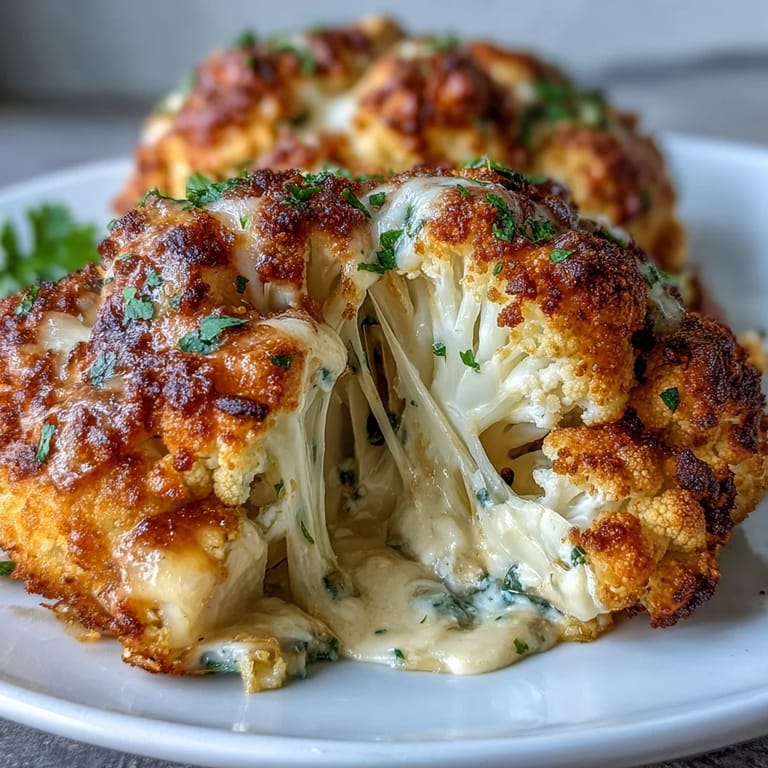
Save One afternoon, my daughter watched me stuff the cauliflower and asked if I was 'making cheese flowers.' That phrase stuck with me, because that's exactly what it is—vegetables dressed up to look like something luxurious. Watching her face light up when we cut into it and the cheese poured out felt like the real magic of cooking: turning simple ingredients into a moment someone remembers.
Why This Works as a Centerpiece
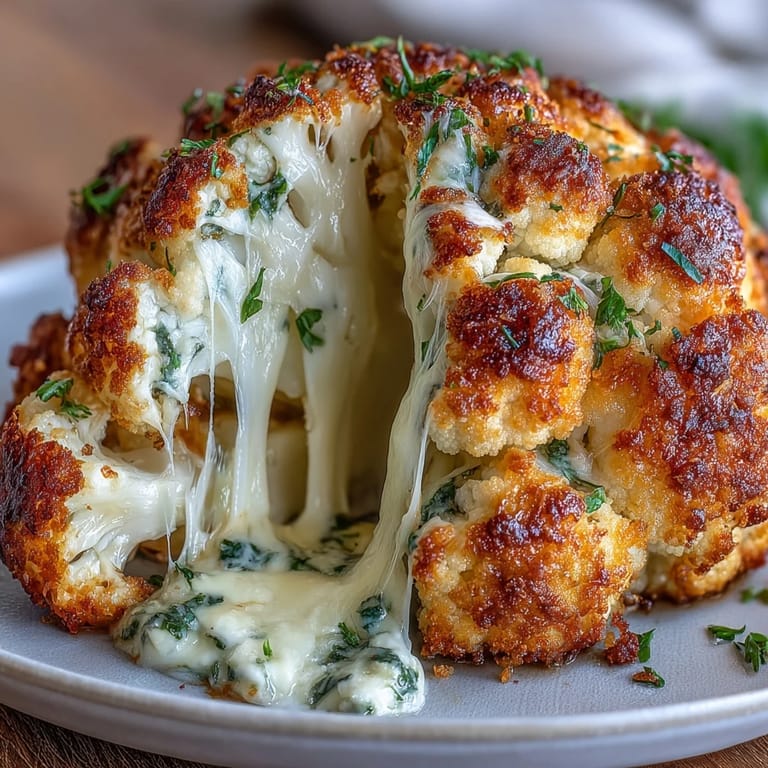
A whole roasted cauliflower looks dramatic on the table in a way that individual servings never could. When you slice into it at the table, everyone watches the cheese ooze out, and suddenly a side vegetable feels like an event. It's vegetarian but hearty enough to be the main course, which makes it perfect for mixed tables where not everyone eats meat.
Flavor Combinations That Build on This Foundation
The smoked paprika and nutmeg create a backbone that's savory and slightly warm, but you can pivot the whole dish depending on what you add to the filling. Sun-dried tomatoes bring acidity and earthiness, while sautéed mushrooms make it deeper and more umami-forward. Fresh herbs like dill or parsley swap easily for chives if you want a lighter, fresher note.
Serving Suggestions and Timing
This dish benefits from resting a few minutes before slicing, which lets the cheese set and the florets firm up slightly. Serve it with something bright and acidic alongside—a crisp green salad with lemon vinaigrette cuts through the richness, or roasted vegetables like broccolini or Brussels sprouts add a pleasant contrast in texture.
- Make the cheese filling up to 24 hours ahead and refrigerate it in a covered container to save yourself time on cooking day.
- If your cauliflower breaks or looks imperfect after roasting, it doesn't matter—slice it into wedges and plate it so the golden top and creamy interior are visible.
- Leftovers taste just as good cold the next day, so don't hesitate to make this for meal prep or casual lunches.
 Save
Save This recipe transformed how I think about vegetarian cooking—not as cooking without something, but as cooking toward something bold and satisfying. Make this once and you'll find yourself reaching for it again whenever you want to impress or simply want to feel like you've cooked something worthy of celebration.
Recipe FAQs
- → How do I know when the cauliflower is done?
The cauliflower is ready when it's golden brown on top, the cheese is bubbling, and a knife inserted into the center meets no resistance. This typically takes 40-45 minutes at 200°C.
- → Can I prepare this ahead of time?
Yes, you can boil and stuff the cauliflower up to a day in advance. Store it covered in the refrigerator, then add the topping and bake when ready to serve. You may need a few extra minutes of baking time if starting from cold.
- → What other cheeses work well in the filling?
Gruyère, Swiss, or sharp cheddar make excellent additions or substitutions. For a lighter version, try part-skim mozzarella or reduce the total cheese amount by half and increase the herbs.
- → Is this suitable for freezing?
Freezing is not recommended as the texture of cooked cauliflower becomes watery when thawed and reheated. It's best enjoyed fresh from the oven for optimal texture and flavor.
- → What should I serve with stuffed cauliflower?
This makes a complete vegetarian main dish when paired with a crisp green salad, roasted vegetables, or crusty bread. As a side, it complements grilled meats, roasted chicken, or seafood beautifully.