 Save
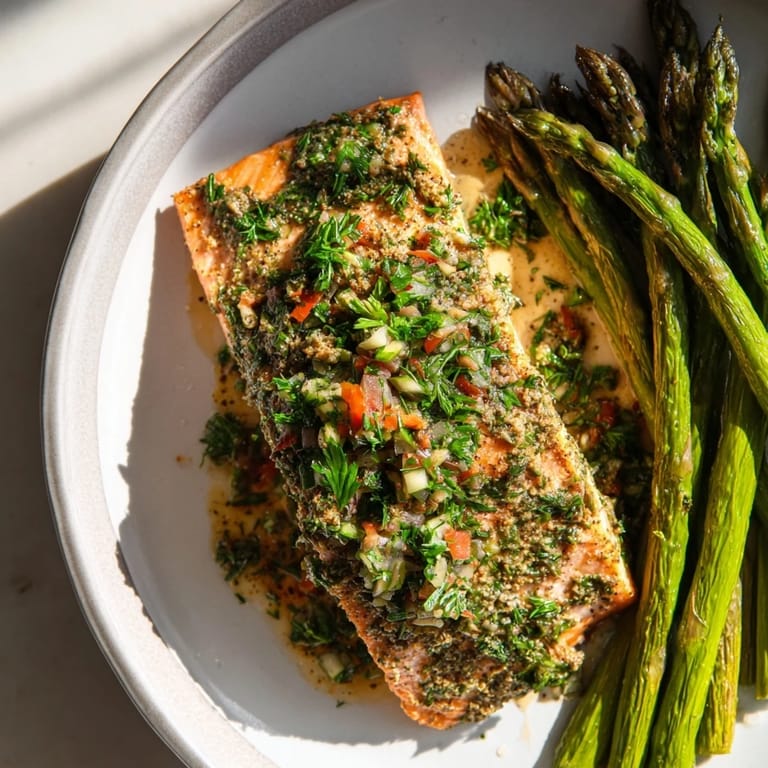
Save My kitchen smelled like a summer garden the evening I first layered fresh herbs onto salmon, their green scent mixing with the warmth of preheating oven air. I had grabbed a handful of parsley and dill from the farmers market without a plan, just a hunch that something bright was needed. The mustard idea came from a jar I spotted while rummaging through the fridge, and suddenly the whole dish clicked. Pressing that fragrant crust onto each fillet felt less like following a recipe and more like painting. Twenty minutes later, I understood why simple combinations often win.
I made this for a friend who swore she didnt like fish, setting the table with low expectations and lemon wedges as backup. She took one bite, paused, then asked if I could write down what I did because she wanted to make it for her family. That moment taught me how a bright crust and perfectly timed roast can change someones whole relationship with salmon. We finished the asparagus straight off the pan, standing at the counter, laughing about how good food never makes it to the table. It became my go to whenever I want to impress without the pressure.
Ingredients
- Skinless salmon fillets (4, each 6 oz): Look for bright, firm flesh without any fishy smell, and pat them completely dry before brushing so the mustard and herbs actually stick instead of sliding off.
- Olive oil (2 tbsp for salmon, 1 tbsp for asparagus): Use a fruity, good quality oil since it carries the flavor of the herbs and helps everything caramelize gently without burning.
- Dijon mustard (1 tbsp): This acts like glue for the crust and adds a subtle tang that balances the richness of the salmon without overpowering the delicate herbs.
- Fresh parsley (1/2 cup, finely chopped): The backbone of the crust, bringing grassy brightness and a soft green color that stays vibrant even after baking.
- Fresh dill (2 tbsp, finely chopped): Its feathery, slightly sweet flavor pairs naturally with fish and makes the whole kitchen smell like spring.
- Fresh chives (1 tbsp, finely chopped): They add a whisper of onion flavor without any harshness, blending quietly into the herb mix.
- Garlic (1 clove, minced): Just enough to add warmth and depth without competing with the brightness of the herbs.
- Lemon zest (1/2 tsp): The oils in the zest bring a floral citrus note that lifts the entire crust and makes each bite feel lighter.
- Kosher salt (1/2 tsp for salmon, 1/4 tsp for asparagus): Season confidently, the salt draws out moisture and amplifies every other flavor in the dish.
- Freshly ground black pepper (1/4 tsp for salmon, 1/8 tsp for asparagus): A few cracks add gentle heat and complexity without masking the freshness of the herbs.
- Asparagus (1 lb, trimmed): Choose firm spears with tight tips, and snap off the woody ends instead of cutting them so they break exactly where tender meets tough.
- Lemon wedges (for serving): A squeeze of fresh juice right before eating wakes up the flavors and adds a final burst of acidity that ties everything together.
Tired of Takeout? 🥡
Get 10 meals you can make faster than delivery arrives. Seriously.
One email. No spam. Unsubscribe anytime.
Instructions
- Preheat and Prep Your Pan:
- Set your oven to 400°F and line a large baking sheet with parchment paper so nothing sticks and cleanup stays effortless. This temperature is hot enough to caramelize the edges without drying out the fish.
- Mix the Herb Crust:
- In a small bowl, combine the parsley, dill, chives, garlic, lemon zest, salt, and pepper, stirring until the mixture looks evenly green and fragrant. The herbs should feel moist and clump together slightly when pressed.
- Prep the Salmon:
- Arrange the salmon fillets on the prepared baking sheet, leaving a little space between each one. Brush the tops generously with olive oil, then spread a thin layer of Dijon mustard over each fillet like youre frosting a cake.
- Apply the Crust:
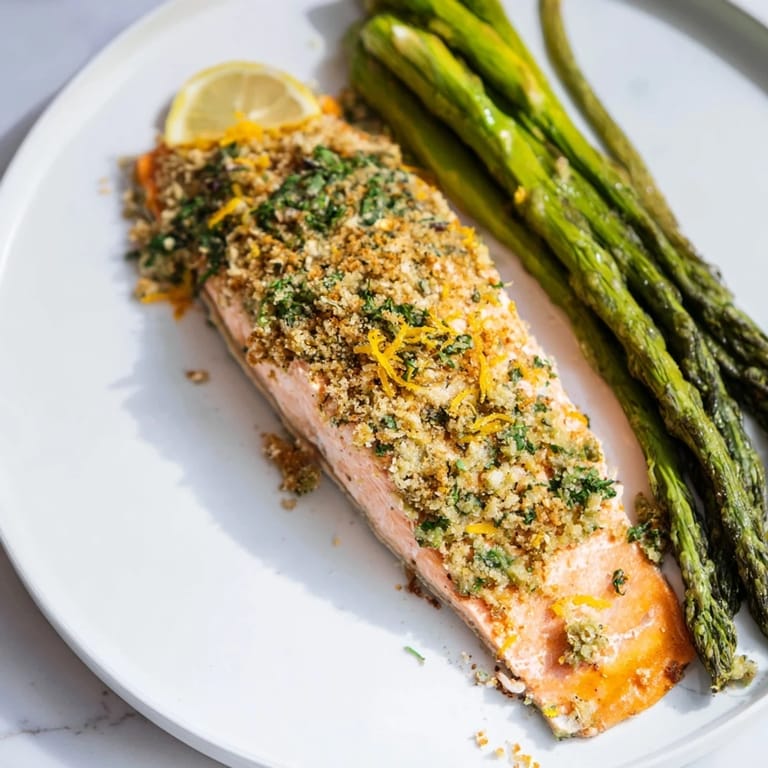
- Press the herb mixture firmly onto the top of each fillet, using your fingers to pack it down so it adheres and forms a thick, even crust. Dont be shy, a generous layer means more flavor in every bite.
- Add the Asparagus:
- Scatter the trimmed asparagus spears beside the salmon on the same pan, drizzle with olive oil, and sprinkle with salt and pepper. Toss them lightly with your hands so every spear glistens.
- Bake Until Perfect:
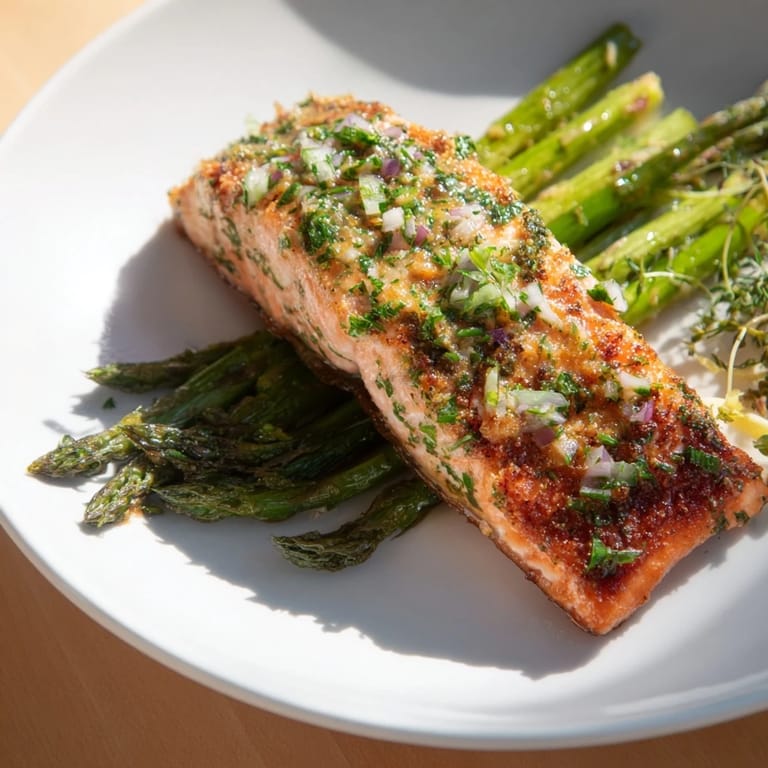
- Slide the pan into the oven and bake for 15 to 18 minutes, until the salmon flakes easily with a fork and the asparagus tips turn golden and tender. The crust should look set and fragrant, not browned or crispy.
- Serve Immediately:
- Transfer everything to plates while still hot, tucking lemon wedges alongside for squeezing. The first bite should taste bright, herby, and just a little indulgent.
 Save
Save One spring evening, I plated this for my parents and watched my dad, who rarely comments on food, pause mid bite and nod slowly before asking for seconds. My mom took a photo before we even started eating, saying it looked too pretty to forget. That meal turned into a tradition, something I make whenever they visit, and now the smell of dill and lemon reminds me of their kitchen table and easy conversation. Food has a way of holding moments like that, quietly and without ceremony.
Swapping Herbs for New Flavors
Tarragon brings a subtle anise sweetness that feels elegant and French, while basil leans brighter and almost summery, especially if you add a handful of torn leaves right after baking. Cilantro and lime zest make the dish feel vibrant and unexpected, perfect if youre craving something with a little more edge. I once used only chives and lemon thyme because thats all I had, and it tasted clean and sophisticated, proving that you dont need a long ingredient list to make something memorable. Trust your instincts and use whatever fresh herbs make you excited to cook.
Pairing and Serving Ideas
A crisp Sauvignon Blanc or a light Pinot Grigio cuts through the richness of the salmon and echoes the brightness of the herbs, making every sip feel like part of the dish. If youre not drinking wine, sparkling water with a twist of lemon or a cucumber mint infusion works beautifully and keeps the meal feeling fresh. I like to serve this with a simple arugula salad dressed in olive oil and lemon, or roasted baby potatoes if Im extra hungry. The key is to keep sides light and let the salmon stay the star, surrounded by flavors that support rather than compete.
Making It Your Own
Sprinkling grated Parmesan over the asparagus before baking adds a nutty, salty crust that makes the vegetables almost addictive, and Ive never had anyone complain about the extra richness. Swapping asparagus for broccolini, green beans, or halved Brussels sprouts works just as well, as long as you adjust the roasting time to match their thickness. Sometimes I add a drizzle of honey to the mustard for a hint of sweetness, or stir in a pinch of red pepper flakes if I want a gentle kick. The beauty of this recipe is how forgiving it is, welcoming small changes without losing its soul.
- Try a different mustard like whole grain or spicy brown for texture and a bolder tang.
- Add a handful of cherry tomatoes to the pan for bursts of sweetness that roast into jammy little pockets.
- Finish with a sprinkle of toasted pine nuts or slivered almonds for crunch and a touch of luxury.
 Save
Save This dish has become my answer to the question of what to make when I want something nourishing, beautiful, and fast, all at once. It never fails to feel like a small celebration, even on the most ordinary Tuesday.
Recipe FAQs
- → What herbs are used to crust the salmon?
Parsley, dill, chives, garlic, and lemon zest form the fresh herb crust that adds bright, aromatic flavors to the salmon.
- → How do I ensure the salmon stays moist while baking?
Brushing the salmon with olive oil and Dijon mustard before applying the herb mixture helps lock in moisture during baking.
- → Can I substitute the asparagus with another vegetable?
Yes, vegetables like green beans, broccoli, or zucchini can be roasted alongside the salmon for a similar texture and flavor balance.
- → Is it necessary to use Dijon mustard in this preparation?
Dijon mustard adds a subtle tang and helps the herbs adhere to the salmon but can be omitted or replaced with a mild oil-based spread if preferred.
- → What cooking temperature and time are recommended?
Bake the herb-crusted salmon and asparagus at 400°F (200°C) for 15 to 18 minutes, until salmon flakes easily and asparagus is tender.
- → Are there any dietary considerations with this dish?
This meal is pescatarian and gluten-free when using certified gluten-free Dijon mustard, making it suitable for those dietary preferences.