 Save
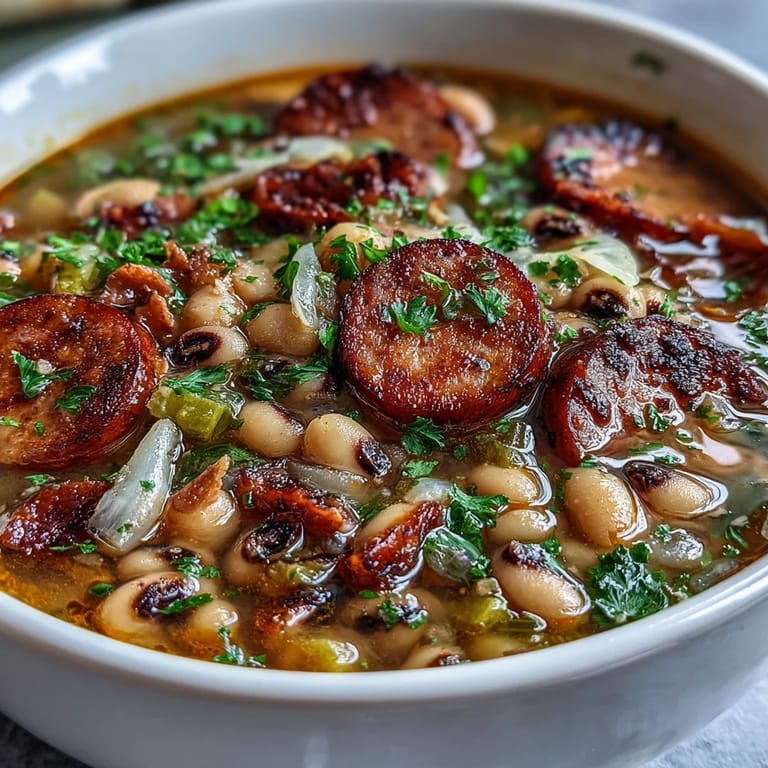
Save My grandmother used to say that black-eyed peas on New Year's Day weren't just tradition—they were insurance, a little edible luck folded into every bite. I didn't understand it as a kid, just knew the kitchen smelled impossibly good while she tended a massive pot, the kind that seemed to bubble with quiet magic. Years later, I found myself doing the exact same thing, simmering peas with smoky sausage and that holy trinity of onion, celery, and bell pepper, and suddenly her words made sense. There's comfort in a dish this old, this reliable, this genuinely delicious.
I made this for a potluck once where everyone brought something trendy, and I almost didn't go because I thought black-eyed peas seemed too simple, too old-fashioned. By the end of the night, my pot was empty and three people were asking for the recipe. One woman told me it reminded her of her mother's kitchen, and another just stood there eating it straight from the serving spoon when she thought no one was looking. That's when I realized this isn't about being fancy—it's about being real.
Ingredients
- Smoked sausage (Andouille or Kielbasa), 225 g: The star ingredient that gives this dish its signature smoky backbone—don't skip the quality here, as cheaper sausage can taste plastic and one-dimensional.
- Thick-cut bacon, 115 g: Renders its fat into the broth and adds a salty richness that keeps people coming back for seconds.
- Dried black-eyed peas, 450 g: Soak them overnight or use the quick-soak method; they'll become creamy inside while holding their shape beautifully.
- Large onion, diced: This is your foundation—let it soften completely in the rendered fat for a sweeter, more integrated flavor.
- Green bell pepper, diced: Adds a gentle vegetal note and textural contrast that balances the meat-heavy dish.
- Celery stalks, 2, diced: Part of the classic holy trinity with onion and pepper; it brings an earthy, subtle sweetness.
- Garlic cloves, 3, minced: Added after the softer vegetables to keep its bite bright rather than letting it fade into the background.
- Low-sodium chicken broth, 1.5 liters: Use quality broth; it becomes the soul of the finished dish, so saltiness matters.
- Water, 240 ml: Helps dilute the sodium level and gives the peas room to breathe as they cook.
- Bay leaves, 2: Remove them before serving—they flavor the whole pot but shouldn't end up on anyone's spoon.
- Smoked paprika, 1 tsp: This is non-negotiable for that warm, authentic smokiness that ties everything together.
- Dried thyme, 1/2 tsp: Adds an herbaceous note that feels Southern and grounded without overwhelming.
- Cayenne pepper, 1/2 tsp (optional): Use it if you like heat, skip it if your crowd prefers gentler flavors.
- Freshly ground black pepper, 1/2 tsp: Freshly cracked makes a noticeable difference in how alive the dish tastes.
- Kosher salt, 3/4 tsp: Start with this amount and taste as you go; the broth adds sodium, so you have room to adjust.
- Fresh parsley, 2 tbsp chopped: A last-minute brightness that cuts the richness and makes the dish look finished.
- Hot sauce, to serve: Let people customize their own heat level at the table.
Tired of Takeout? 🥡
Get 10 meals you can make faster than delivery arrives. Seriously.
One email. No spam. Unsubscribe anytime.
Instructions
- Prepare your peas:
- Rinse your dried peas and pick through them for any stones or debris, then soak overnight in plenty of cold water, or use the quick-soak method if you're short on time. Drain and rinse thoroughly before cooking—this is the unsexy step that actually matters for digestibility and flavor.
- Crisp the bacon:
- In a large Dutch oven or heavy pot over medium heat, cook the diced bacon until it's deeply browned and crispy, which should take about 5-7 minutes. Remove it with a slotted spoon and set aside, leaving that rendered fat behind like liquid gold.
- Brown the sausage:
- Slice your sausage and add it to the same pot, letting it develop color and a slight crust on its edges for about 4-5 minutes. The goal is browning, not cooking through, since it'll finish cooking in the broth.
- Build your flavor base:
- Add the diced onion, bell pepper, and celery to the pot and let them soften in all that rendered meat fat, stirring occasionally, for about 5-6 minutes until the onion becomes translucent and sweet-smelling. This is called a soffritto or holy trinity in Southern cooking, and it's the foundation everything else rests on.
- Add the aromatics:
- Stir in your minced garlic and cook for just 1 minute more—you want it fragrant but not burned, which would turn bitter. This quick moment matters more than you'd think.
- Build the broth:
- Pour in your soaked and drained peas, chicken broth, water, bay leaves, smoked paprika, thyme, cayenne if you're using it, black pepper, and salt. Stir everything together so nothing sticks to the bottom, then return the bacon and sausage to the pot.
- Simmer with patience:
- Bring everything to a boil over medium-high heat, then lower the heat to low, cover the pot, and let it simmer gently for 1 to 1.5 hours, stirring occasionally. The peas are done when they're completely tender but not falling apart, and the broth has thickened and deepened in color.
- Finish and serve:
- Taste the pot and add more salt if needed, remove those bay leaves, and stir in your fresh parsley just before serving. Ladle into bowls and let people add hot sauce to their preference at the table.
 Save
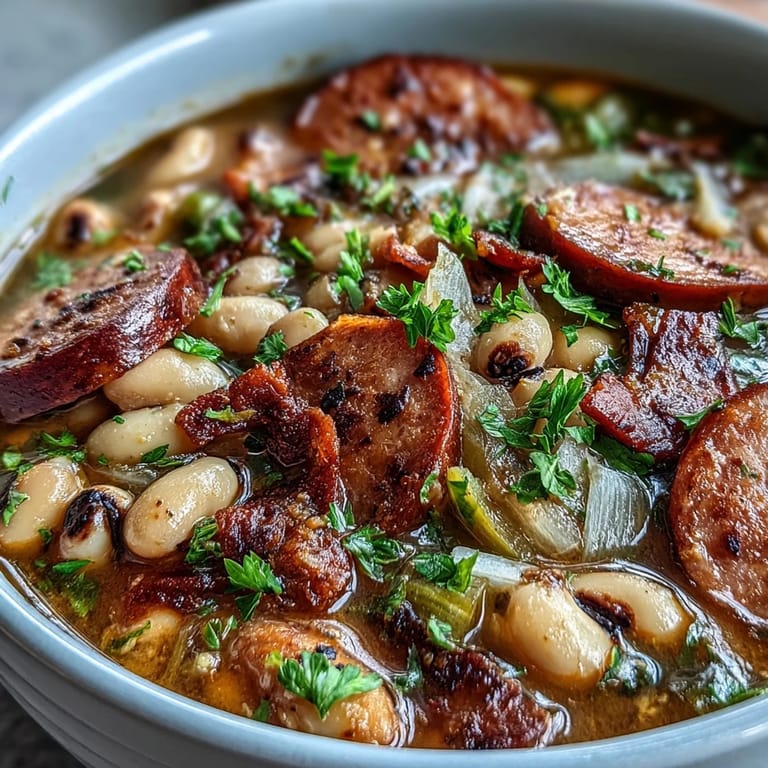
Save There's something about serving this dish on a cold January afternoon that feels like you're handing someone a warm blanket. My neighbor once told me she made it for her family after a rough month, and her daughter asked why everything suddenly tasted like home again—I think that's the real magic of this recipe.
Why This Dish Matters
Black-eyed peas have roots in resilience, in making something extraordinary from humble ingredients, and that spirit lives in every pot. The tradition of eating them on New Year's is about inviting luck, but honestly, the luck is already happening because you're taking an hour and a half to cook something nourishing for yourself or people you care about. That's the real beginning.
Making It Your Own
This recipe is flexible in beautiful ways—collard greens or diced tomatoes can go in during the last 15 minutes of cooking, adding color and nutrition without fundamentally changing the dish. Some people add a splash of apple cider vinegar at the end, others stir in a bit of liquid smoke if they're making a vegetarian version. The core stays solid while you make it yours.
Serving and Storage
Serve this hot over steamed rice with cornbread on the side—that's the traditional pairing, and it exists because the flavors complement each other perfectly, the peas and broth softening the cornbread into something almost spoon-like. Leftovers taste better the next day as the flavors meld, and this keeps beautifully in the refrigerator for up to five days or freezes for up to three months.
- Always reheat gently over medium-low heat with a splash of water or broth to restore the creamy texture.
- Make a double batch and freeze half for a future night when you need comfort food instantly.
- If the broth thickens too much, thin it with water—the peas will continue absorbing liquid as it sits.
 Save
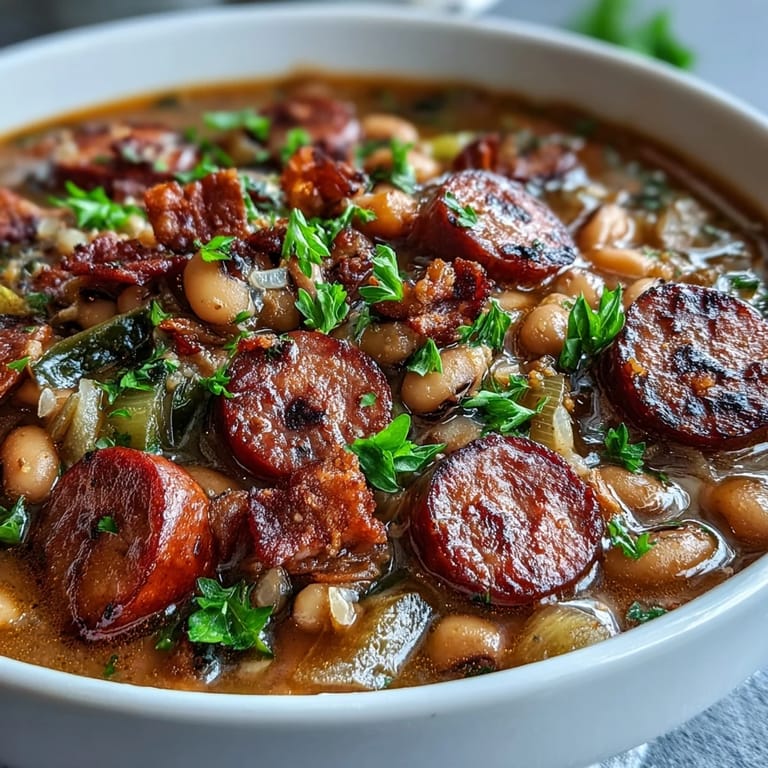
Save This recipe is an invitation to slow down and taste something real, something that tastes like it was made by someone who wanted you to feel better. That's worth more than a perfect presentation could ever be.
Recipe FAQs
- → Do I need to soak the black-eyed peas before cooking?
Yes, soak dried black-eyed peas overnight in water, then drain and rinse. For faster preparation, cover them with boiling water and let stand for one hour before proceeding with the dish.
- → Can I make this dish vegetarian?
Absolutely. Omit the bacon and sausage, use vegetable broth instead of chicken broth, and add extra smoked paprika or liquid smoke to maintain that savory, smoky depth of flavor.
- → What's the best way to serve these black-eyed peas?
Traditionally served over steamed white rice with cornbread on the side. The dish pairs beautifully with sautéed collard greens and a crisp white wine or sweet iced tea.
- → How long do leftovers keep in the refrigerator?
Store cooled leftovers in an airtight container for up to 4-5 days. The flavors actually develop and improve over time, making this an excellent meal prep option.
- → Can I use canned black-eyed peas instead of dried?
You can substitute about 4-5 cans of black-eyed peas, rinsed and drained. Reduce the cooking time to 30-40 minutes since canned peas are already tender, though dried peas offer superior texture and flavor absorption.
- → What makes this dish traditional for New Year's?
Black-eyed peas symbolize prosperity and luck in Southern folklore, while the round shape represents coins. Eating them on New Year's Day is believed to bring good fortune and financial success for the coming year.