 Save
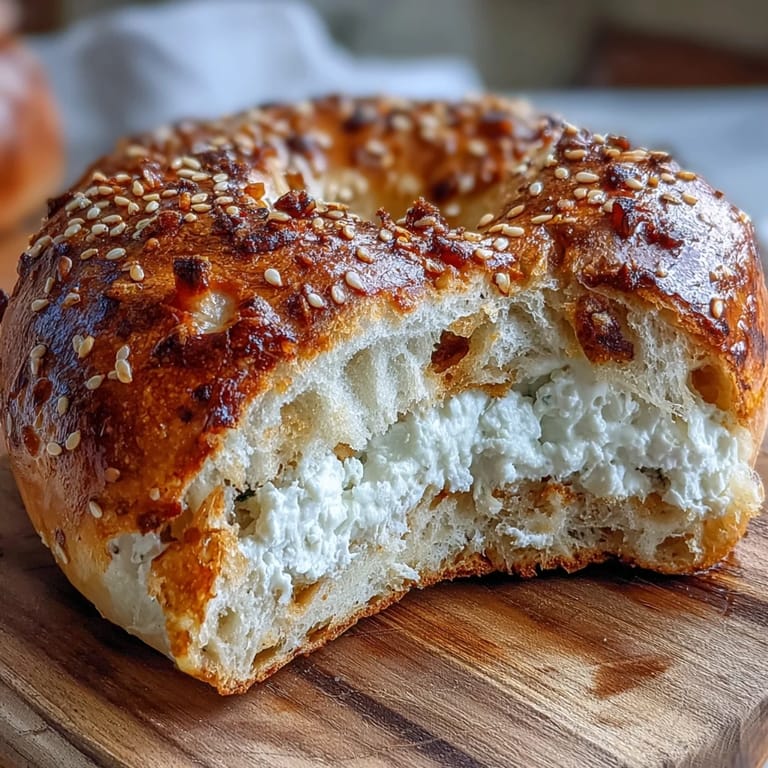
Save I discovered these bagels by accident on a Tuesday morning when my usual bakery was closed and I had nothing but self-rising flour and Greek yogurt staring at me from the pantry. Something about the simplicity intrigued me—no yeast, no overnight waiting, just two ingredients and 35 minutes between me and warm bagels. That first batch came out puffy and chewy, and I couldn't believe how effortless they were. My skepticism melted faster than cream cheese on a warm bagel. Now they're my go-to when I want something homemade without the fuss.
I remember making a batch for my neighbor who's always rushing to work, and watching her face light up when I handed her one still warm from the oven was worth every minute. She'd been skeptical about the two-ingredient magic until she bit into it—suddenly the conversation shifted from whether they could possibly be good to which toppings she wanted to try next. That moment reminded me how the simplest recipes often make the biggest impression.
Ingredients
- Self-rising flour (1 1/2 cups, 190 g): This is the backbone of the magic—it already contains the leavening agents, so you skip the whole yeast-and-proofing ritual and jump straight to shaping.
- Plain Greek yogurt (1 cup, 240 g): Full-fat gives you a softer, more tender crumb, but low-fat works if that's what's in your fridge—the yogurt provides moisture and tang that helps create that chewy bagel texture.
- Egg (1, beaten, optional): The egg wash gives your bagels that glossy, bakery-style finish and helps toppings stick beautifully.
- Sesame seeds or everything bagel seasoning (1 tbsp, optional): Toppings are where you can have fun—try poppy seeds, dried onion, za'atar, or even shredded cheese for savory variations.
Tired of Takeout? 🥡
Get 10 meals you can make faster than delivery arrives. Seriously.
One email. No spam. Unsubscribe anytime.
Instructions
- Heat your oven and prep your workspace:
- Set the oven to 375°F and line your baking sheet with parchment paper so your bagels won't stick and cleanup is effortless. This small step saves you from bagels glued to the pan.
- Bring flour and yogurt together:
- Combine them in a large bowl and mix with a spatula until a shaggy, slightly sticky dough forms—it won't look polished, and that's exactly right. You're looking for no dry flour streaks, but don't overwork it.
- Knead into smoothness:
- Transfer to a lightly floured surface and knead for just 2–3 minutes until the dough feels smooth and elastic under your hands. You'll notice the texture transform from rough to supple—that's when you know it's ready.
- Divide and shape your bagels:
- Split the dough into 4 equal pieces, roll each into a ball, then roll and stretch each into a rope about 8 inches long. Join the ends firmly and pinch the seam so it doesn't come apart during baking.
- Add color and flavor:
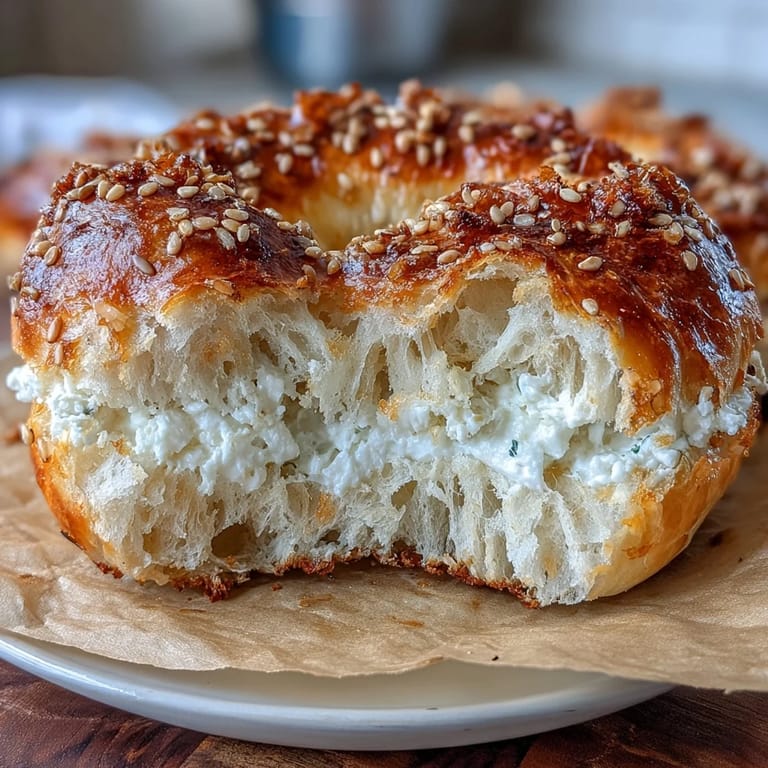
- Place bagels on the sheet, brush with beaten egg if you're using it, and sprinkle your chosen toppings generously. The egg wash helps everything stick and creates that shiny, professional-looking crust.
- Bake until golden:
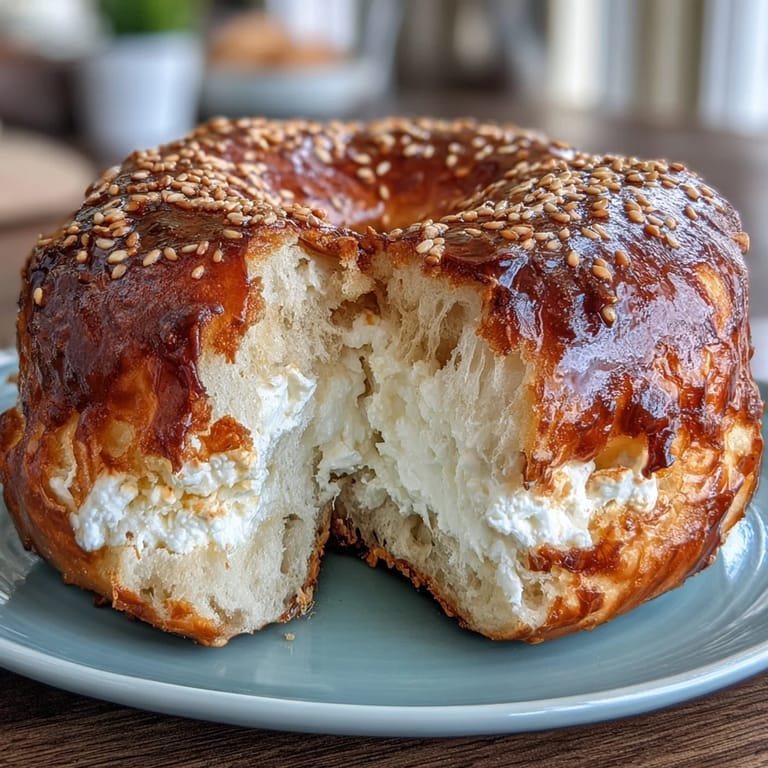
- Bake for 22–25 minutes until the bagels are a deep golden brown and sound hollow when tapped on the bottom. Trust your eyes and your instincts—they know when it's done.
- Cool before serving:
- Let them rest on a wire rack for a few minutes so the steam escapes and they set properly. If you slice into them right away they're still delicious, but a little cooling time makes them easier to handle.
 Save
Save There's something deeply satisfying about serving bagels you made yourself, especially when the whole process takes less time than waiting in line at a bagel shop. My kids now ask for these instead of store-bought, which feels like winning at parenting through simple carbs and Greek yogurt.
The Magic of Self-Rising Flour
Self-rising flour changed my quick-bread game entirely once I understood what it was actually doing. It's flour that already has the leavening agents mixed in, so you're getting consistent rise without guessing whether your baking powder or baking soda is fresh. That reliability means these bagels turn out the same way every time, whether you're making them on a Tuesday or a Saturday.
Why Greek Yogurt Is the Secret
The tanginess in Greek yogurt does more than just bind the dough—it adds a subtle flavor complexity that makes people ask what's in these bagels because they taste more developed than a two-ingredient recipe should allow. The protein in the yogurt also contributes to that chewy texture you're looking for, and the moisture keeps them tender even the next day when you slice and toast them. I've tried this with regular yogurt before, and while it works, the Greek yogurt's thickness and tang really do make a noticeable difference.
Toppings and Variations
Once you've mastered the basic bagel, toppings become your playground for creativity. I've experimented with everything from everything seasoning to nutritional yeast to shredded sharp cheddar, and every variation has its moment. Some mornings call for simplicity—just salt and sesame—while others demand something bolder.
- Savory options shine here: try dried onion, za'atar, furikake, or a mix of garlic powder and Italian herbs for variety.
- Sweet bagels work too if you brush them with a beaten egg and sprinkle cinnamon sugar before baking, or skip toppings entirely and serve them with jam and cream cheese.
- Make them dairy-free by using a thick non-dairy yogurt alternative like cashew or oat-based options, which work beautifully as long as they're creamy and not too runny.
 Save
Save These bagels proved to me that sometimes the most impressive kitchen moments come from the simplest recipes. Keep this one close for mornings when you want fresh bagels but not the effort.
Recipe FAQs
- → What makes these bagels soft and chewy?
The combination of Greek yogurt and self-rising flour produces a tender, elastic dough that yields a soft and chewy texture without yeast.
- → Can I use other types of flour for these bagels?
Whole-wheat self-rising flour can be used to add fiber and a nuttier flavor, but regular self-rising flour ensures the best rise and texture.
- → Is the egg wash necessary?
Egg wash is optional; it adds a glossy, golden finish and helps toppings stick, but bagels can be baked without it for a more rustic look.
- → How long should I bake the bagels?
Bake at 375°F (190°C) for 22–25 minutes until golden brown and cooked through for the best texture and flavor.
- → Can I make these dairy-free?
Yes, by substituting Greek yogurt with a thick non-dairy yogurt alternative, you can prepare a dairy-free version with similar results.
- → How should I store leftover bagels?
Store cooled bagels in an airtight container at room temperature for up to 2 days, or freeze for longer preservation.