 Save
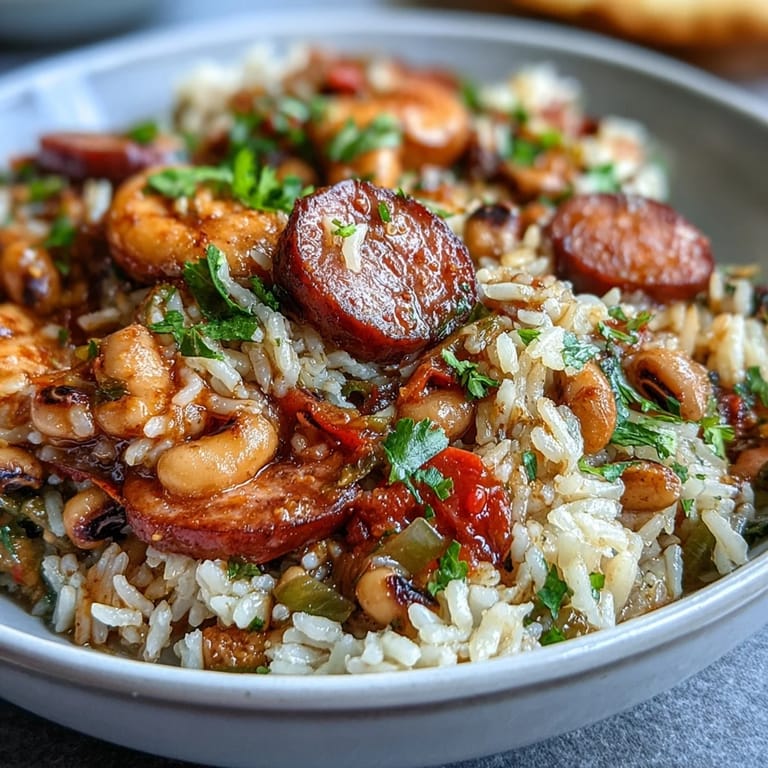
Save My neighbor Marcus showed up one Saturday morning with a cast iron pot and a mission, teaching me how to make proper jambalaya the way his grandmother made it in New Orleans. I'd attempted it before with disappointing results, but watching him work through that holy trinity of onions, celery, and peppers while the sausage crackled in the background changed everything. There's something about one-pot meals that feels less like cooking and more like controlled chaos coming together perfectly. By the time the rice absorbed all those spiced, smoky flavors, I understood why this dish had survived centuries and countless kitchen tables.
I made this for a small dinner party last fall, and what struck me was how the kitchen filled with that deep, toasty smell of Cajun spices mixing with the sausage fat—my guests started congregating in the kitchen before we'd even finished cooking. One friend who claimed she didn't like okra or anything "too Southern" came back for thirds, which told me everything about how this dish disarms people's preconceptions. That night taught me that jambalaya isn't just food; it's an invitation.
Ingredients
- Smoked sausage (340 g / 12 oz): Andouille is traditional and carries that deep, peppery smoke that defines the whole dish, though kielbasa works if you can't find it—slice it at an angle so the pieces brown better.
- Onion, celery, and bell peppers (1 medium onion, 2 celery stalks, 1 red and 1 green bell pepper): This is your holy trinity, the foundation that every Cajun cook knows by heart, so don't skip the celery even if it seems odd.
- Garlic (3 cloves): Mince it fine so it distributes evenly and doesn't leave harsh chunks.
- Black-eyed peas (1 can, 425 g): They stay firm through cooking and add earthiness that balances the spice—canned is perfectly acceptable here.
- Long-grain white rice (300 g / 1½ cups): The starch absorbs all the broth and seasoning, so use actual rice, not minute rice.
- Chicken broth (800 ml / 3⅓ cups): Low-sodium lets you control the salt and taste the actual spices.
- Diced tomatoes (1 can, 400 g): The acidity cuts through the richness and adds complexity you don't expect.
- Cajun seasoning (1½ tsp): This is a blend, so read the label if you have allergies—some versions contain hidden gluten or soy.
- Smoked paprika (1 tsp): This is non-negotiable; regular paprika won't give you that smoky depth.
- Thyme and oregano (½ tsp each): Dried herbs are fine here since they're simmered long enough to release their oils.
- Bay leaf (1): It stays in during cooking and comes out at the end—don't skip this small detail.
- Salt and black pepper (½ tsp salt, ¼ tsp pepper): Taste as you go since sausage varies in saltiness.
- Cayenne pepper (¼ tsp, optional): Add this if you want heat, but the Cajun seasoning already has some spice.
- Olive oil (2 tbsp): Just enough to start the sausage and coat the vegetables.
- Spring onions and parsley (2 spring onions, 2 tbsp parsley): Fresh garnish wakes up the whole dish at the end.
Tired of Takeout? 🥡
Get 10 meals you can make faster than delivery arrives. Seriously.
One email. No spam. Unsubscribe anytime.
Instructions
- Brown the sausage first:
- Heat your oil in a large Dutch oven or heavy pot over medium heat, then add the sliced sausage and let it sit long enough to develop a brown crust on each side—about 4 to 5 minutes total. You're not trying to cook it through, just render the fat and build flavor.
- Build the foundation with vegetables:
- Add the diced onion, celery, and both bell peppers to the sausage, stirring occasionally until the vegetables soften and the onions turn translucent, around 5 minutes. The bottom of the pot will have browned bits that are pure flavor, so don't scrape aggressively.
- Wake up the aromatics:
- Stir in the minced garlic and let it cook just until fragrant, maybe 30 seconds to 1 minute—this is your signal that everything's ready for the next step.
- Toast the rice:
- Add the rice and stir it through the sausage and vegetables for a minute or two, coating each grain in oil and releasing its nutty smell. This step sounds small but changes the texture completely.
- Combine everything:
- Pour in the chicken broth, diced tomatoes with their juices, and the drained black-eyed peas, then sprinkle in the Cajun seasoning, smoked paprika, thyme, oregano, bay leaf, salt, pepper, and cayenne if you're using it. Stir well so nothing sticks to the bottom.
- Bring to a boil and simmer:
- Let the mixture come to a rolling boil, then immediately lower the heat to low, cover the pot with a lid, and let it cook undisturbed for 20 to 25 minutes. You'll hear the gentle bubbling underneath, which means the rice is absorbing all that seasoned liquid—don't peek or stir.
- Rest and finish:
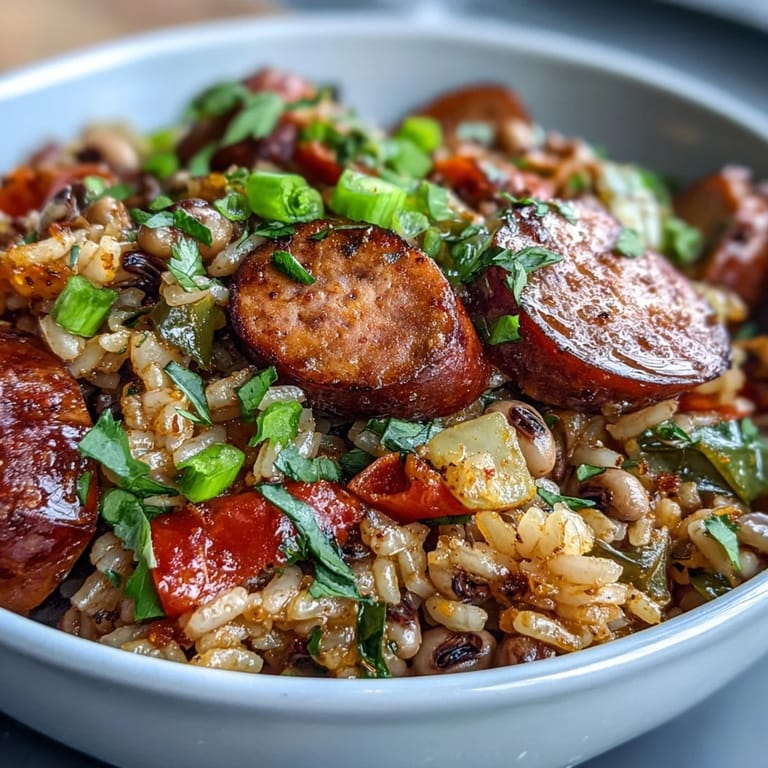
- When the rice is tender and the liquid has been absorbed, remove the pot from heat and let it sit covered for 5 minutes—this allows everything to settle and the rice grains to firm up. Take out the bay leaf, fluff everything with a fork, and taste for seasoning before adding your garnish of fresh spring onions and parsley.
 Save
Save I think about that dinner party often because of a small moment I'd never expected—after everyone finished eating, one guest asked for the recipe not because she wanted to impress someone else, but because she wanted to make it again for her son who was going through a difficult time, knowing that a good bowl of jambalaya might be exactly what he needed to feel cared for. That's when I realized this dish carries something beyond taste.
The Secret of Smoked Sausage
The sausage isn't just a protein here—it's the backbone of the entire flavor profile. When you brown it first, you're releasing its oils and spices into the pot, creating a base that nothing else can replicate. Some cooks use chicken sausage for a lighter version, but it won't give you that rich, peppery depth that makes jambalaya feel so complete and satisfying. If you have access to real Andouille sausage from a butcher or a good grocery store, use it—the flavor difference is immediately noticeable.
Why One Pot Matters
There's a reason Cajun cooking relies so heavily on one-pot meals—not just for convenience, but because every ingredient touches every other ingredient as everything simmers together. The rice soaks up not just the broth, but the oils from the sausage, the sweetness of the peppers, the umami of the tomatoes, and the spice of the seasonings all at once. It's nearly impossible to achieve this kind of flavor complexity any other way, which is why even the simplest version of jambalaya tastes so deeply satisfying.
Customizing Your Heat Level
Cajun seasoning blends vary wildly from brand to brand, and some already pack considerable heat while others are milder and more herbaceous. Before you add extra cayenne, taste a tiny pinch of your seasoning mix to get a sense of what you're working with. The beauty of jambalaya is that it doesn't demand heat—it demands flavor—so don't feel obligated to add the cayenne if you prefer something more mellow.
- Start with less cayenne than the recipe suggests, taste the finished dish, and add more if you want it spicier.
- Serve hot sauce on the side so everyone at your table can adjust their own heat level without affecting the whole pot.
- Remember that the spices taste stronger when the dish is hot, so wait a moment before deciding you need more.
 Save
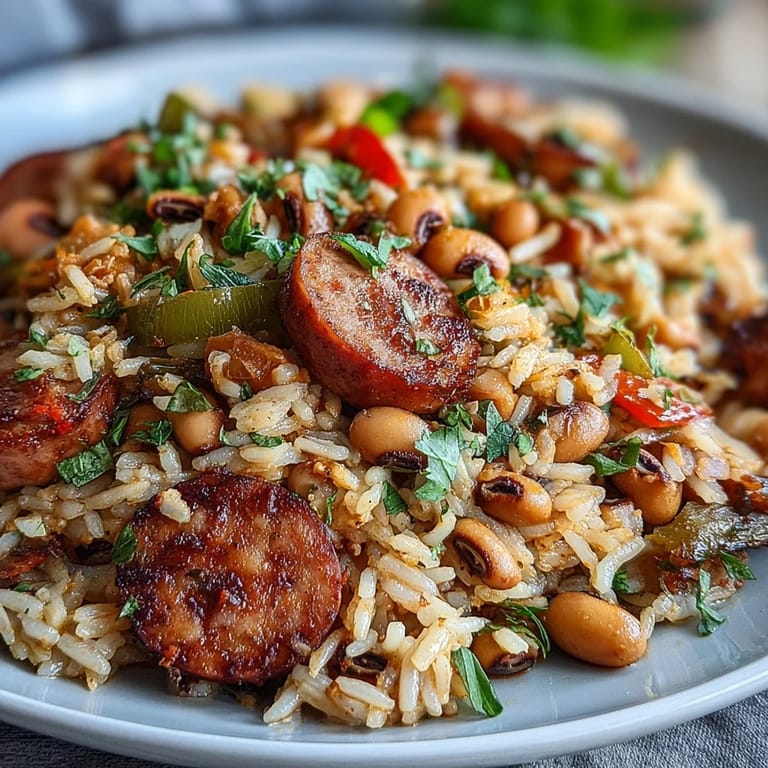
Save Jambalaya teaches you that sometimes the simplest approach—vegetables, meat, grain, and spice simmering in one pot—creates something memorable and generous enough to feed both body and spirit. Make it once for yourself, then make it for someone who needs to know they're cared for.
Recipe FAQs
- → What makes black-eyed pea jambalaya different from traditional jambalaya?
Black-eyed pea jambalaya incorporates legumes for added protein and texture, while traditional versions typically rely only on meat and rice. The peas add creaminess and make the dish more filling.
- → Can I use dried black-eyed peas instead of canned?
Yes, but you'll need to soak and cook them separately first. Dried peas require overnight soaking and about 1 hour of simmering before adding to the jambalaya.
- → What type of sausage works best?
Andouille sausage provides authentic Cajun flavor with its smoky, spicy profile. Kielbasa makes an excellent substitute if Andouille isn't available—both hold their shape well during cooking.
- → How can I adjust the spice level?
Reduce or omit the cayenne pepper for milder flavor. You can also decrease the Cajun seasoning to 1 teaspoon. Always add hot sauce at the table so diners can customize their heat preference.
- → What should I serve with this jambalaya?
Cornbread, crusty French bread, or buttermilk biscuits complement the dish perfectly. A simple green salad with vinaigrette balances the rich, hearty flavors.
- → How long does this keep in the refrigerator?
Store in an airtight container for up to 4 days. The flavors often improve overnight as the rice absorbs more seasoning. Reheat gently with a splash of broth to restore moisture.