 Save
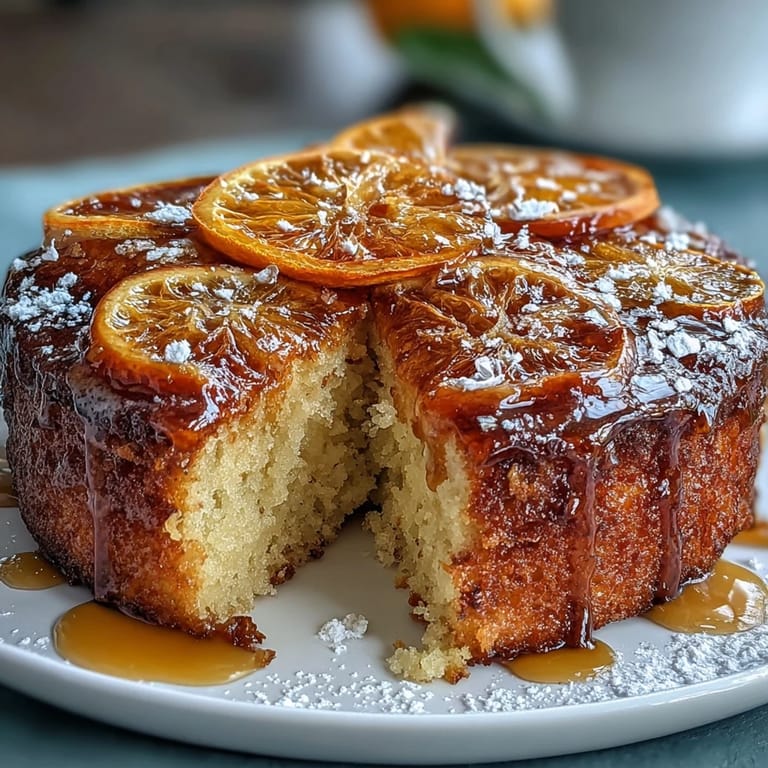
Save My neighbor handed me a jar of candied oranges she'd made the week before, and I stood in my kitchen wondering what on earth to do with them. The slices were glossy and jewel-like, catching the afternoon light, so I did what any baker does when inspired by beautiful ingredients: I built a cake around them. The result was this olive oil cake with almond flour, tender and moist, with candied orange slices arranged like stained glass across the top. That first slice tasted like sunshine and almonds, and I've made it countless times since.
I made this for a book club meeting on a grey November evening, nervous about bringing something everyone might actually enjoy. When I inverted the cake and those burnished candied orange slices appeared on top like a surprise, the whole room went quiet for a moment. Someone asked for the recipe before they'd even finished their slice, and I realized this cake had that rare quality of tasting both comforting and a little bit special.
Ingredients
- Almond flour: This is what makes the cake tender and naturally gluten-free, but don't skip the small amount of regular or gluten-free flour—it helps structure the crumb so it isn't too dense.
- Extra-virgin olive oil: Use one you actually like drinking, because you'll taste it. The fruity or peppery notes come through and make the cake sophisticated.
- Greek yogurt: This keeps everything moist and adds a subtle tang that balances the sweetness of the candied oranges.
- Candied oranges: If you're short on time, quality store-bought candied citrus works, but making your own takes just 25 minutes and fills your kitchen with the most amazing smell.
- Orange zest: Don't measure this stingily—it's your friend here, adding brightness and aroma.
- Eggs and sugar: Room-temperature eggs beat to pale and fluffy, which creates lift and keeps the cake from feeling heavy.
Tired of Takeout? 🥡
Get 10 meals you can make faster than delivery arrives. Seriously.
One email. No spam. Unsubscribe anytime.
Instructions
- Make the candied oranges first:
- Combine sugar and water in a saucepan and bring to a gentle simmer, watching until the sugar fully dissolves. Lay your orange slices in the syrup and let them bubble softly for 20 to 25 minutes, turning them once halfway through—they'll go from opaque to translucent, and that's exactly what you want.
- Prep your pan:
- While the oranges cool on parchment paper, preheat your oven to 350°F and prepare a 9-inch round cake pan with grease and parchment. Arrange those cooled candied slices on the bottom, overlapping them slightly like roof tiles.
- Build the dry ingredients:
- Whisk together almond flour, gluten-free flour, baking powder, and salt in one bowl, making sure there are no lumps hiding in the almond flour.
- Whip the wet mixture:
- In another bowl, beat eggs and sugar for about 2 to 3 minutes until the mixture looks pale and slightly thickened, then whisk in olive oil, Greek yogurt, orange zest, and vanilla until everything is smooth and combined.
- Fold it all together:
- Gently fold the dry ingredients into the wet mixture using a spatula—this is not the time for aggressive stirring, just until you don't see any white streaks of flour.
- Bake low and slow:
- Pour the batter gently over those candied oranges and smooth the top. Bake for 40 to 45 minutes until a toothpick in the center comes out clean—the kitchen will smell like citrus and honey.
- The flip:
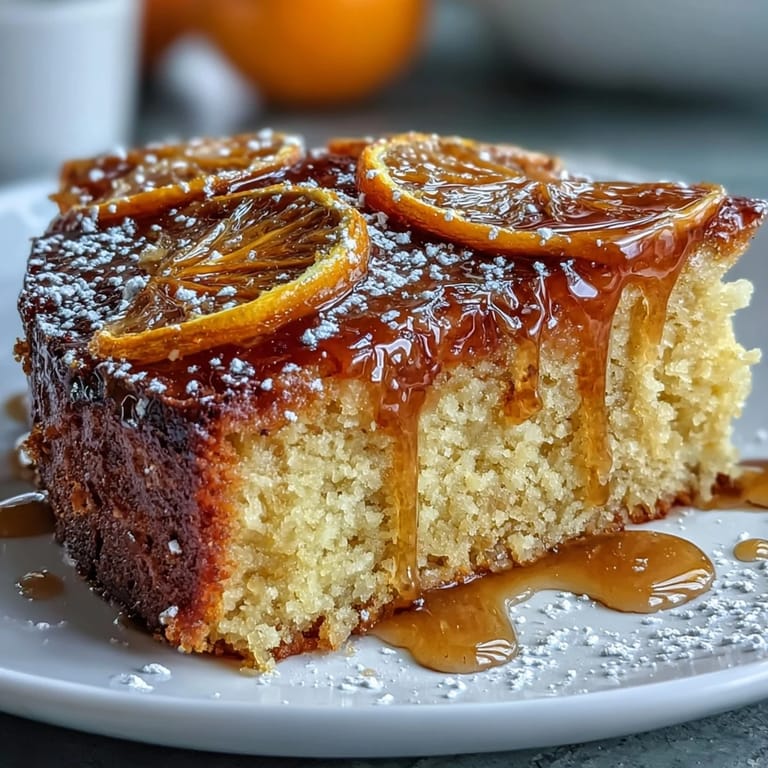
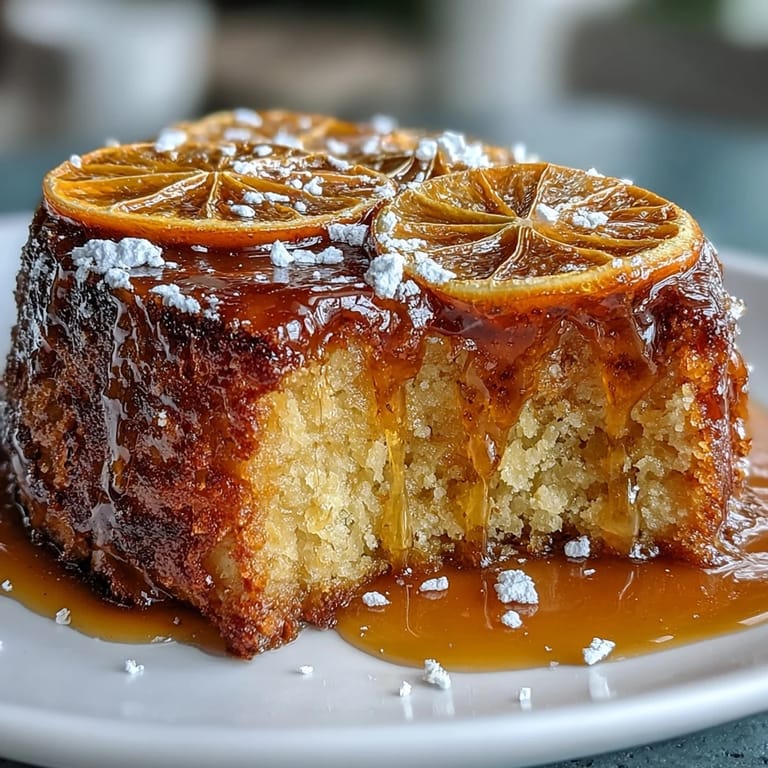
- Cool the cake in the pan for 10 minutes, then run a knife around the edges and invert it onto a serving plate. That moment when you peel away the parchment and see those perfect candied orange slices on top is worth the whole process.
 Save
Save My daughter took one bite and declared it tasted like a fancy bakery, then asked if I could make it for her school potluck. Watching people light up when they bit into a slice was the real reward—that moment when texture and flavor and the jewel-like appearance all came together at once.
Why Candied Oranges Deserve Your Attention
Most of us buy candied citrus from specialty shops for a small fortune, but honestly, making it at home is meditative and forgiving. You're essentially poaching thin orange slices in simple syrup until they become translucent—there's no precision needed, just patience. The syrup itself is liquid gold; strain it and use it to sweeten tea or drizzle over vanilla ice cream. You'll start making extra jars just to have them on hand.
Flour Matters More Than You Think
The combination of almond flour and a small amount of regular or gluten-free flour creates a texture that's both delicate and stable. If you use only almond flour, the cake spreads too much and tastes almost oily; the added flour acts like a gentle structure-maker. I learned this the hard way, so trust me on the ratios.
Serving and Storing Your Cake
This cake is best at room temperature when the flavors feel bright and the crumb is tender without being fragile. It actually improves slightly the next day as the flavors meld, and it keeps covered at room temperature for up to two days, making it perfect for baking ahead. A light dusting of powdered sugar and a few fresh mint leaves transform it from everyday to company-ready in about 30 seconds.
- Pair it with strong tea, Greek coffee, or even a glass of dessert wine for something memorable.
- A dollop of whipped cream or Greek yogurt on the side adds richness without overwhelming the delicate citrus flavor.
- This cake freezes beautifully for up to a month if wrapped well, though I rarely have leftovers long enough to test that.
 Save
Save This cake has become my go-to when I need to bring something that feels thoughtful but isn't fussy. It's the kind of dessert that reminds people why homemade matters.
Recipe FAQs
- → How do candied oranges affect the cake?
Candied oranges add a sweet, tangy flavor and soft texture that contrasts with the moist crumb, enhancing the overall taste and visual appeal.
- → Why use olive oil in the batter?
Olive oil imparts a fruity richness and moistness to the cake, improving texture and adding Mediterranean notes.
- → Can almond flour be substituted?
Almond flour provides nuttiness and moisture; substituting it changes texture and flavor—use gluten-free blends carefully for best results.
- → What's the role of Greek yogurt in this dish?
Greek yogurt adds moisture, slight tanginess, and tenderizes the crumb for a soft, balanced finish.
- → How to ensure the cake is baked correctly?
Bake until a toothpick inserted in the center comes out clean, usually after 40-45 minutes at 350°F (175°C), to achieve a moist but fully cooked texture.