 Save
Save I discovered these flatbreads by accident when a friend brought leftover cottage cheese to a casual dinner and we were out of regular bread. I had Greek yogurt in the fridge, flour on hand, and suddenly we were mixing something together just to see what would happen. The first batch came off the pan golden and impossibly tender, and nobody could believe how simple the ingredient list was. That night taught me that the best recipes often come from working with what you have rather than following a rigid plan.
I made these the morning of a small gathering and watched my partner tear into the first one straight off the skillet while they were still steaming. There's something satisfying about serving food that's so obviously homemade and warm, especially when people taste how different they are from store-bought versions. Those few minutes of pan-frying create something that feels like a small act of care.
Ingredients
- Plain flour: Use all-purpose flour or a light bread flour if you want slightly chewier results; measure by weight if you can, as it's more forgiving than cups.
- Greek yogurt: The acidity and fat from yogurt do the work that yeast normally does, creating lift and tenderness with no fermentation needed.
- Cottage cheese: This is the secret ingredient that keeps the flatbreads soft and gives them a subtle tang; don't skip it or substitute ricotta without adjusting texture.
- Baking powder: A half teaspoon is enough to help the dough puff slightly in the pan without making it taste chemical.
- Fine sea salt: Use fine rather than coarse so it distributes evenly throughout the dough.
- Olive oil or melted butter: Either works for cooking; olive oil gives a savory flavor while butter makes them richer.
Tired of Takeout? 🥡
Get 10 meals you can make faster than delivery arrives. Seriously.
One email. No spam. Unsubscribe anytime.
Instructions
- Mix the dry base:
- Combine your flour, baking powder, and salt in a bowl and give them a quick whisk or stir so the leavening is evenly distributed. This takes less than a minute but makes a real difference in how the flatbreads rise.
- Bring in the dairy:
- Add the Greek yogurt and cottage cheese and start mixing with a wooden spoon or your hands until you see shaggy clumps forming. The dough will look rough and slightly loose at first, which is exactly what you want.
- Knead gently:
- Transfer to a lightly floured surface and knead for just 2 to 3 minutes until the dough becomes smooth and holds together without being sticky. If it feels wet, sprinkle a little more flour gradually; if it's dry, wet your fingers slightly and knead again.
- Portion the dough:
- Divide into 6 equal pieces and roll each one into a smooth ball. This step helps distribute the ingredients evenly so every flatbread cooks the same way.
- Roll out thin:
- Working with one ball at a time, use a rolling pin to flatten it into a round about a quarter inch thick, dusting with flour so it doesn't stick. The thickness matters because too thin and it gets crispy, too thick and it stays doughy in the center.
- Heat your pan:
- Use a nonstick skillet or cast iron pan over medium heat and let it warm for a minute or two so the surface is hot enough to create golden spots. The right temperature is crucial—too high and the outside burns before the inside cooks; too low and you get pale, chewy bread.
- Brush and cook:
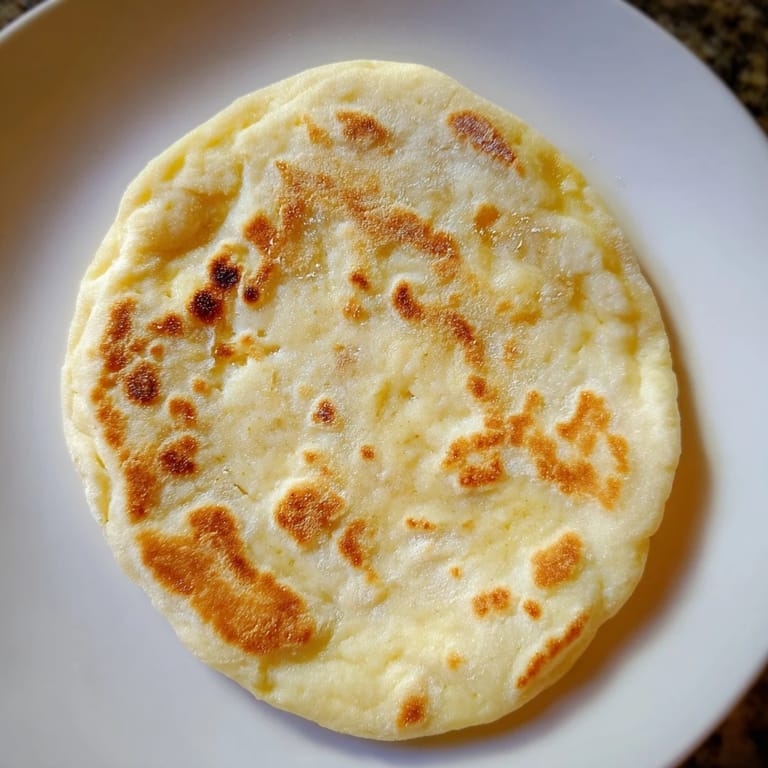
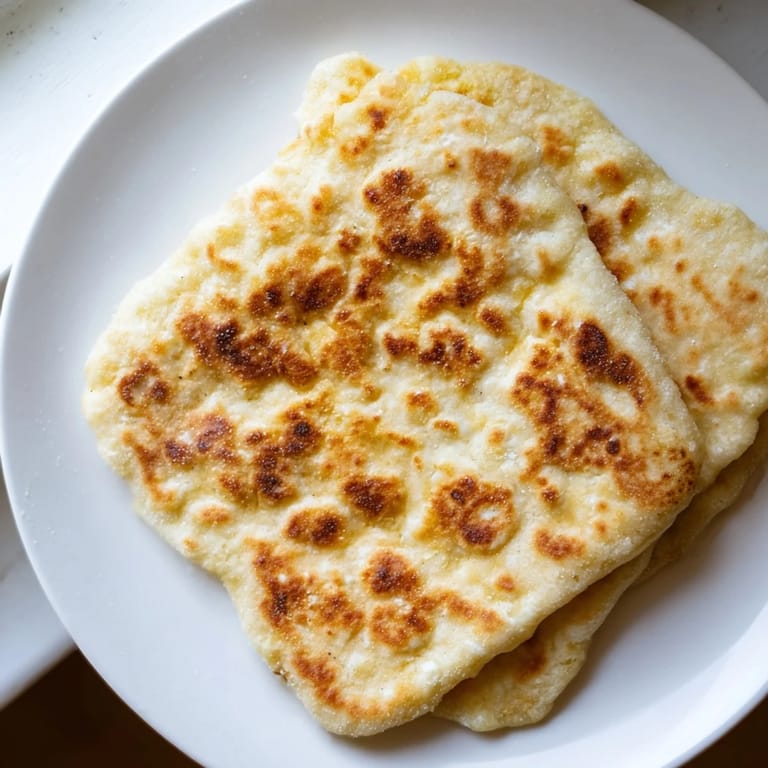
- Lightly brush the hot pan with oil or butter, then place one or two flatbreads on it and let them sit undisturbed for 2 to 3 minutes. You're looking for golden speckles and a slight char pattern, which means the surface has caramelized just enough.
- Flip and finish:
- Turn them over and cook the second side for another 2 to 3 minutes until it matches the first side. The flatbread should sound slightly hollow when you tap it, a sign that it's cooked through.
- Stack and keep warm:
- Transfer finished flatbreads to a plate and cover loosely with a clean kitchen towel so they stay warm and soft while you finish the remaining dough. This traps just enough steam to keep them tender without making them soggy.
 Save
Save The moment these became a regular part of my cooking was when my daughter asked for them specifically instead of asking for bread at dinner. Food that people actually want to eat, again and again, is the real marker of a recipe worth keeping.
Flavor Variations That Work
The base dough is neutral enough to adapt to almost any meal. I've mixed fresh dill and minced garlic into the dough and served them alongside fish, stirred in chopped parsley and chives for herb bread that pairs with roasted vegetables, and even added a pinch of nigella seeds for something more aromatic. The cottage cheese takes flavors well without overpowering them, so you can lean into whatever you're cooking alongside these flatbreads.
Storage and Reheating
Leftover flatbreads keep in an airtight container for up to three days and taste almost as good reheated as they do fresh. The cottage cheese keeps them from drying out, so a quick warm-up in a dry skillet brings them back to life without any oil needed. I've also wrapped cooled flatbreads individually in foil and frozen them for up to a month, which is perfect for when you want just one or two without having to make a whole batch.
Why This Works as a Side Dish
These flatbreads are forgiving enough for weeknight dinners but impressive enough to serve at a small gathering, which is why they've become a staple in my kitchen. They complement soups, stews, roasted vegetables, and curries, and they work equally well as a vehicle for spreads and dips. The yogurt and cottage cheese create a naturally tender bread that doesn't need hours of planning or special equipment to pull off.
- Make the dough up to 4 hours ahead and keep it covered in the fridge, then roll and cook just before serving for maximum warmth.
- If you don't have cottage cheese, Greek yogurt mixed with a little ricotta works as a substitute in a pinch.
- These freeze beautifully after cooking, so it's worth making a double batch when you have the time.
 Save
Save There's something grounding about making bread, even when it's just a quick flatbread in a skillet. These ones give you that satisfaction in half an hour.
Recipe FAQs
- → What makes these flatbreads tender and chewy?
The addition of cottage cheese and Greek yogurt enriches the dough, providing moisture and a subtle tang that results in a tender, chewy texture after cooking.
- → Can I add herbs or spices to the dough?
Yes, mixing in chopped parsley, chives, dill, or minced garlic into the dough enhances the flavor without altering its texture.
- → How are these flatbreads cooked?
They are pan-fried in a lightly oiled nonstick skillet or cast iron pan over medium heat for 2–3 minutes per side until golden spots form.
- → What is the best way to store leftovers?
Store flatbreads in an airtight container and reheat in a dry pan to restore their softness and warmth.
- → Can I use a substitute for plain flour?
While plain flour gives the best texture, experimenting with whole wheat or gluten-free blends may alter the softness and chewiness.