 Save
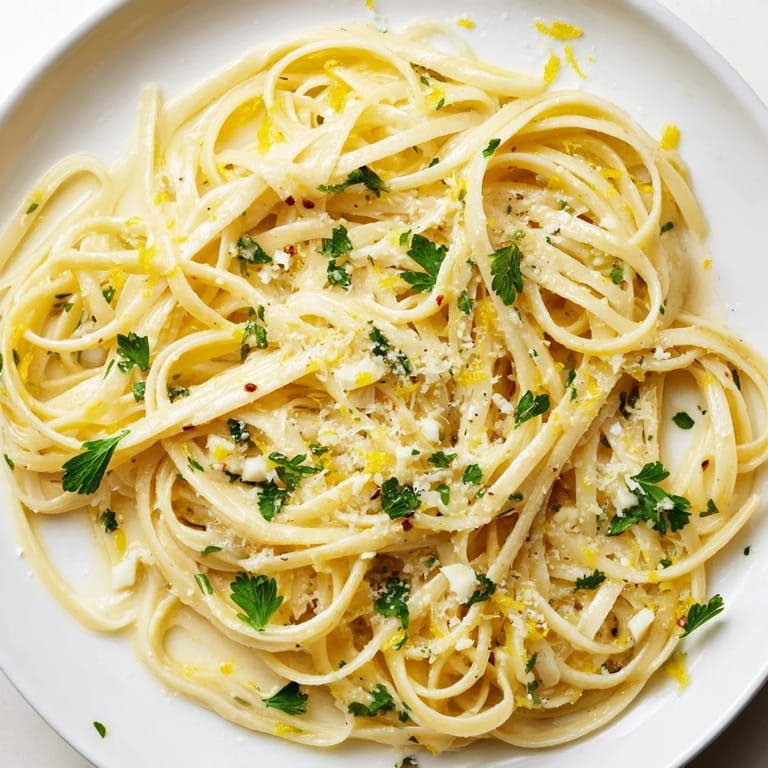
Save There's something almost meditative about watching butter melt into golden pools, garlic turning translucent under the gentle heat of a skillet. I discovered this linguine one ordinary Tuesday when I had nothing but pantry staples and twenty minutes before guests arrived—no plan, no stress, just the quiet confidence that garlic and butter have never let anyone down. That night, the pasta disappeared faster than I could plate it, and someone asked for the recipe before dessert even arrived. It became the dish I make when I want to prove that simplicity, done thoughtfully, is its own kind of magic.
My roommate in college lived on instant ramen until I made her this pasta one snow-heavy evening. She sat at the kitchen counter with a glass of wine, just watching the garlic hit the butter, and said something like "Oh, so this is what food can do." She never looked at a ramen packet the same way again, and I never forgot how a simple plate of pasta somehow made an ordinary Monday feel a little more intentional.
Ingredients
- Linguine, 400g: The flat ribbons hold onto sauce better than thin spaghetti, so every bite actually tastes like something instead of just being a vehicle for salt water.
- Unsalted butter, 80g: Unsalted is essential here because you're controlling the seasoning yourself, not letting the butter decide for you.
- Garlic cloves, 6 large, finely minced: Mince them yourself right before cooking—pre-minced garlic tastes like a forgotten jar, and fresh-minced releases those peppery, bright notes that make this dish sing.
- Crushed red pepper flakes, 1/4 tsp: Optional, but they add a whisper of heat that keeps your palate awake instead of lulled into butter-coma.
- Lemon zest, from 1 lemon: This is the secret handshake—a tiny amount of brightness that makes people taste every other ingredient more vividly.
- Sea salt, 1/2 tsp and freshly ground black pepper, 1/4 tsp: Fresh pepper matters more than you think; ground-the-week-before tastes like dust, ground-right-now tastes like a hug.
- Fresh flat-leaf parsley, 30g, finely chopped: The green at the end isn't just for show—it adds a clean, almost grassy note that cuts through all that richness.
- Parmesan cheese, 40g, freshly grated: Again, fresh grated, not the green can—the difference is the difference between a good pasta and one you'll crave for weeks.
- Lemon wedges, to serve: Let people squeeze these at the table; it's their chance to make the dish exactly the way their mouth wants it.
Tired of Takeout? 🥡
Get 10 meals you can make faster than delivery arrives. Seriously.
One email. No spam. Unsubscribe anytime.
Instructions
- Salt the water like you mean it:
- Fill a large pot most of the way and bring it to a rolling boil—the kind where steam rises aggressively and you can hear it from the next room. When it's there, add enough salt that the water tastes like a pleasant sea, then add your linguine. You want the pasta itself seasoned, not saved by sauce at the end.
- Watch the garlic like a hawk:
- While pasta cooks, melt butter in a large skillet over medium heat, then add your minced garlic. Listen for a gentle sizzle and watch for that moment when it goes from raw-white to pale-gold and smells like someone's cooking somewhere lovely—usually one to two minutes. If it starts browning, you've gone too far and the flavor turns bitter and mean.
- Build the sauce in layers:
- Once garlic is perfect, stir in red pepper flakes and lemon zest if using, letting them warm through for maybe thirty seconds. This wakes them up and releases their essential oils into the butter so they're not just floating on top but actually part of something.
- Toss the pasta like you're dancing:
- Reserve about half a cup of pasta water before draining, then add the hot linguine to your skillet. Toss it constantly—and I mean really toss it, with confidence—adding pasta water a little at a time until the sauce coats every strand with a silky, glossy finish instead of looking dry or swimming in liquid.
- Season, taste, adjust:
- Add salt and black pepper, then taste it. Really taste it, not just sampling—get a full bite and think about what you're experiencing. If it needs more salt, add it now. If it needs more lemon brightness, squeeze a wedge right into the pan.
- Finish with green and cheese:
- Stir in your chopped parsley and half the Parmesan if using, toss everything together one more time, and serve immediately onto warm plates before the pasta cools down and loses that silky, just-cooked quality.
 Save
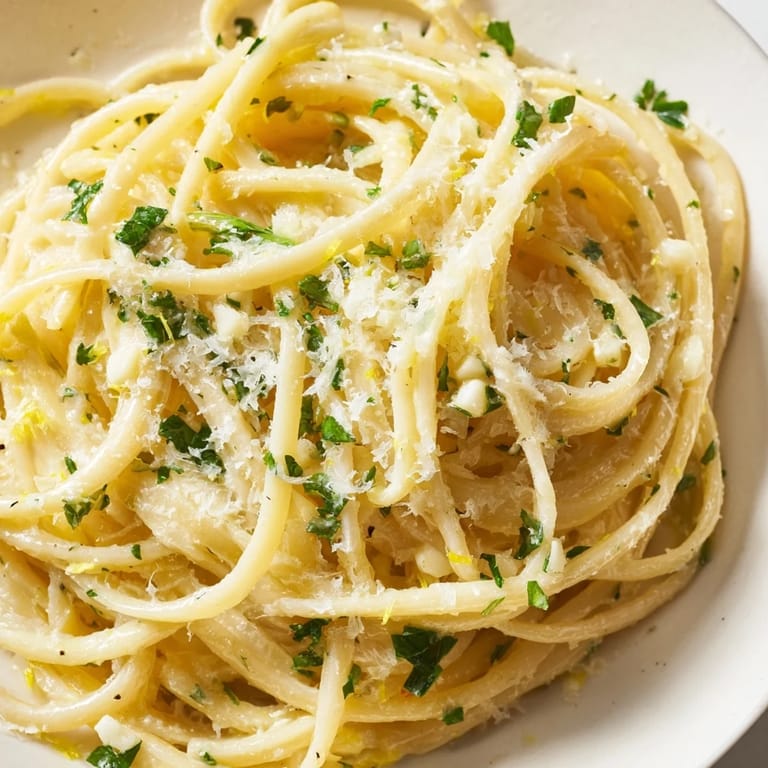
Save Years later, at a dinner party where everything else felt slightly formal, someone asked for seconds of this pasta and suddenly everyone relaxed. The conversation got louder, someone told a terrible joke, someone else reached over to steal a bite off another person's plate—it stopped being a meal and became a moment. That's what I remember about this dish: it has a way of making people feel taken care of without any fuss.
The Science of Simplicity
This dish works because butter is an emulsion and pasta water is starch, and when you combine them properly, you get something smooth and silky that feels luxurious on your tongue without any cream whatsoever. The garlic infuses that butter with flavor compounds that are fat-soluble, meaning they spread evenly across every strand, so you get garlic in every bite without overwhelming anything. It's simple cooking that respects the ingredients instead of hiding them behind technique.
Why This Works as a Last-Minute Dinner
Twenty minutes from start to finish means you're not tired before guests arrive, which changes everything about how you feel when you're cooking and plating. The ingredient list is short enough to keep mental notes without written instructions—once you've made it a few times, it becomes muscle memory, the kind of thing you can make while talking or thinking about something else. That's the real luxury here: a dish that tastes intentional but never feels demanding.
Make It Your Own
This pasta is a canvas, not a rule book. I've added sautéed mushrooms on mornings when I found a few lingering in the crisper drawer, thrown in fresh spinach that wilts in about thirty seconds, stirred in cooked shrimp for nights when the dish needed more substance. A mix of butter and olive oil gives it a lighter feel and a different flavor profile altogether, less rich but somehow more interesting.
- Fresh herbs like basil or dill can replace or join the parsley depending on what you have and what mood you're in.
- Red pepper flakes and lemon zest are optional but honestly they're the parts that make it memorable instead of just filling.
- Pair it with a crisp white wine like Pinot Grigio, or honestly just drink whatever you're enjoying because pasta this simple pairs with almost anything.
 Save
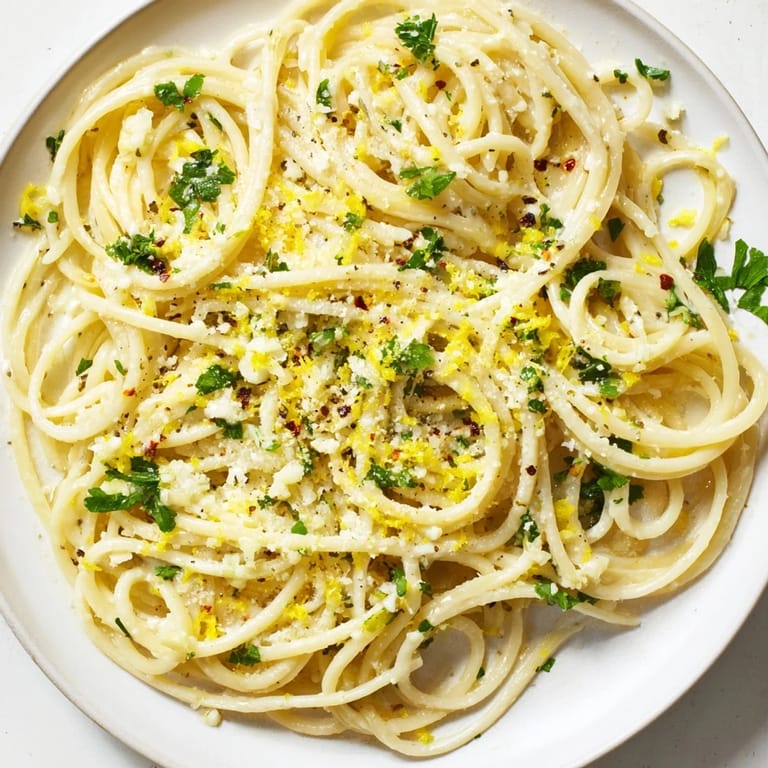
Save This is the recipe I come back to when everything feels complicated. It reminds me that the best meals don't need many ingredients or hours in the kitchen—they just need attention and care, even if that care only lasts twenty minutes.
Recipe FAQs
- → How do I prevent garlic from burning?
Sauté minced garlic over medium heat and watch closely, stirring frequently. Remove from heat as soon as it becomes fragrant and light golden to avoid bitterness.
- → Can I substitute butter with olive oil?
Yes, using olive oil or a mix of butter and olive oil can add richness and a slightly different flavor profile while maintaining the sauce’s smooth texture.
- → How do I keep the sauce smooth and creamy?
Adding reserved pasta water a little at a time while tossing the pasta helps emulsify the sauce, coating the linguine evenly and creating a silky consistency.
- → What makes red pepper flakes optional?
Red pepper flakes add subtle heat, but can be omitted if a milder, more delicate flavor is preferred in the dish.
- → Can I add other ingredients for variety?
Yes, sautéed mushrooms, spinach, or cooked shrimp are great options to enhance flavor and texture while complementing the garlic butter base.
- → How to adjust for gluten-free or dairy-free needs?
Swap linguine with gluten-free pasta varieties and use vegan butter while omitting Parmesan to suit gluten-free or dairy-free diets.