 Save
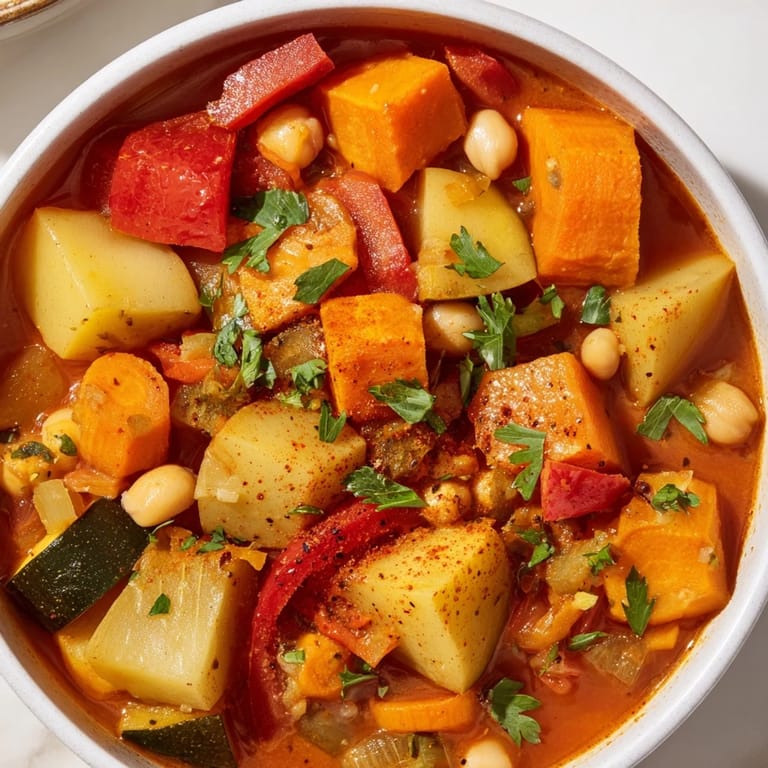
Save There's something about the smell of sweet potatoes caramelizing in olive oil that makes a kitchen feel like home, even if you've only just moved in. I discovered this stew on a grey October afternoon when my farmers market haul seemed to mock my lack of inspiration—a pile of root vegetables, some cans I'd grabbed on autopilot, and a sudden craving for something warm that didn't feel heavy. What emerged was this gloriously humble pot of comfort, the kind of dish that somehow tastes better the next day and somehow always stretches further than you planned.
I made this for a friend who'd just moved to the city, and she ate two bowls straight from the pot while we unpacked her kitchen boxes. She kept saying things like "Wait, this is vegan?" in that tone of pleasant surprise, and honestly, that's when I knew the recipe was working. There's something generous about feeding people food that nourishes them without fanfare—no explanations needed, just bowls getting refilled.
Ingredients
- Sweet potatoes: These are the soul of the stew—they dissolve slightly at the edges and release their natural sweetness into the broth, creating a velvety texture without any cream.
- Yukon Gold or russet potatoes: The supporting act that adds earthiness and helps thicken the stew as they break down; russets will give you a heartier mouthfeel.
- Carrots: They stay pleasantly toothy and add a subtle sweetness that balances the tomato's acidity.
- Onion: The foundation—let it soften fully or you'll taste sharp sulfur notes instead of caramelized sweetness.
- Celery: Often overlooked, but it brings an aromatic backbone that makes people ask what the secret ingredient is.
- Garlic: Three cloves minced is the right amount; too much overpowers the delicate vegetables, too little and you lose the depth.
- Red bell pepper: Added partway through so it keeps its brightness and color.
- Zucchini: Mild and forgiving, it melts into the background while adding volume and nutrients.
- Baby spinach: Optional but worth it for a final nutrient boost and a whisper of green earthiness.
- Cannellini or kidney beans: Cannellini are creamier and more delicate; kidney beans are firmer and hold their shape better—choose based on whether you want the stew smooth or chunky.
- Chickpeas: They add protein and a slightly nutty flavor that rounds out the beans.
- Diced tomatoes: Canned is actually better here than fresh; the acidity cuts through the sweetness and brightens the entire pot.
- Vegetable broth: Use a good one—the kind you'd drink straight—because this stew is only as flavorful as your broth.
- Tomato paste: Two tablespoons deepens the color and concentrates the umami without making it taste aggressively tomatoey.
- Smoked paprika: A tablespoon of different spice can transform a dish; this brings warmth and a whisper of smoke that suggests depth.
- Dried thyme: A classic pairing with root vegetables; it's subtle but essential.
- Ground cumin: Just enough to add earthiness without turning this into a curry.
- Olive oil: Use what you like cooking with; this isn't the place to splurge on premium extra virgin.
Tired of Takeout? 🥡
Get 10 meals you can make faster than delivery arrives. Seriously.
One email. No spam. Unsubscribe anytime.
Instructions
- Build your foundation:
- Heat the olive oil in a large pot over medium heat and add your onion, celery, and carrot. Let them soften together for about 5 minutes, stirring occasionally—you want them to release their sweetness and soften slightly, not brown. The kitchen will start to smell welcoming.
- Layer in the aromatics:
- Stir in the minced garlic, red bell pepper, and zucchini, then let them cook for another 3 minutes. The garlic should become fragrant but not brown; if it starts to color, lower the heat slightly.
- Toast the spices:
- Add the sweet potatoes, regular potatoes, smoked paprika, thyme, cumin, pepper, and salt, stirring to coat everything with oil. Cook for 2 minutes—this brief toasting brings the spices to life and prevents them from tasting like an afterthought.
- Build the broth:
- Stir in the tomato paste first, letting it caramelize slightly against the hot pot for about 30 seconds, then add the diced tomatoes, vegetable broth, and bay leaf. Bring everything to a boil, then reduce the heat to low.
- First simmer:
- Cover the pot and let it simmer gently for 20 minutes, or until the potatoes are just tender when pierced with a fork. The vegetables should be soft but not falling apart.
- Bring in the beans:
- Add the drained cannellini beans and chickpeas, then simmer uncovered for 10 to 15 minutes more. This is when the flavors really start to meld and the stew thickens as the vegetables begin to break down slightly.
- Final touches:
- If you're using spinach, stir it in and cook for 2 minutes until it's wilted and deep green. Taste, adjust the salt and pepper, then remove the bay leaf.
- Serve:
- Ladle the stew into bowls and garnish with fresh parsley if you have it; a squeeze of lemon wedge over the top adds brightness that makes people close their eyes for a second and say that's better.
 Save
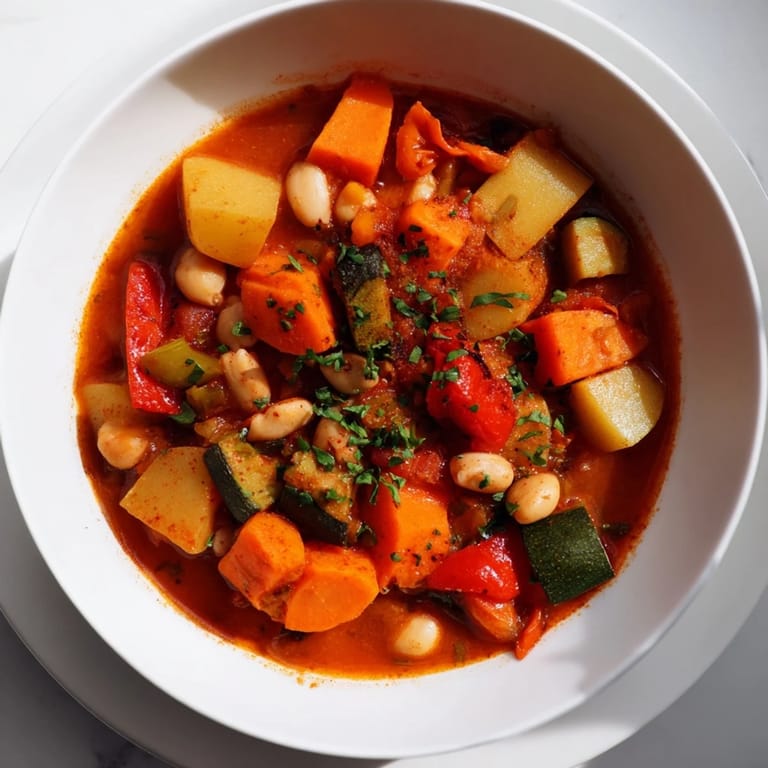
Save This stew became my emergency dinner when life got overwhelming, the kind of meal where every component was already in the pantry and the only thing I needed to do was show up and chop vegetables. There's something deeply reassuring about that—knowing that comfort is only an onion and some patience away.
Why This Stew Feels Like More Than Just Dinner
Sweet potato stews have appeared in kitchens across cultures for centuries because they're inherently nourishing and naturally generous. This version respects that tradition while staying grounded in simple technique—no fancy shortcuts, no impossible ingredients, just honest vegetables and humble beans doing what they do best. When you eat a bowl of this, you're eating something that could feed you again tomorrow from the same pot, and that kind of abundance matters.
Scaling and Storage
This recipe doubles easily if you're feeding more people or planning ahead for the week. The stew actually improves after a day in the refrigerator as the flavors deepen and the components soften further into each other. Store it in an airtight container for up to 5 days, or freeze it in portions for up to 3 months—it reheats beautifully on the stovetop over low heat with a splash of broth.
The Best Vessel and Serving Strategy
A Dutch oven or heavy-bottomed pot is ideal because it distributes heat evenly and prevents sticking, but any large pot will work if you stir occasionally. Serve this stew in wide, shallow bowls so the vegetables stay warm and the broth catches the light—there's something about the presentation that makes people slow down and actually taste what they're eating. A slice of crusty bread is all the accompaniment this needs, though some people like it over rice or with a simple green salad alongside.
- Pour the broth generously—it's the best part and worth savoring.
- A wedge of fresh lemon on the side lets people brighten their bowl to their own taste.
- Leftovers taste even better the second day, so don't hesitate to make extra.
 Save
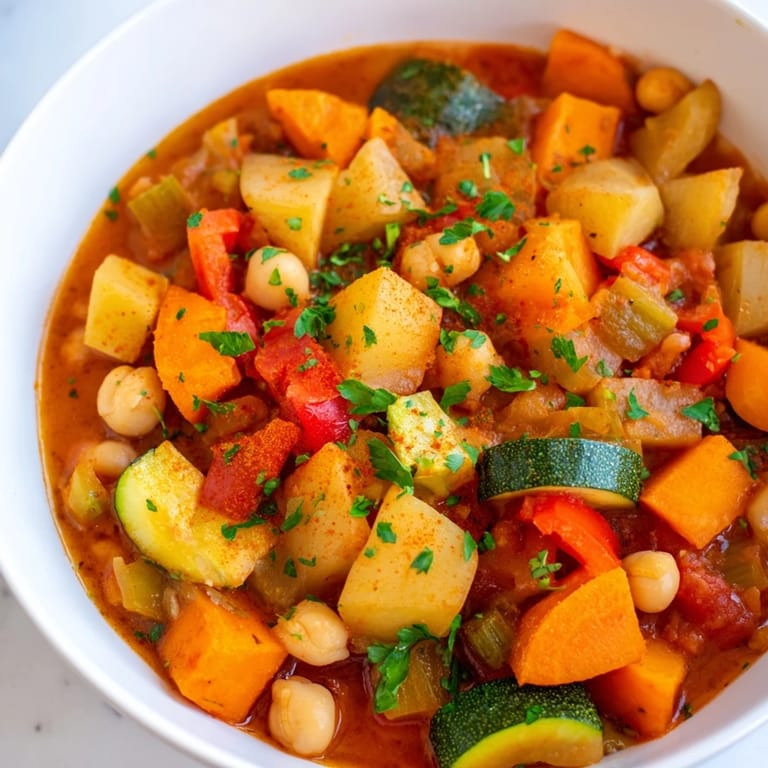
Save This stew reminds me that the best meals are the ones that show up without pretense and make everyone at the table feel quietly taken care of. Make it when you need comfort, make it when you need to feed people, make it because you can.
Recipe FAQs
- → How can I adjust the stew’s spiciness?
To increase the heat, stir in ½ teaspoon of chili flakes while adding the spices. For a milder taste, omit the chili flakes altogether.
- → Can I substitute other legumes in this dish?
Yes, lentils or black beans work well and gently alter the texture while maintaining protein content.
- → What vegetables can I add or swap?
Feel free to add seasonal vegetables like squash or green beans, or replace zucchini and bell pepper depending on availability.
- → How do I store leftovers properly?
Cool the stew completely before refrigerating in an airtight container. It keeps well for up to 4 days and flavors deepen overnight.
- → Is this stew suitable for meal prepping?
Absolutely, this stew reheats beautifully and can be frozen in portions for convenient future meals.