 Save
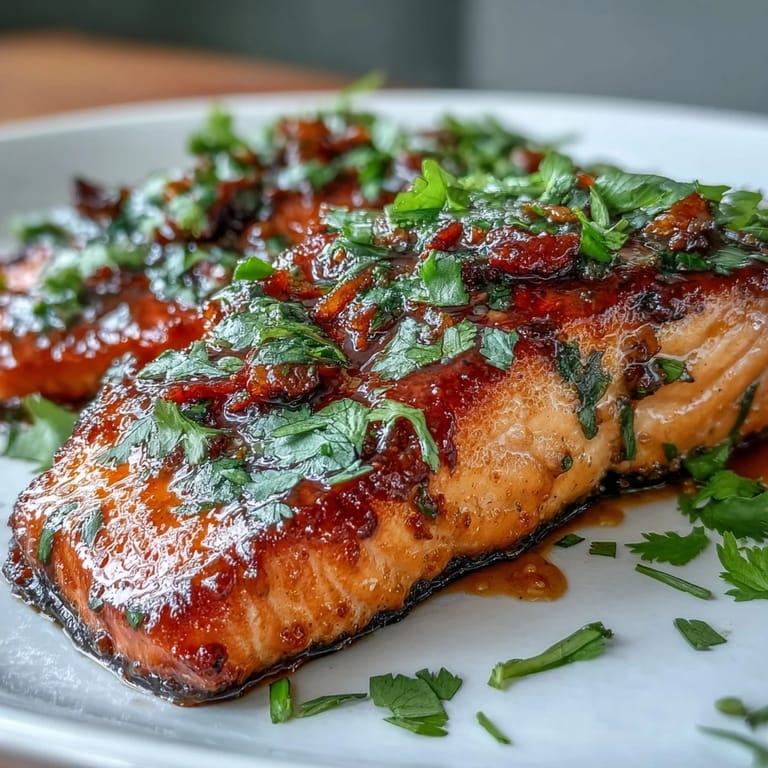
Save My neighbor knocked on the door one Tuesday evening with a bottle of wine and an apology—she'd overbought salmon at the market and asked if I could help her use it. Twenty minutes later, we were standing in my kitchen with melted butter pooling over pink fillets, the smell of garlic and lime filling the air so completely that my kitchen felt like a restaurant. She watched the oven like it held secrets, and when we pulled that pan out, the glaze had caramelized into something almost amber. That dinner taught me that the best meals often arrive unplanned, and this honey-lime garlic salmon became the dish I return to whenever I want to feel like I've done something impressive without breaking a sweat.
I made this for my sister's partner on his first visit to our house, and I remember the moment he took that first bite—his whole face softened. He set down his fork and said something like, "Wait, you made this?" and I felt that small thrill that comes from nailing a dish when it actually matters. There's something about honey-lime garlic salmon that elevates a regular Tuesday into an occasion, and it turned out to be exactly what I needed that evening.
Ingredients
- Salmon fillets (4, about 6 oz each): Look for fillets that are firm and smell like the ocean, not fishy—that's your sign they're fresh and ready to shine.
- Unsalted butter (4 tablespoons, melted): Using unsalted lets you control the salt level, and melting it first means it mixes beautifully with the honey and lime.
- Honey (1/3 cup): This is your sweetness anchor, caramelizing slightly as it bakes and creating a glossy, almost lacquered finish on the fish.
- Lime juice (3 tablespoons, freshly squeezed): Fresh juice makes a real difference here—bottled can taste thin and a bit dusty, so take the two minutes to squeeze actual limes.
- Garlic (4 cloves, minced): Mince it fine so it distributes evenly through the glaze rather than settling in chunks; raw garlic mellows beautifully as the salmon bakes.
- Salt (1/2 teaspoon) and black pepper (1/4 teaspoon): These seem small, but they're what keeps the glaze from becoming one-note, so don't skip the seasoning step.
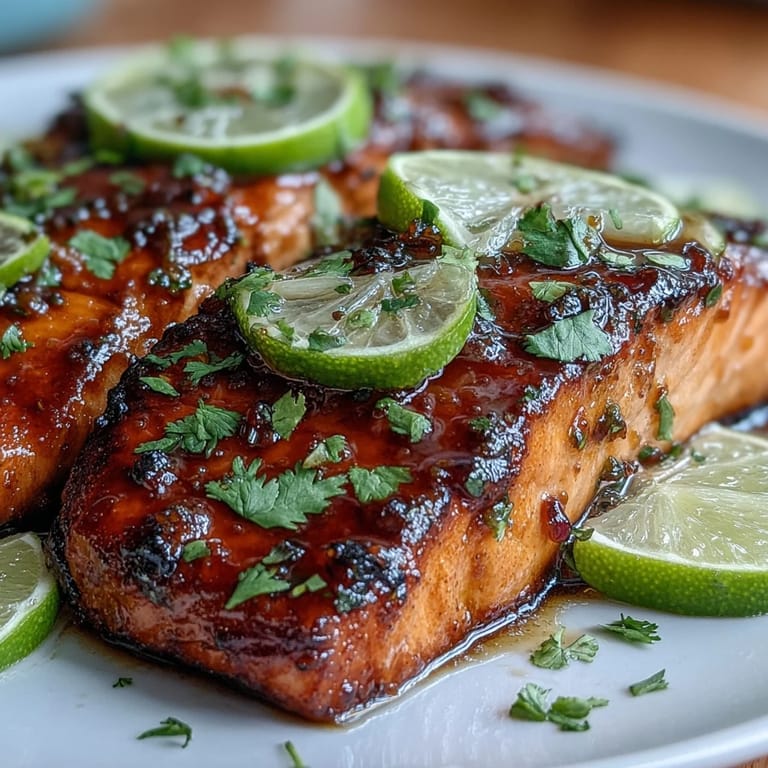
- Lime slices (for topping): These aren't just pretty—they infuse the fish with extra lime flavor and keep the top from drying out while it bakes.
- Fresh cilantro or parsley (2 tablespoons, chopped): The herb is your finishing flourish, adding a bright note right at the end that makes people think you fussed more than you actually did.
Tired of Takeout? 🥡
Get 10 meals you can make faster than delivery arrives. Seriously.
One email. No spam. Unsubscribe anytime.
Instructions
- Set the stage:
- Heat your oven to 400°F and line your baking dish with foil—this part is less about cooking and more about protecting your sanity from cleanup later.
- Dry your salmon:
- Pat each fillet thoroughly with paper towels; dry fish absorbs the glaze instead of repelling it, which is the difference between glossy and slick.
- Whisk the magic:
- Combine melted butter, honey, lime juice, minced garlic, salt, and pepper in a small bowl, stirring until the honey dissolves and everything is uniform in color.
- Coat and arrange:
- Spoon or brush the glaze generously over each fillet—don't be shy here, this is what creates the caramelized exterior and keeps everything moist inside.
- Top with lime:
- Lay a couple of lime slices on each fillet; they'll soften as they bake and add subtle flavor to every bite.
- Bake until opaque:
- Place the pan in the oven for 15 to 20 minutes, watching for the moment when the flesh turns opaque at the thickest part and flakes easily when prodded with a fork. An internal temperature of 145°F is your target if you're using a thermometer.
- Finish and serve:
- Pull the pan from the oven, sprinkle with fresh cilantro or parsley, and serve while the glaze is still glossy and warm.
 Save
Save There was an afternoon when my daughter came home from school and asked what that smell was, and when I told her salmon, she made that face kids make when they're suspicious of anything involving fish. She sat at the counter and watched me glaze it, asking questions the whole time—why honey, why lime, what the garlic does—and by the time we sat down to eat, she was invested. She took a bite and looked genuinely surprised, then asked for seconds, and I realized that this dish had done something I hadn't set out to do: it made her less afraid of trying new things.
The Glaze Is Everything
The real magic of this salmon lives in that glaze, and once you understand how it works, you can play with it endlessly. The honey provides sweetness and helps the glaze caramelize, the lime juice cuts through that sweetness and keeps things bright, the garlic adds savory depth, and the butter is what makes it all coat the fish instead of running off. I've learned that the ratio matters—too much honey and it's cloying, too much lime and it becomes sharp and thin. The balance is what makes people ask for the recipe.
Timing and Temperature
At 400°F, salmon cooks fast, which is exactly the point—you're looking for that sweet spot where the outside has started to caramelize and the inside is still tender and moist. I used to check the fish constantly, worried I'd miss the moment, until someone told me that the continuous opening and closing of the oven door actually extends the cooking time. Now I set a timer for 15 minutes and trust it, checking only when the timer beeps. If the fish flakes easily and looks opaque all the way through, you're done; if there's still a bit of translucence at the thickest part, give it another minute.
Variations and Serving Ideas
Once you've made this version a few times, you'll start seeing variations everywhere. I've swapped lime for lemon on nights when limes weren't in the house, and the result was subtle but noticeably different—warmer, less sharp. A pinch of cayenne adds gentle heat without overwhelming the glaze, and I've even tried a tiny bit of soy sauce for umami depth. Serve this with steamed vegetables, rice, quinoa, or a crisp green salad—the lighter you keep the sides, the more the salmon shines.
- For extra caramelization, run the salmon under the broiler for the last two minutes of baking, but watch closely to avoid burning.
- Leftovers keep for two days in the refrigerator and are delicious eaten cold the next day.
- If you're making this for a crowd, the recipe scales beautifully—just double the glaze and arrange fillets in a single layer.
 Save
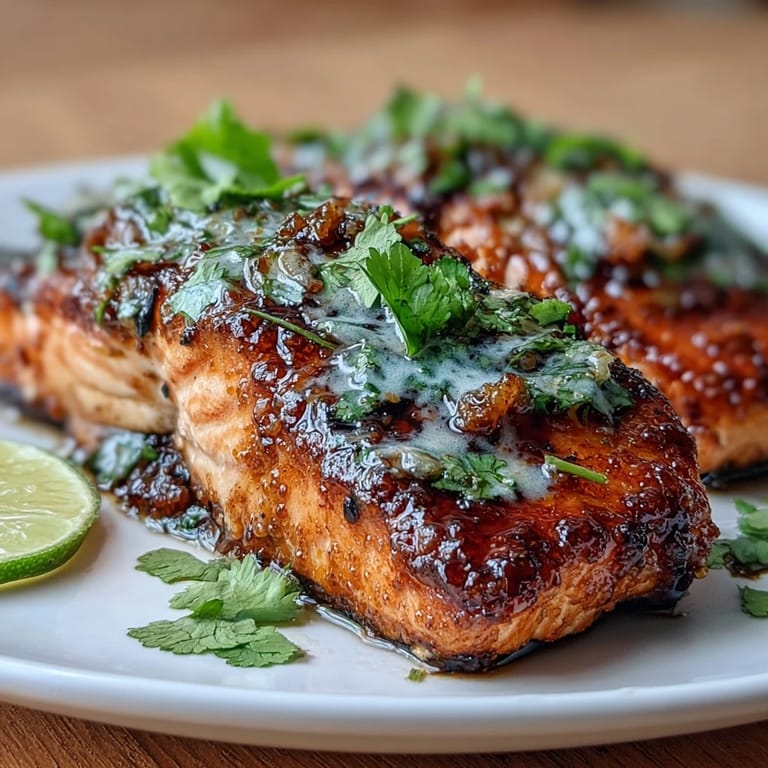
Save This salmon has become my answer to the question of what to make when someone important is coming to dinner or when I just need to feel capable in the kitchen. It's the kind of dish that tastes more complicated than it actually is, which might be the best compliment a recipe can receive.
Recipe FAQs
- → What type of salmon works best?
Both skinless and skin-on fillets can be used. Skin-on helps retain moisture during baking.
- → Can I substitute lime with another citrus?
Yes, lemon works well as an alternative, offering a similar bright acidity.
- → How do I achieve a caramelized finish?
Switch the oven to broil for the last 2 minutes of baking, watching closely to avoid burning.
- → Is it possible to make this dairy-free?
Use a plant-based butter substitute to keep the glaze dairy-free without compromising flavor.
- → What side dishes pair well with this salmon?
Steamed vegetables, rice, quinoa, or a crisp green salad complement the flavors nicely.