 Save
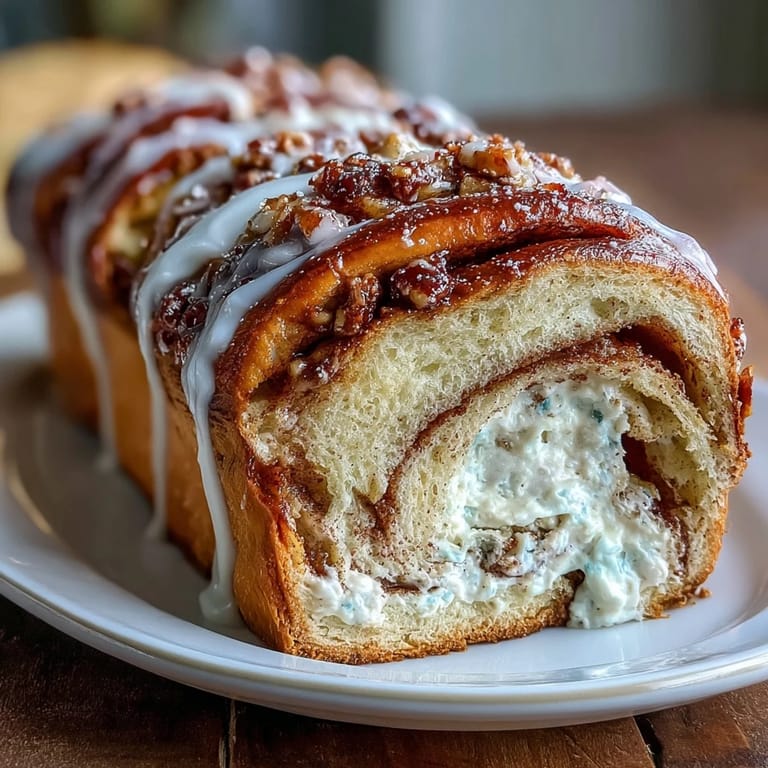
Save My kitchen smelled like a New Orleans bakery the first time I attempted this recipe, and honestly, I nearly gave up when my dough refused to cooperate during the twist. Something about the way the cinnamon and cream cheese layers promised to spiral together felt like edible magic, though, so I pushed through the sticky mess and discovered something special. This King Cake Cinnamon Babka Loaf became my unexpected obsession because it combines everything I love about festive baking without requiring a culinary degree. It's the kind of bread that makes people think you've been secretly training as a pastry chef.
There was this moment during a Mardi Gras gathering when I pulled this loaf from the oven and set it on the counter to cool, still steaming and practically glowing under the kitchen lights. Someone walked in, caught the aroma, and just stopped talking mid-sentence. By the time I'd glazed it and scattered those purple, green, and gold sugars across the top, three people were already hovering with forks in hand, and I realized I'd accidentally created something that goes beyond just dessert.
Ingredients
- All-purpose flour (3 1/4 cups): The foundation here is crucial—you want something reliable that'll hold those layers without being too dense or tough.
- Instant yeast (2 1/4 teaspoons): Don't skimp or substitute active dry without adjusting amounts; this stuff works fast and gets your dough doubling in reasonable time.
- Whole milk (2/3 cup, lukewarm): Temperature matters more than you'd think—too hot kills the yeast, too cold and nothing happens, so aim for around 110°F.
- Unsalted butter (total 1/2 cup for dough and fillings): Softened is non-negotiable here; cold butter won't incorporate smoothly and you'll end up frustrated.
- Brown sugar and cinnamon filling: This is where the babka soul lives, so don't be shy with the cinnamon—it's what makes people close their eyes when they taste it.
- Cream cheese (4 oz, softened): This adds richness and tang that balances the sweetness, but it must be truly softened or your layers won't spread evenly.
- Powdered sugar glaze: Adjust milk gradually until you hit that glossy but pourable consistency, because too thin and it runs everywhere, too thick and it sits there like concrete.
- Sanding sugars (purple, green, gold): This isn't just decoration—it's the final promise that something festive is happening on your plate.
Tired of Takeout? 🥡
Get 10 meals you can make faster than delivery arrives. Seriously.
One email. No spam. Unsubscribe anytime.
Instructions
- Mix the dough base:
- Combine flour, sugar, yeast, and salt in your bowl, then whisk milk, eggs, and vanilla separately before bringing them together. The dough should come together shaggy and rough at this point, not smooth yet.
- Build the strength:
- Beat in that softened butter gradually—this is where patience pays off, because you're essentially creating an emulsion that transforms the dough into something silky and elastic over 8–10 minutes. You'll feel the difference when it suddenly stops sticking to the sides and starts looking almost alive.
- First rise:
- Pop it in a greased bowl, cover with a damp towel, and find a warm spot (an oven with the light on works perfectly). Watch for when it's roughly doubled—don't obsess over exact timing since warm kitchens rise faster than cold ones.
- Prepare your fillings:
- Mix brown sugar with cinnamon and butter until it's spreadable, then beat cream cheese separately with sugar and vanilla until it's smooth and fluffy. These need to be ready before you touch that risen dough.
- Laminate the dough:
- Punch down your puffy dough and roll it into a 16x12-inch rectangle on a floured surface—aim for even thickness or some areas will bake faster than others. Spread cream cheese filling first, leaving that half-inch border, then top with cinnamon mixture.
- Create the signature twist:
- Roll tightly from the long side, then slice the log lengthwise down the middle—this is the part that feels dramatic but is honestly straightforward. Twist those two strands together keeping the cut sides visible, then coil them into your loaf pan shape.
- Second rise:
- Cover and let it get puffy again, about 45 minutes, though it might surprise you by rising faster than the first time since the dough is now sugar-fed from those fillings. You're looking for it to reach the top of the pan without overflowing.
- Bake to golden:
- At 350°F, this takes 35–40 minutes until the top is that burnished caramel color and a knife inserted in the center comes out clean. If it's browning too fast, tent with foil and keep watching—ovens vary wildly.
- Cool and finish:
- Let it sit 15 minutes in the pan so it sets slightly, then turn it out onto a rack to cool completely. Once cooled, drizzle that glaze and shower it with sanding sugars while the glaze is still tacky so they stick.
 Save
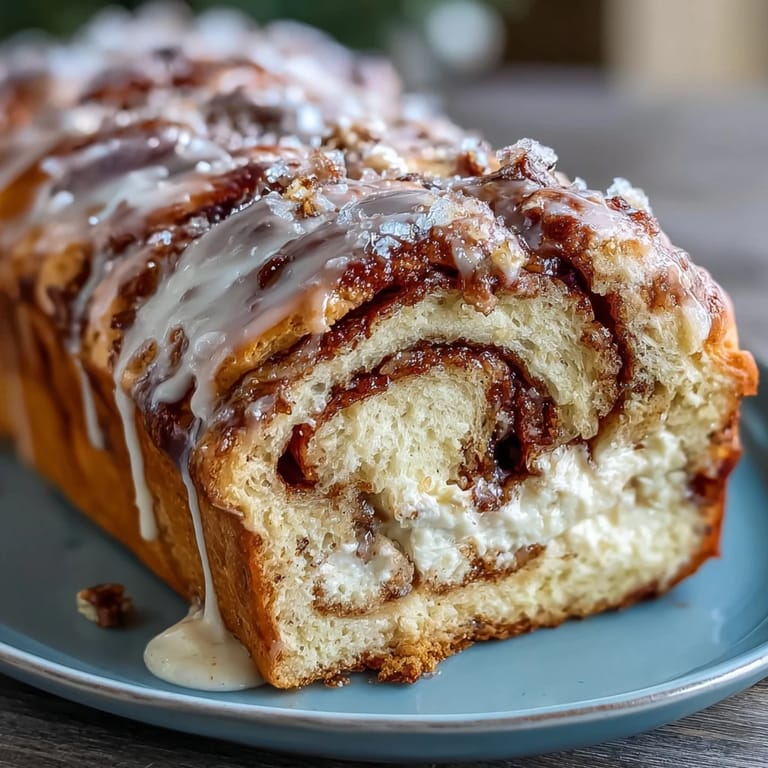
Save There's something about standing in your kitchen with purple, green, and gold sanding sugars catching the light on warm bread that makes you feel like you've done something genuinely worthwhile. That's when this recipe stopped being instructions on a page and became my go-to for when I want to turn an ordinary day into something worth celebrating.
The Magic of Laminated Dough
Laminating here just means creating those gorgeous visible swirls by spreading fillings on your rolled dough before rolling and twisting—it's theatrical without being technical. The cream cheese layer underneath acts as a barrier that keeps the cinnamon from making your bread dense, which is why the two-filling approach works so well together. I learned this the hard way after trying single-filling versions that either dried out or became cloyingly sweet.
Timing and Temperature Tricks
Room temperature ingredients really do matter here, especially eggs and cream cheese, because they incorporate smoothly and create a tender crumb. Milk should be just warm to the touch—if you can hold your finger in it for ten seconds comfortably, you're there. One winter my kitchen was unusually cold and everything took nearly twice as long to rise, which taught me that patience beats rushing when it comes to yeast breads.
Variations and Personal Touches
Orange zest stirred into the dough adds a brightness that plays beautifully against cinnamon, and I've had good results swapping mascarpone for the cream cheese when I'm feeling fancy. The beauty of this recipe is that it's flexible enough to welcome your preferences without losing its identity. Storage isn't usually an issue because it disappears, but wrapped in foil it keeps for three days and actually tastes even better on day two when everything melts together slightly.
- Try a touch of cardamom mixed with the cinnamon if you want to channel Scandinavian pastry traditions.
- Make it ahead up to the second rise, then bake the next morning for fresh-baked bread without the early wake-up.
- Insert that King Cake baby right before serving if you're doing this for Mardi Gras—it's tradition and surprisingly entertaining.
 Save
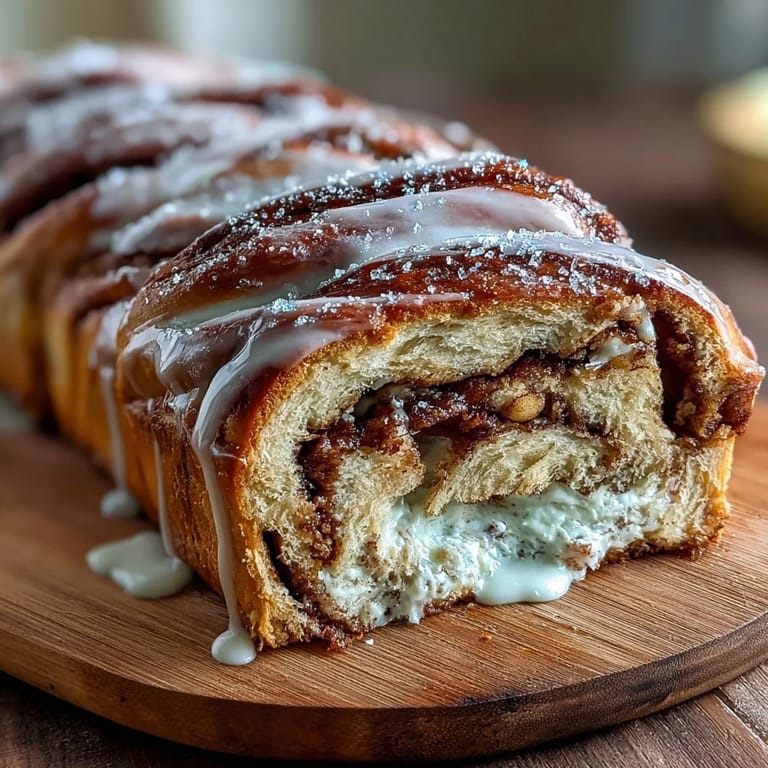
Save This bread is the reason I keep sanding sugars on hand year-round now, and it's become my answer to the question of what to bring when someone asks for something special. It's proof that you don't need fancy equipment or years of training to create something that genuinely impresses.
Recipe FAQs
- → What type of flour is best for this loaf?
All-purpose flour provides the right balance of gluten for a tender yet structured dough.
- → Can I substitute cream cheese in the filling?
Yes, mascarpone can be used instead for a richer, creamier flavor.
- → How long should I let the dough rise?
Allow the dough to rise until doubled in size, approximately 1 to 1.5 hours, and again after shaping for about 45 minutes.
- → What is the purpose of the colorful sugars on top?
The purple, green, and gold sanding sugars add festive color and a slight crunch, inspired by King Cake traditions.
- → How do I ensure the loaf bakes evenly?
Bake at 350°F for 35 to 40 minutes, tenting with foil if it browns too quickly for even cooking.