 Save
Save There's something about the smell of lemon zest hitting a warm bowl that makes you want to bake immediately—that's exactly what happened when I first decided to use my sourdough starter for donuts instead of bread. My kitchen smelled like a farmer's market and a bakery had merged, and I knew I was onto something special. The idea was simple: take that tangy, alive starter and pair it with bright lemon and plump blueberries to create donuts that felt homemade in the best way. What surprised me most was how soft and naturally leavened they turned out, almost like someone had invented the perfect donut while I wasn't paying attention.
I made a batch for my neighbor on a Sunday morning, and she came back an hour later asking if I could make them weekly—that's when I realized these weren't just good, they were the kind of thing people remember. She dunked one in her coffee and closed her eyes like she'd just experienced something profound, which made the whole early wake-up worth it.
Ingredients
- Active sourdough starter (1/2 cup): This is your leavening agent and flavor foundation; unfed or discard starter works beautifully, so don't feel like you need to feed it fresh.
- Buttermilk (1/2 cup): The acidity complements the sourdough's tang and keeps the crumb tender; if you don't have it, plain yogurt or milk with vinegar works in a pinch.
- Unsalted butter (1/4 cup, melted): Melting it first means it incorporates smoothly and keeps the donuts moist.
- Eggs (2 large, room temperature): Room temperature eggs blend more evenly, which gives you a better crumb structure.
- Vanilla extract (1 tsp): A touch of vanilla rounds out the citrus without making itself known.
- Lemon zest (from 1 lemon): Zest right before mixing since it's most aromatic fresh; don't skip this step.
- Fresh lemon juice (2 tbsp): Fresh juice tastes brighter than bottled, and you can taste the difference in every bite.
- All-purpose flour (2 cups): Standard flour keeps the texture tender without being dense.
- Granulated sugar (3/4 cup): This sweetens both the donut and balances the tartness.
- Baking powder (1 1/2 tsp): Combined with baking soda, it gives you a light lift in the oven.
- Baking soda (1/2 tsp): The baking soda reacts with the acidic starter and buttermilk to create lift and tenderness.
- Fine sea salt (1/2 tsp): Salt enhances every flavor and is gentler on the delicate crumb than kosher salt.
- Fresh blueberries (1 cup): Fresh or frozen works; frozen ones may slightly tint the batter but add bursts of flavor.
- Powdered sugar for glaze (1 cup): The base of your silky coating.
- Fresh lemon juice for glaze (2–3 tbsp): Adjust to your preferred glaze thickness.
- Lemon zest for glaze (1 tsp): A final sprinkle of brightness right on top.
Tired of Takeout? 🥡
Get 10 meals you can make faster than delivery arrives. Seriously.
One email. No spam. Unsubscribe anytime.
Instructions
- Prepare your pans and oven:
- Preheat your oven to 350°F and lightly grease two nonstick donut pans with a little butter or cooking spray. Cold pans means the batter won't start cooking before you're ready, which keeps everything even.
- Mix your wet ingredients:
- In a large bowl, whisk together the sourdough starter, buttermilk, melted butter, eggs, vanilla, lemon zest, and fresh lemon juice until everything looks smooth and pale. You're looking for that moment when the mixture goes from streaky to homogeneous—don't overthink it.
- Combine the dry ingredients:
- In a separate bowl, whisk together the flour, sugar, baking powder, baking soda, and salt. This keeps the leavening agents distributed evenly so you don't get dense pockets.
- Bring wet and dry together gently:
- Pour the wet mixture into the dry ingredients and stir with a spatula just until there are no streaks of flour left. Overmixing develops gluten, which makes donuts tough instead of tender—stop as soon as you can't see dry flour.
- Fold in the blueberries:
- Gently fold the blueberries into the batter using a light hand; if you want to prevent them from sinking, lightly dust them with a little flour first. This little trick keeps them suspended throughout the donut instead of settling to the bottom.
- Fill the pans:
- Spoon or pipe the batter into your prepared donut pans, filling each cavity about three-quarters full. The batter is thick enough to hold its shape but soft enough to fill the molds smoothly.
- Bake until golden:
- Bake for 13 to 15 minutes, or until the donuts spring back when you gently press the top and a toothpick inserted into the thickest part comes out clean. At around 13 minutes, peek in—you're looking for just a touch of golden color on top.
- Cool with patience:
- Let the donuts rest in the pans for 5 minutes so they firm up slightly, then turn them out onto a wire rack to cool completely. This prevents them from falling apart while still warm and gives the glaze something to grip.
- Make the glaze:
- Whisk together powdered sugar, fresh lemon juice, and lemon zest until you reach the consistency of thick cream—pourable but not runny. If it's too thick, add more juice a teaspoon at a time.
- Glaze and set:
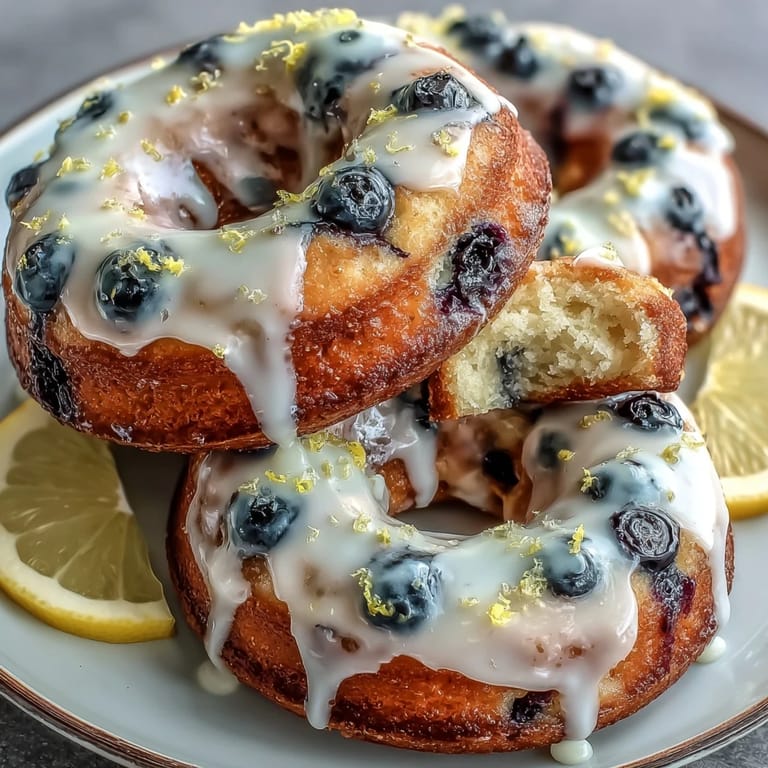
- Dip each cooled donut into the glaze, letting the excess drip back into the bowl, then place it on a clean rack to set. The glaze will firm up slightly as it sits, creating that beautiful shiny finish.
 Save
Save One morning, I bit into one of these donuts and realized they tasted like exactly what I needed that day—bright, not too sweet, with little moments of tartness from the sourdough. That's when food became more than fuel; it became a way to say hello to someone you care about or to give yourself permission to enjoy breakfast as something luxurious.
Why Sourdough in Donuts
Sourdough starter brings a subtle tang and natural fermentation that store-bought donuts can't touch. The starter gives these donuts a tender crumb because the fermentation partially breaks down the gluten, and it keeps them soft for longer than standard baked donuts. It's also a smart use of discard—instead of throwing starter away, you're turning it into something delicious.
Lemon and Blueberry Balance
The magic here is that lemon juice and zest don't overwhelm the blueberry; instead, they make the berry flavor pop brighter. I learned this after making a batch where I added too much lemon to the glaze and couldn't taste the blueberries anymore—now I add the zest to the batter and dial back the glaze to let both flavors shine. The tartness of the sourdough starter amplifies the lemon, so you get complexity without having to add exotic ingredients.
Storage and Serving Ideas
These donuts taste best the same day when the glaze is still tacky and the crumb is softest, but they keep airtight for two days without losing much charm. You can store them at room temperature, and if you want to freshen them slightly on day two, a quick pass under a warm oven or toaster oven brings back some of that just-baked feeling. They also freeze beautifully for up to three weeks—just thaw at room temperature and re-glaze if you want them to look just-made.
- Serve these with strong coffee or a cold glass of milk to balance the brightness.
- Dust with a little extra lemon zest on top of the glaze for an edible reminder of how special they are.
- Make them on Sunday and enjoy them through Wednesday if you store them right, though they disappear much faster than that.
 Save
Save These lemon blueberry sourdough donuts are the kind of recipe that makes you feel like a baker, even if you're just following a few simple steps. They're proof that the best breakfasts come from using what you have on hand and trusting your instincts in the kitchen.
Recipe FAQs
- → How does sourdough starter affect the texture?
Sourdough starter naturally leavens the batter, lending a tender, airy crumb and subtle depth of flavor that enhances overall softness.
- → Can frozen blueberries be used?
Yes, frozen blueberries work well. It's recommended to fold them in lightly dusted with flour to prevent sinking during baking.
- → What is the purpose of the lemon glaze?
The lemon glaze adds a bright, tangy sweetness and a smooth finish that complements the blueberry bursts and sourdough base.
- → Is buttermilk necessary or is there a substitute?
Buttermilk contributes tenderness and tang. You can substitute with plain yogurt or milk combined with a teaspoon of vinegar.
- → How to tell when these treats are fully baked?
They are done when sides pull slightly away from the pan, the tops spring back gently when pressed, and a toothpick inserted comes out clean.
- → How should these be stored after baking?
Store in an airtight container at room temperature and consume within two days to retain freshness and softness.