 Save
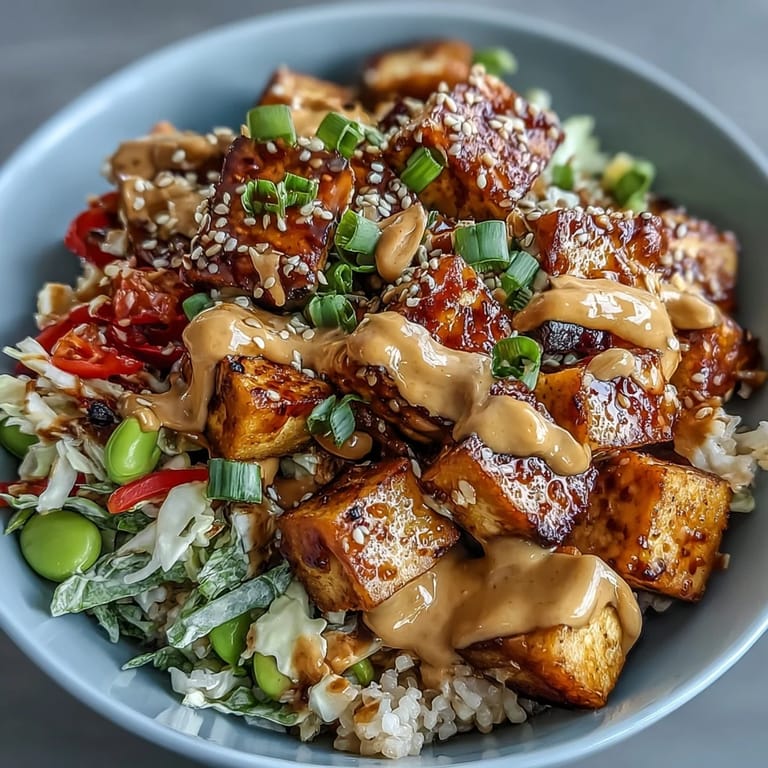
Save My friend Maya showed up one Tuesday with a container of golden tofu cubes and a jar of peanut sauce that smelled like a Bangkok street market. She'd been meal-prepping all weekend, and when she cracked open that lid, I immediately understood why—the aroma hit differently. That afternoon, watching her arrange those vibrant vegetables over fluffy rice felt less like cooking and more like painting something you'd actually want to eat. I recreated it that same week, and it became the bowl I make when I need to feel both nourished and genuinely satisfied.
I made this for my roommate during a particularly rough week when she'd mentioned missing real meals, and watching her spoon that peanut sauce over the vegetables and take the first bite—her whole expression softened. That's when I realized this wasn't just a bowl; it was the kind of food that reminds you that taking care of yourself can feel luxurious. She asked for the recipe immediately, and now we make it together on Sunday afternoons, turning it into this quiet ritual of chopping and stirring.
Ingredients
- Extra-firm tofu (400 g): Press it dry for at least 15 minutes—this is the secret to crispiness that actually happens, not the soggy disappointment you get when you skip this step.
- Cornstarch (2 tbsp): This creates that shatteringly crisp exterior that makes every bite satisfying in a way plain baked tofu just cannot deliver.
- Brown rice or quinoa (200 g): Quinoa cooks faster if you're impatient like me, but brown rice has this nutty flavor that plays beautifully with the peanut sauce.
- Mixed vegetables (carrot, bell pepper, cabbage, edamame, cucumber, spring onions): Buy them prepped if your budget allows—half the battle is having beautiful vegetables ready to go, and it makes the whole process feel less like a chore.
- Creamy peanut butter (60 g): Use the kind without added oils; it whisks into a silky sauce without that greasy film on top.
- Soy sauce or tamari (2 tbsp): Tamari is your friend if you're gluten-free, and honestly, you won't taste the difference.
- Maple syrup (1 tbsp): A tiny bit of sweetness that balances the umami and vinegar without making this taste like dessert.
- Rice vinegar or lime juice (1 tbsp): The acid component that wakes everything up; fresh lime juice makes it brighter and more summery.
- Toasted sesame oil (1 tsp): Use the real stuff—even though the bottle is small and expensive, a teaspoon goes into multiple batches and the flavor difference is worth it.
- Garlic and ginger (1 clove and 1 tsp): Fresh ginger matters here more than anywhere else; the brightness it adds to the sauce is irreplaceable.
Tired of Takeout? 🥡
Get 10 meals you can make faster than delivery arrives. Seriously.
One email. No spam. Unsubscribe anytime.
Instructions
- Press that tofu like your dinner depends on it:
- Wrap your block in a clean kitchen towel, place it on a plate, weigh it down with something heavy (a cast iron pan works perfectly), and leave it for 15 minutes. You'll see actual liquid dripping out, which means you're doing it right.
- Get your grains going:
- Measure your rice or quinoa into a saucepan with the water or broth and bring it to a boil. Once it's bubbling, reduce the heat to low, cover, and let it do its thing for about 20 minutes—you're free to prep everything else while this happens.
- Cube and coat the tofu:
- Cut your pressed tofu into bite-sized cubes, then toss them gently in a bowl with cornstarch and salt until every surface is dusted with a thin white layer. This coating is what creates the crispy exterior.
- Crisp that tofu until it's golden:
- If baking, toss the cornstarch-coated cubes with olive oil on a baking sheet and slide into a 200°C oven for 20–25 minutes, stirring halfway through until they're deep golden brown on multiple sides. If pan-frying, heat olive oil in a skillet over medium-high heat and cook the tofu in batches until crispy all over—this usually takes about 15 minutes total.
- Whisk the sauce into creamy existence:
- In a mixing bowl, combine your peanut butter, soy sauce, maple syrup, rice vinegar, sesame oil, warm water, minced garlic, and grated ginger, whisking until it's completely smooth. If it's too thick, add a splash more water until it reaches that pourable consistency.
- Prep your vegetables with intention:
- Julienne the carrot, slice the bell pepper into thin strips, shred the purple cabbage, slice the cucumber, and thinly slice the spring onions. If using frozen edamame, steam them for a few minutes until heated through.
- Assemble like you're plating for someone you love:
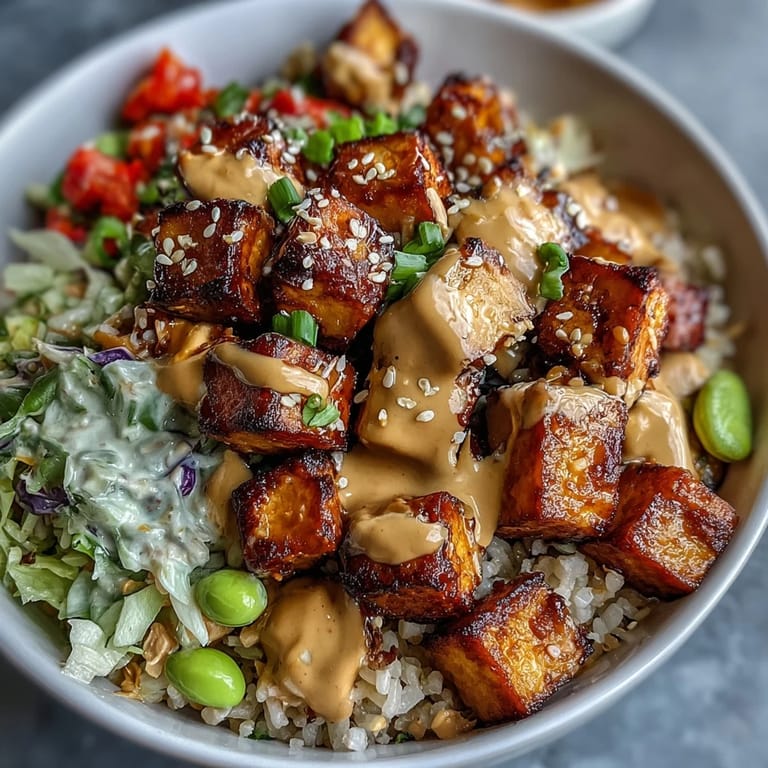
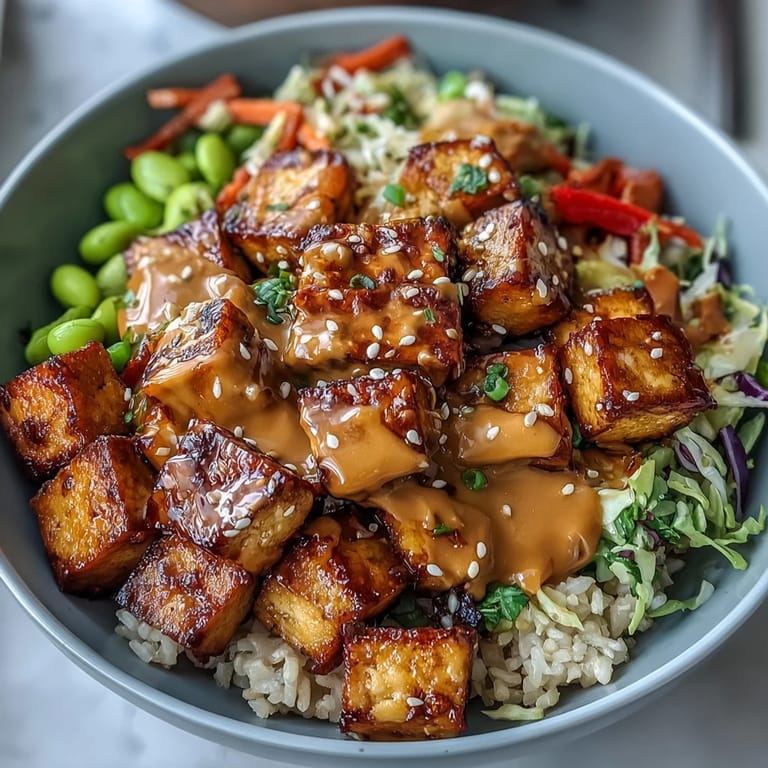
- Start with a base of fluffy rice or quinoa in each bowl, then arrange the tofu, carrots, bell pepper, cabbage, edamame, cucumber, and spring onions in sections around the bowl. This isn't just functional; it makes eating the bowl feel intentional.
- Drizzle generously and garnish:
- Pour that peanut sauce over everything, then scatter with chopped roasted peanuts, sesame seeds, and fresh cilantro or mint leaves. Serve immediately while everything is still warm.
 Save
Save There's something about eating from a bowl that feels different from a plate—it's contained, complete, intentional. I remember eating this on my apartment balcony on a quiet morning before work got loud, and something about that meal made the day feel manageable in a way coffee alone couldn't fix. It became my go-to when I needed to remember that eating well doesn't have to be complicated or joyless.
Making This Truly Yours
The beauty of a bowl like this is how easily it becomes whatever you need it to be. I've made it with roasted sweet potato instead of rice on mornings when I wanted something warmer, and with cauliflower rice on evenings when I was being careful with carbs. My neighbor swears by adding avocado, and she's right—the creaminess against the crispy tofu is genuinely perfect. You can build toward this bowl or build away from it; the foundation is solid enough to support your preferences.
The Peanut Sauce Situation
This sauce is where the magic happens, and it's forgiving enough to play with. The first time I made it, I used lime juice instead of rice vinegar and it became brighter, more summery—now I can't imagine it any other way. If you want more heat, a pinch of sriracha stirred in right before serving won't overpower the nutty peanut flavor. I've also learned that making extra sauce is never a waste; it keeps in a jar for days and elevates leftover vegetables or grains into something that tastes deliberately composed.
Variations and Additions That Actually Work
This bowl is genuinely adaptable without losing its integrity, which is rare and wonderful. I've added steamed broccoli when I had it on hand, roasted chickpeas for extra protein when tofu felt boring, and even soft scrambled eggs on mornings when I wanted something familiar alongside the adventurous vegetables. The rule I follow is simple: if it would taste good with peanut sauce, it probably belongs in this bowl.
- Sriracha or extra chili flakes turn the sauce from comforting to exciting without overshadowing the peanut base.
- A squeeze of fresh lime juice right before eating brightens everything, especially if the bowl has been sitting while you were busy.
- Toasted nori sheets torn into strips add an umami punch that makes you understand why this combination has become a favorite.
 Save
Save This bowl has become my answer to the question I ask myself most afternoons: what do I actually want to eat? The answer is almost always this. It's nourishing without feeling austere, and satisfying without leaving you heavy—which might be the best compliment any meal can receive.
Recipe FAQs
- → How do I make the tofu crispy?
Coat tofu cubes evenly with cornstarch and a pinch of salt, then bake at 200°C (400°F) for 20–25 minutes, flipping halfway, or pan-fry in olive oil until golden on all sides.
- → Can I substitute the grains used?
Yes, brown rice or quinoa can be swapped with cauliflower rice for a lower-carb option or any preferred whole grain for variety.
- → What can I use instead of soy sauce?
Tamari works well as a gluten-free alternative to soy sauce in the peanut sauce, maintaining flavor while accommodating dietary needs.
- → How can I adjust the peanut sauce consistency?
Add warm water gradually while whisking until the sauce reaches your desired creaminess and pourability.
- → What optional toppings enhance this bowl?
Roasted peanuts, sesame seeds, fresh cilantro, or mint leaves add extra texture and fresh herbal notes to complement the flavors.