 Save
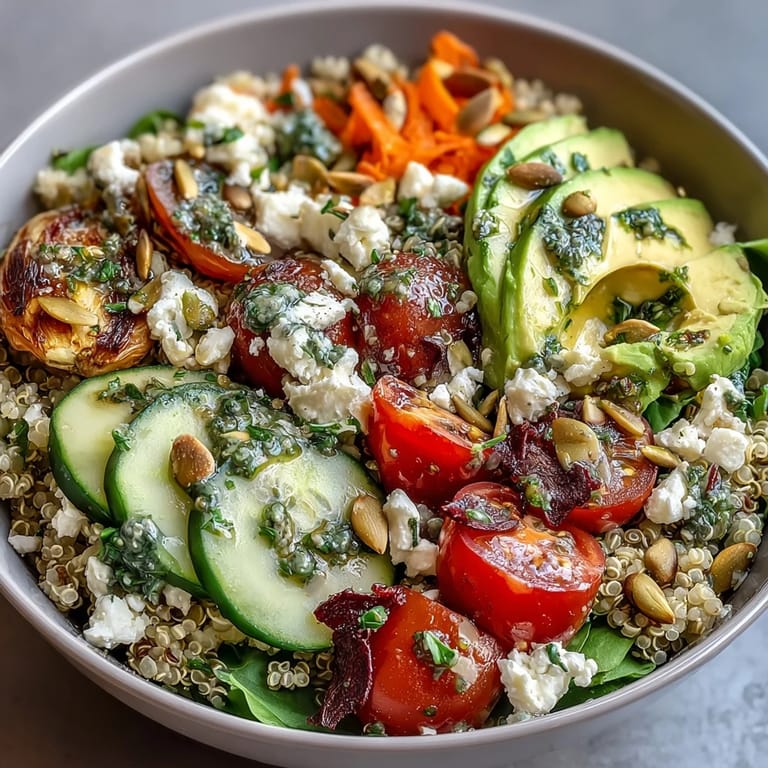
Save A few years back, I found myself stuck in that afternoon slump at work, hungry but uninspired by the sad desk lunch I'd packed. That's when I started experimenting with grain bowls at home, and something clicked—suddenly I had a canvas for whatever was in my fridge, and it tasted intentional instead of like leftovers. What began as a practical solution became my favorite way to eat, especially on days when I needed to feel nourished without fussing around in the kitchen.
I made these bowls for my roommate once when she was overwhelmed with work deadlines, and watching her actually sit down to eat something colorful and real instead of ordering the third delivery of the week felt like a small victory. She came back to the kitchen ten minutes later asking for the dressing recipe, which is how I knew I'd stumbled onto something worth keeping around.
Ingredients
- Brown rice, quinoa, or farro: Pick your grain based on mood—rice is gentle and familiar, quinoa is nutty and protein-packed, farro is chewy and substantial; I've learned that having all three on hand means you're never stuck.
- Chickpeas, grilled chicken, pan-seared tofu, or shrimp: Choose one or mix them depending on what your body needs that day; chickpeas hold up beautifully in the fridge and shrimp cook in minutes if you're short on time.
- Cherry tomatoes: Halving them instead of leaving them whole means they actually integrate into bites instead of rolling around like little red escape artists.
- Cucumber: Diced small enough to feel textured but not so small it disappears; the crunch saves the whole bowl from feeling heavy.
- Shredded carrots: Raw and slightly sweet, they're non-negotiable for color and the way they stay crisp even hours after assembly.
- Avocado: Add just before serving or it'll oxidize and turn gray, which tastes fine but looks sad; always slice lengthwise and use a spoon to scoop.
- Red onion: Thinly sliced so it's sharp enough to matter but not so thick it overwhelms; if it feels too harsh, quick-pickle it in a splash of lemon juice five minutes before eating.
- Feta cheese: Crumbled by hand rather than pre-shredded keeps it from clumping, and it's optional if dairy doesn't work for you.
- Toasted pumpkin seeds: These bring a salty crunch that somehow elevates everything; toast them yourself for two minutes and the kitchen smells like possibility.
- Fresh herbs: Parsley, cilantro, or basil added at the very end so they don't wilt into shadows of themselves.
- Olive oil, lemon juice, apple cider vinegar, Dijon mustard, and garlic: These four elements make a dressing that tastes bright without being fussy, and the mustard acts as an emulsifier so it doesn't separate immediately.
Tired of Takeout? 🥡
Get 10 meals you can make faster than delivery arrives. Seriously.
One email. No spam. Unsubscribe anytime.
Instructions
- Cook your grain with intention:
- Follow the package timing but taste it a minute or two before you think it's done—you want tender with a slight firmness in the center, not mushy. Let it cool slightly so it doesn't wilt your other ingredients when you assemble.
- Prep your protein:
- If using chicken, a hot pan and a little patience give you golden edges; tofu needs a non-stick surface or a light oil coating to avoid sticking; shrimp cooks in under three minutes and will toughen if you linger. Chickpeas just need rinsing if they're canned, but a quick pan-sear in a touch of oil and salt makes them crispy on the outside.
- Make the dressing while things cool:
- Whisk the oil, lemon juice, vinegar, mustard, and garlic together in a small bowl until it emulsifies slightly; the mustard is doing the real work here. Taste and adjust salt and pepper until it makes your mouth water—this is what ties everything together.
- Arrange with purpose:
- Start with your grain as the foundation, then layer protein, then vegetables in a way that feels balanced. Leave gaps so the dressing seeps through rather than sitting on top.
- Finish just before eating:
- Add the avocado and herbs last, drizzle the dressing over top, and eat within an hour or everything starts getting acquainted in ways you might regret.
 Save
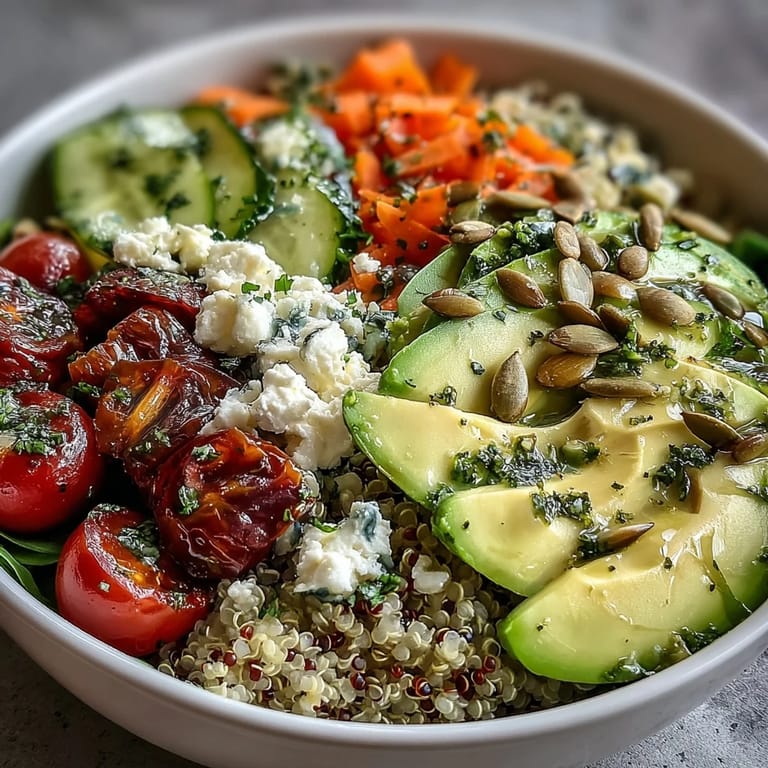
Save There was this morning I made three bowls for my partner before they left for a long shift, and they came home saying it was the only thing that kept them feeling human during a brutal day. That's when I realized this wasn't just about convenience—it was about showing up for someone with a bowl full of colors and care.
Grain Choices and What They Bring
Brown rice feels grounding and familiar, quinoa brings a slightly fluffy texture and complete protein if you're not adding much else, and farro has this nutty chew that makes you slow down and actually taste things. I rotate through them depending on the season and what's calling me—brown rice for comfort, quinoa when I want elegance without effort, farro when I'm feeling particularly intentional about my food. Each one pairs differently with dressings and toppings, so the same bowl never quite feels the same.
Building Your Perfect Protein Combination
Chickpeas are your best friend if you meal-prep because they stay firm and flavorful for days, while grilled chicken is lean and disappears into the background if you want the vegetables to shine. Tofu takes on whatever you're doing to it without complaint, and shrimp feels luxurious even though it costs almost nothing and cooks faster than you'd believe. I've learned that mixing two proteins in one bowl actually works—chickpeas and shrimp together create a satisfying weight and flavor complexity that keeps you interested through every bite.
Storage, Seasons, and the Joy of Flexibility
Pack the dressing separately if you're eating tomorrow so everything stays crisp, and keep avocado and herbs in a little container to add right before you eat. In summer I add extra cucumber and tomatoes and a whisper of fresh basil, while winter calls for roasted vegetables and heartier grains that warm you from the inside. The real magic is that this bowl evolves with you throughout the year, never feeling repetitive even when the base stays the same.
- If you're meal-prepping, assemble everything except the avocado and dress it only when you're about to eat.
- Roasted vegetables like broccoli, cauliflower, or beets transform a raw bowl into something warming without losing the fresh aspect.
- Add a soft-boiled or fried egg on top if you need extra richness or protein—it catches some of the dressing and becomes part of the magic.
 Save
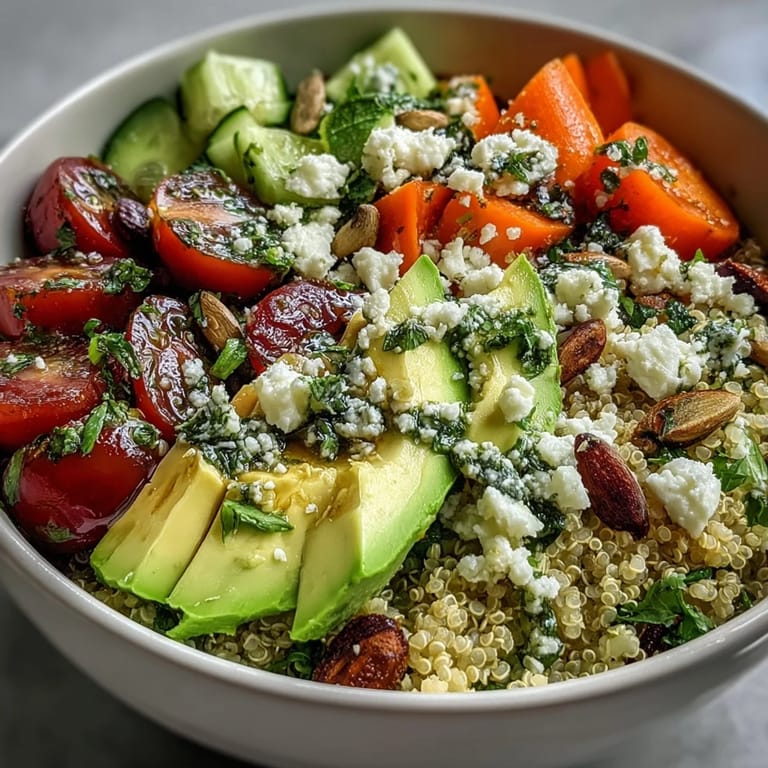
Save This bowl has become my answer to almost everything—too hungry, too lazy, too bored, too tired, too ready to celebrate. It's the kind of food that tastes like taking care of yourself without feeling like a chore.
Recipe FAQs
- → Which grain works best for meal prep?
Brown rice and quinoa hold up exceptionally well for meal prep, maintaining texture after refrigeration. Cook grains in advance and store in airtight containers for up to 5 days.
- → Can I make this bowl entirely plant-based?
Absolutely. Use chickpeas or cubed tofu for protein, swap feta cheese with nutritional yeast or omit entirely, and you'll have a completely vegan bowl that's still protein-rich and satisfying.
- → What vegetables can I substitute seasonally?
Roasted sweet potatoes, sautéed kale, shredded Brussels sprouts in winter; fresh corn, bell peppers, zucchini in summer. The beauty of grain bowls is adapting to whatever's fresh and available.
- → How do I prevent the avocado from browning?
Toss sliced avocado with a squeeze of fresh lemon juice before adding to your bowl. The citrus creates a protective barrier that keeps the flesh vibrant green for several hours.
- → Can I use a store-bought dressing instead?
Yes, though the homemade lemon-herb dressing takes just minutes and tastes fresher. If using store-bought, look for vinaigrettes with olive oil and citrus bases to complement the grain flavors.
- → What's the best way to reheat leftovers?
Warm the grains and protein gently in the microwave or on the stovetop, then add fresh toppings and dressing just before serving. This maintains the contrast between warm, fluffy grains and crisp, cool vegetables.