 Save
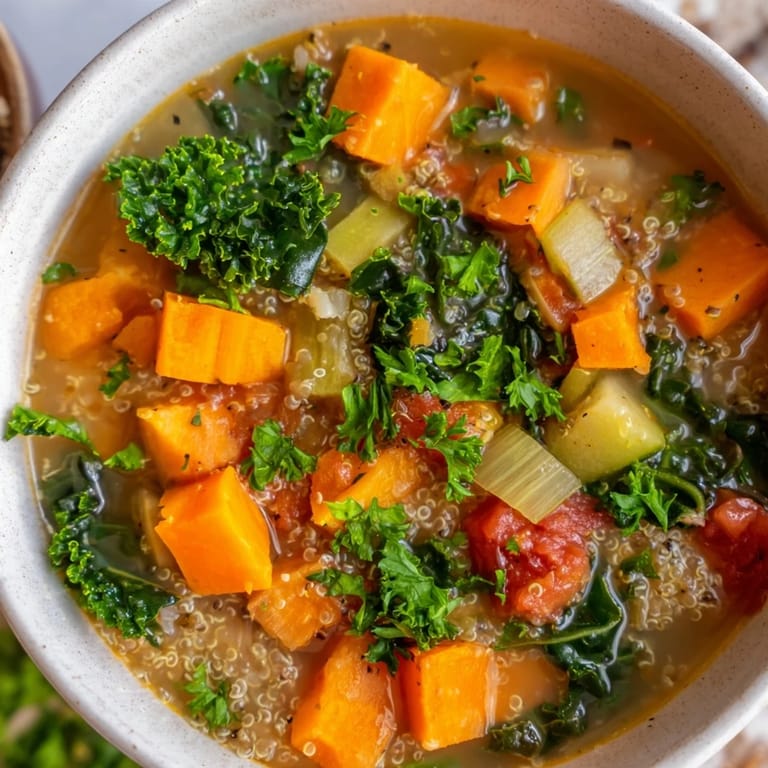
Save Last November, my neighbor showed up at my door with an armful of farmer's market vegetables she couldn't use in time, and I stood in my kitchen wondering what to do with them all. I decided to throw everything into a pot with some quinoa and broth, and that happy accident became the soup I now make whenever the temperature drops. There's something about layering root vegetables and leafy greens into a single pot that feels like gathering people around a table—everything comes together naturally, warming you from the inside out.
I made this soup for my sister during a particularly rough week, and she texted me three days later saying she'd made it twice more because it was the only thing that made her feel better. That's when I knew it wasn't just a recipe—it was one of those dishes that does more than feed your stomach.
Ingredients
- Olive oil: Just a tablespoon is enough to get everything aromatic and keep your vegetables from sticking to the pot.
- Onion and garlic: These two are the flavor foundation, and letting them get soft and fragrant before adding anything else makes all the difference.
- Carrots, celery, and parsnip: The parsnip especially adds a subtle sweetness that deepens as it cooks, balancing the earthiness of everything else.
- Sweet potato: It dissolves slightly into the broth as it cooks, making the whole soup creamier without any actual cream.
- Kale or Swiss chard: Remove the thick stems first—they take forever to cook and can overpower the delicate flavor you're building.
- Cabbage: This might seem like an odd choice, but it adds body to the broth and a subtle sweetness that sneaks up on you.
- Tomatoes: Canned ones work beautifully here and add acidity that brightens everything else.
- Quinoa: Make sure you rinse it first to remove the bitter coating—I learned this the hard way once.
- Vegetable broth: Low-sodium lets you control the seasoning, and you can always taste and adjust before serving.
- Thyme and oregano: Dried herbs work perfectly here and won't overpower the vegetables like fresh ones might.
- Bay leaf: Remove it before serving, but don't skip it—it quietly anchors all the flavors together.
- Fresh parsley and lemon juice: The parsley is mostly for color, but that lemon juice at the end wakes everything up and makes the soup taste like itself.
Tired of Takeout? 🥡
Get 10 meals you can make faster than delivery arrives. Seriously.
One email. No spam. Unsubscribe anytime.
Instructions
- Sauté your aromatics:
- Heat the olive oil and add your diced onion with minced garlic, stirring for a couple of minutes until the kitchen smells incredible and the onion turns translucent. This slow start is where all the flavor magic begins, so don't rush it.
- Build your vegetable base:
- Toss in your carrots, celery, parsnip, and sweet potato, stirring occasionally for five to six minutes so they start to soften at the edges. You want them to release their sweetness into the oil before you add the liquid.
- Add the leafy greens and tomatoes:
- Stir in your kale and cabbage along with the diced tomatoes, letting everything cook together for just a couple of minutes so the greens start to wilt. This step brings color into your pot and signals that you're close to soup territory.
- Build your broth:
- Pour in your quinoa, vegetable broth, and dried herbs, then add your bay leaf along with a pinch of salt and pepper. Bring everything to a gentle boil, then immediately turn it down to low heat and cover the pot.
- Simmer until everything is tender:
- Let it bubble quietly for 25 to 30 minutes, checking once halfway through to make sure nothing's sticking to the bottom. You'll know it's done when the vegetables are completely soft and the quinoa has turned from opaque to translucent with a little white spiral visible in each grain.
- Finish with brightness:
- Fish out the bay leaf, then stir in your fresh parsley and a squeeze of lemon juice if you're using it. Taste a spoonful and season with a bit more salt or pepper if it needs it, then ladle into bowls and serve while everything is still steaming.
 Save
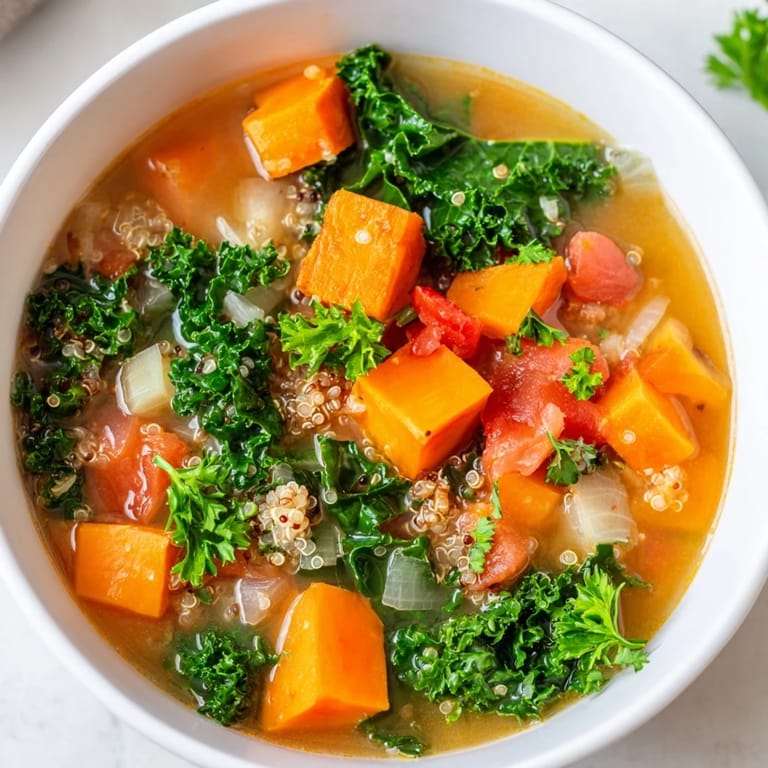
Save What strikes me most about this soup is how it changes based on what you have and what you need. On rushed weeknight dinners it's a quick fix, but on quiet Sunday afternoons it becomes something you stir and taste and think about while it cooks, the way some recipes invite you to slow down.
How to Make It Your Own
The beauty of this soup is that it's built on a framework rather than rigid rules. If you don't have parsnips, use more carrots; if kale seems bitter to you, swap it for spinach or chard; if you want it to feel more like a meal, throw in a drained can of chickpeas or white beans in the last few minutes. I've made it with roasted beets, with extra garlic when I'm feeling under the weather, and once with a handful of torn basil instead of parsley. Each version tastes like itself and somehow still feels like home.
Pairing and Serving Ideas
This soup sits happily on its own, but it transforms into something bigger when you serve it alongside other things. A thick slice of crusty whole-grain bread is the obvious choice, but I've also paired it with a simple green salad, some good cheese on the side, or even a grilled cheese sandwich cut into pieces for dunking. On colder evenings, I'll sometimes ladle it into a mug and sip it standing up, which sounds odd but feels exactly right on days when you need comfort more than ceremony.
Storage and Reheating
This soup keeps beautifully in the refrigerator for four or five days, and it tastes even better the next day once all the flavors have had time to get to know each other. You can also freeze it for up to three months—just leave a bit of headroom in your container because it expands slightly. Reheat gently on the stove with a splash of extra broth if it's thickened too much, and taste before serving so you can adjust the seasoning.
- For extra protein and substance, add a can of drained chickpeas or white beans right before simmering.
- A pinch of red pepper flakes stirred in during cooking adds warmth without heat if you're feeling adventurous.
- If you want to make this dairy-free creamy, stir in a splash of coconut milk at the very end instead of lemon juice.
 Save
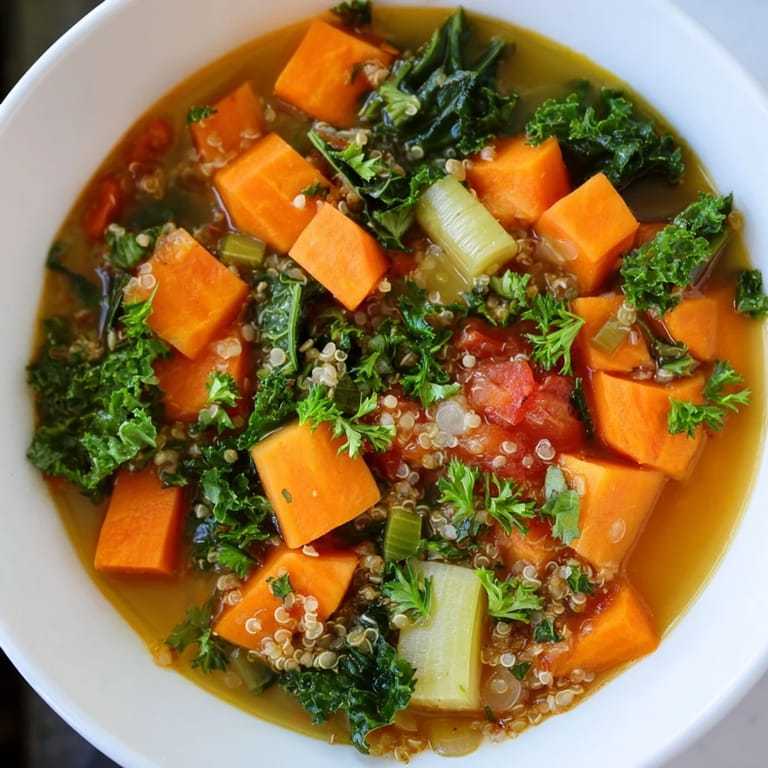
Save This soup reminds me that the most nourishing meals aren't about fancy techniques or hard-to-find ingredients—they're about putting good things together and letting them become something warm and whole. Make it, share it, come back to it whenever you need something that feels like a hug in a bowl.
Recipe FAQs
- → What vegetables work best in this soup?
Root vegetables like carrots, parsnip, and sweet potato add sweetness and body, while leafy greens such as kale or Swiss chard bring color and nutrients. Cabbage and tomatoes offer subtle acidity and texture.
- → How can I increase the protein content?
Adding a can of drained chickpeas or white beans boosts protein without changing the soup's flavor profile significantly.
- → What herbs enhance the soup's flavor?
Dried thyme, oregano, and bay leaf infuse the broth with aromatic undertones, complementing the vegetables and quinoa wonderfully.
- → Can I substitute the greens if I don't have kale?
Yes, spinach is a great alternative that wilts quickly and adds fresh green notes to the soup.
- → What is the best way to serve this dish?
Serve hot with a sprinkle of fresh parsley for brightness. Pairing with crusty whole-grain bread makes the meal more filling.
- → Is this soup suitable for dietary restrictions?
Yes, it is naturally gluten-free, dairy-free, and vegetarian, but double-check broth ingredients for allergens.