 Save
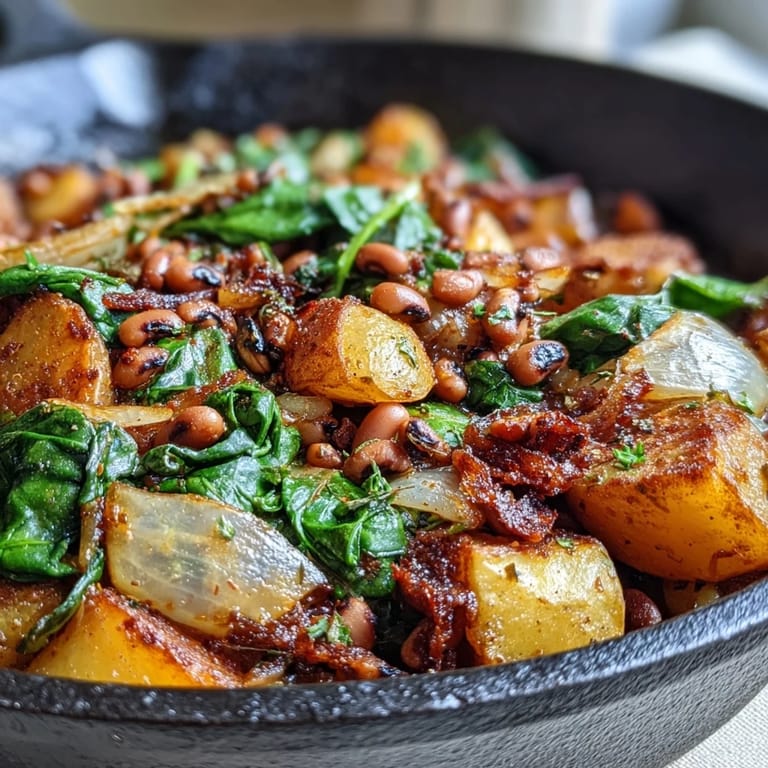
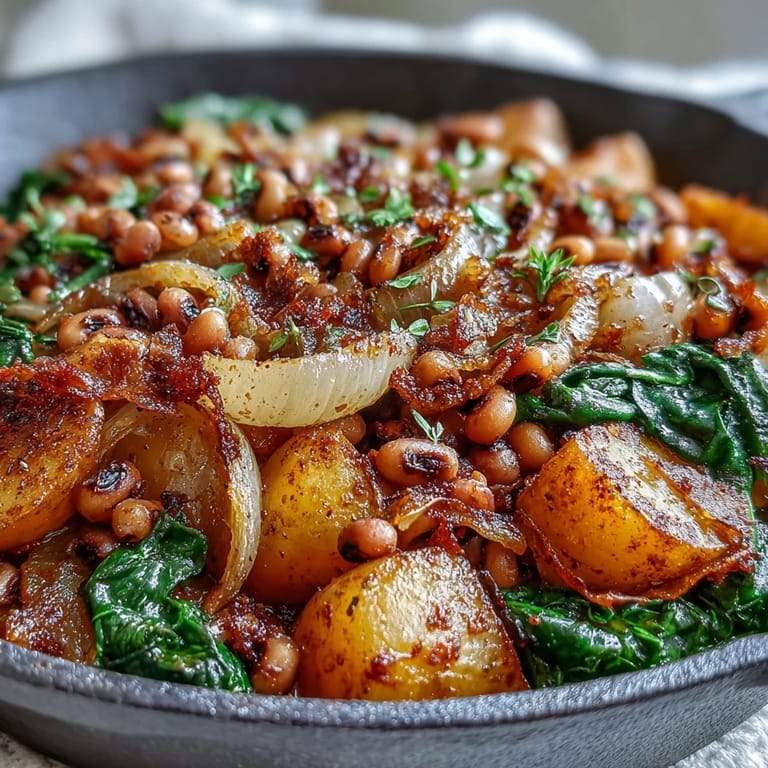
Save There's something about a cast iron skillet that makes even the simplest ingredients feel like they belong together. I discovered this one-pan wonder on a Tuesday evening when I had spinach wilting in the crisper drawer and a can of black-eyed peas I'd been meaning to use for weeks. The smell of caramelized onions mixed with smoked paprika filled my kitchen so completely that my neighbor actually knocked to ask what I was making. What started as pantry improvisation became the meal I now make whenever I need something honest and filling without the cleanup nightmare.
I made this for my sister during one of those unpredictable fall weekends when the weather can't decide what season it wants to be. She arrived hungry and skeptical about vegetarian food, but halfway through her bowl she stopped talking and just ate, which is the highest compliment I've ever received. That moment taught me that good food doesn't need a complicated backstory or fancy ingredients—it just needs to be made with attention and served while it's still warm.
Ingredients
- Olive oil: Two tablespoons is your base layer of flavor; don't skimp here because it's what turns those onions golden and coaxes the spices to bloom.
- Yellow onion: One large onion sliced thin will caramelize into something almost sweet, providing the foundation that holds everything together.
- Yukon Gold potatoes: Three medium potatoes diced into roughly half-inch cubes will soften just enough while keeping their shape and developing those crispy edges.
- Fresh spinach: Three cups roughly chopped will seem like too much until it hits the heat and transforms into something delicate and concentrated.
- Black-eyed peas: Two cups cooked or one drained can gives you protein and a creamy texture that binds the whole dish; canned works beautifully if you rinse them well.
- Garlic: Three minced cloves added at the right moment creates an aromatic foundation that lifts every other flavor without overwhelming anything.
- Smoked paprika: One teaspoon delivers warmth and a subtle bacon-like note that makes people ask if there's meat in the skillet.
- Dried thyme: Half a teaspoon keeps everything grounded and earthy without announcing itself.
- Crushed red pepper flakes: A quarter teaspoon is optional but worth including if you enjoy heat that builds gradually rather than attacks.
- Vegetable broth: Half a cup of low-sodium broth steams the potatoes gently and adds moisture that gets absorbed into everything else.
- Fresh parsley: Two tablespoons chopped and scattered on top adds brightness and color that makes the whole plate look alive.
- Lemon wedges: Optional but essential for cutting through the richness with a squeeze of acid right before eating.
Tired of Takeout? 🥡
Get 10 meals you can make faster than delivery arrives. Seriously.
One email. No spam. Unsubscribe anytime.
Instructions
- Get your skillet ready:
- Heat two tablespoons of olive oil in a large cast iron skillet over medium heat until it shimmers and moves easily across the surface. You want it hot enough that when you add the onions, they immediately release their fragrance.
- Build your flavor base:
- Add your sliced onion and let it sit for about three to four minutes, stirring occasionally, until it softens and turns translucent at the edges. This is when your kitchen will start smelling like something worth making.
- Get the potatoes golden:
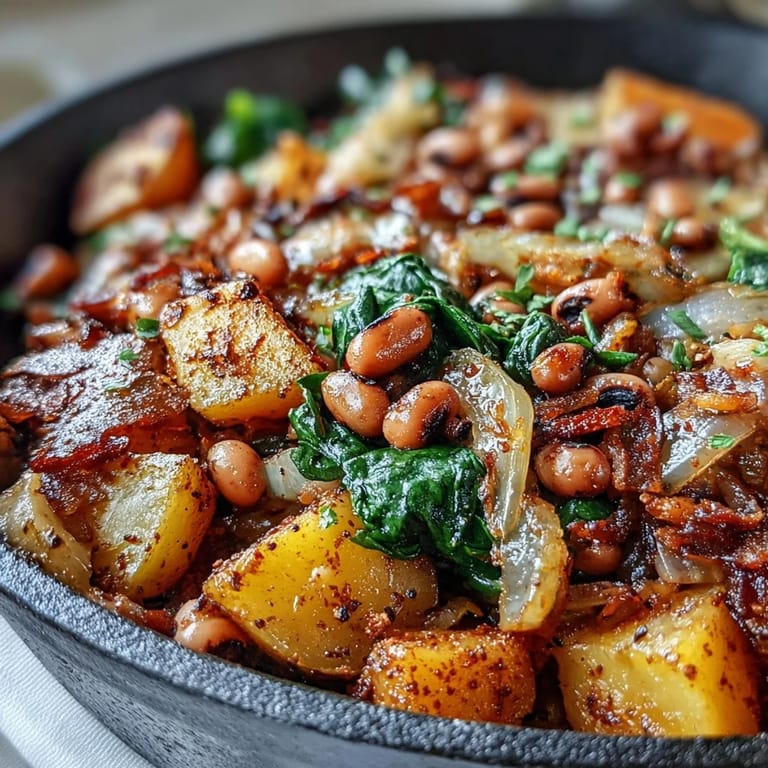
- Stir in your diced potatoes and cook for ten to twelve minutes, stirring every couple of minutes so they develop a light golden crust while staying tender inside. You're looking for that beautiful moment when they're both crispy and cooked through.
- Wake up the spices:
- Add your minced garlic, smoked paprika, thyme, and red pepper flakes, stirring constantly for about one minute until everything is fragrant and coating the vegetables. This is the moment when the dish stops being ingredients and starts becoming food.
- Bring it together:
- Pour in your vegetable broth, add the black-eyed peas, and stir well so everything is combined and the liquid reaches the potatoes. Cover the skillet and let it simmer gently for eight to ten minutes, stirring occasionally, until the potatoes are completely tender and the liquid is mostly absorbed.
- Finish with greens:
- Uncover the skillet, add your chopped spinach, and cook for two to three minutes, stirring gently, until it wilts down into the dish and becomes part of the whole. The spinach will seem to shrink dramatically, but that's exactly what you want.
- Taste and adjust:
- Season everything with salt and freshly ground black pepper to your preference, tasting as you go. Add the fresh parsley if you're using it, and serve hot with lemon wedges on the side.
 Save
Save This dish became part of my rotation on nights when I'm tired but want to feel nourished, and there's something powerful about that combination. It's the kind of meal that proves you don't need a recipe with thirty ingredients or hours of cooking to create something that tastes like care.
Why Cast Iron Makes a Difference
A cast iron skillet holds and distributes heat in a way that other pans simply don't, which is why those potatoes develop that particular kind of crispness while staying tender inside. The seasoned surface of a well-maintained skillet also adds a subtle depth to anything you cook in it, a flavor that builds over years and can't be replicated in a stainless steel or nonstick pan. If you don't have cast iron yet, this is honestly a good reason to invest in one piece—it will outlast every other kitchen tool you own and improve with every meal.
Making It Your Own
The beauty of a one-pan meal is that it's forgiving enough to adapt to whatever you have on hand or whatever sounds good on a particular day. I've made this with kale instead of spinach, with cubed sweet potatoes mixed in with the regular ones, and once with sautéed mushrooms added for extra texture. The core formula stays the same—softened onions, cooked potatoes, beans, and greens—but the variations are endless and always delicious.
Serving and Storage Ideas
Serve this hot straight from the skillet with a squeeze of fresh lemon juice and a piece of cornbread on the side if you want something more substantial. Leftovers reheat beautifully in the same skillet over medium heat, and it actually tastes even better the next day when all the flavors have had time to get to know each other.
- A dollop of sour cream or a handful of sharp cheddar cheese transforms this into something richer if you're not keeping it strictly vegetarian.
- Serve it over rice or with warm flatbread if you want to stretch it further or make it feel like a more formal meal.
- This keeps in the refrigerator for three days and freezes beautifully for up to three months, making it ideal for meal planning on Sunday afternoons.
 Save
Save This is the kind of meal that quietly becomes a favorite, the one you make when you want something comforting but aren't trying to impress anyone. It's proof that sometimes the best dishes are the ones that don't apologize for being simple.
Recipe FAQs
- → Can I use dried black-eyed peas instead of canned?
Yes, soak dried peas overnight and cook until tender before adding to the skillet. This will extend total preparation time but yields excellent texture and flavor.
- → What other greens work well in this dish?
Kale, Swiss chard, or collard greens make excellent substitutions for spinach. Adjust cooking time slightly as heartier greens may need a few extra minutes to wilt properly.
- → How can I add more protein to this meal?
Sautéed tempeh, tofu cubes, or even cooked chicken can be added with the black-eyed peas. Serving with rice or cornbread also creates a more complete protein profile.
- → Can I make this dish ahead of time?
This skillet dinner reheats beautifully and often tastes better the next day as flavors meld. Store in an airtight container for up to 4 days and reheat gently on the stove.
- → What's the best way to prevent potatoes from sticking?
Ensure your skillet is properly heated before adding oil, and don't stir too frequently. Letting potatoes develop a golden crust creates better texture and prevents sticking.