 Save
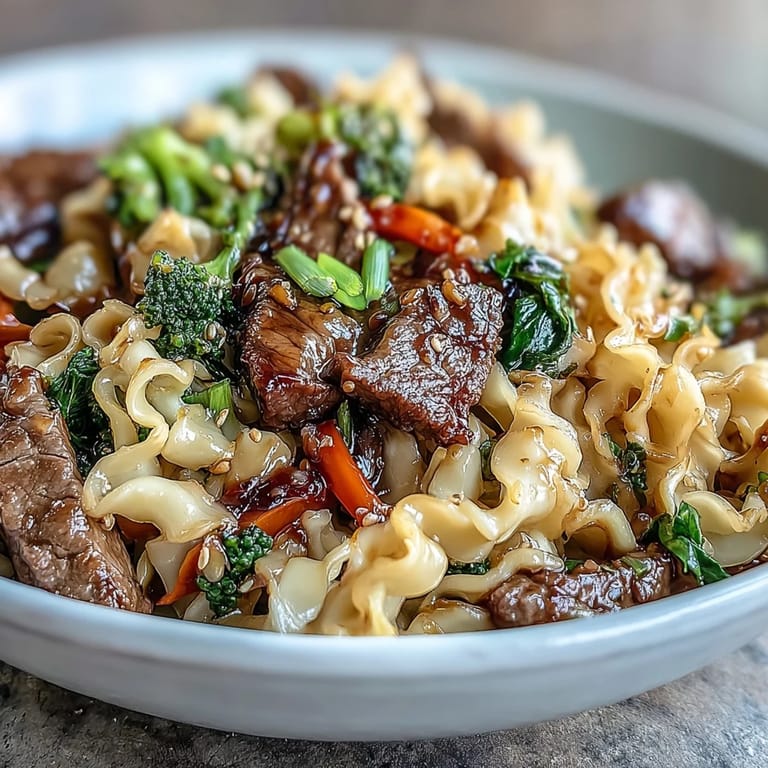
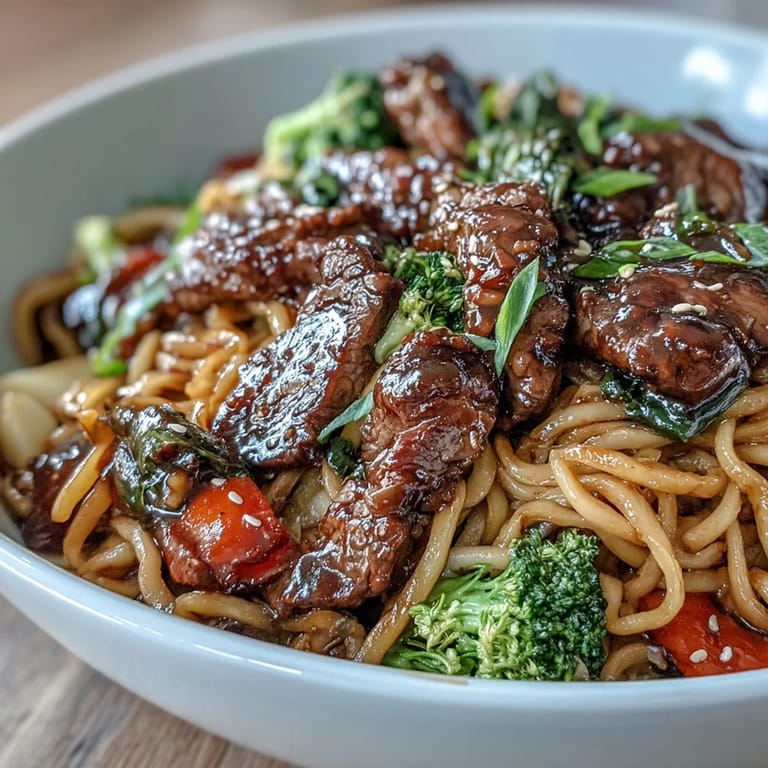
Save My wok was smoking before I even realized the heat was too high, and suddenly I understood why every cooking show emphasizes prep work. I had vegetables half-chopped, beef still on the cutting board, and noodles boiling over while I frantically searched for the soy sauce. That chaotic Tuesday night taught me more about stir-frying than any recipe ever could. Now, Korean beef noodles are my go-to when I want something that feels indulgent but comes together faster than takeout delivery.
I made this for my sister after she moved into her first apartment, and she called me the next morning asking how to recreate it. She had assumed it was some complicated technique she would never master, but when I walked her through it over the phone, she realized it was just about timing and heat control. Hearing her excited voice when she nailed it on her second try reminded me why I love sharing recipes. Food becomes a language when you teach someone to cook something they thought was out of reach.
Ingredients
- Rice noodles: These soak up the sauce beautifully without getting mushy, and I always rinse them under cold water after draining to stop the cooking and prevent clumping.
- Flank steak: Slicing against the grain is non-negotiable here, it transforms a chewy cut into tender, melt-in-your-mouth bites that cook in minutes.
- Broccoli florets: I learned to cut them into bite-sized pieces so they cook at the same rate as the peppers, and they add a satisfying crunch that balances the soft noodles.
- Bell pepper: Red or yellow peppers bring a subtle sweetness that plays off the salty soy sauce, and their bright color makes the whole dish look vibrant.
- Carrot: Julienned carrots cook quickly and add a slight earthiness, plus they look elegant when cut thin and uniform.
- Green onions: I always save these for the very end because their fresh, sharp bite cuts through the richness of the sauce.
- Garlic and ginger: These two create the aromatic foundation, and I grate the ginger on a microplane so it disperses evenly without leaving fibrous bits.
- Soy sauce: The backbone of the sauce, and I use low-sodium so I can control the saltiness without overwhelming the other flavors.
- Brown sugar: It dissolves into the sauce and creates a glossy caramel note that balances the salty and savory elements perfectly.
- Sesame oil: Just a tablespoon adds a nutty depth that makes the whole dish smell like your favorite Korean restaurant.
- Vegetable oil: I use this for the high-heat cooking because it does not smoke as easily as olive oil, keeping everything clean-tasting.
- Sesame seeds: Toasted sesame seeds add a final nutty crunch and make the dish look polished, even on a weeknight.
Tired of Takeout? 🥡
Get 10 meals you can make faster than delivery arrives. Seriously.
One email. No spam. Unsubscribe anytime.
Instructions
- Prep the noodles:
- Cook the rice noodles according to the package directions, then drain and rinse them under cold water to stop the cooking. This keeps them from turning into a sticky clump later.
- Sear the beef:
- Heat vegetable oil in a large skillet or wok over medium-high heat until it shimmers, then add the thinly sliced flank steak in a single layer and let it sear without moving for about 2 minutes before flipping. Remove it once browned and set it aside so it does not overcook.
- Build the aromatics:
- In the same skillet, add the minced garlic and grated ginger, stirring constantly for about 30 seconds until the smell fills your kitchen. Do not let them burn or they will turn bitter.
- Stir-fry the vegetables:
- Toss in the broccoli, bell pepper, and julienned carrot, stirring frequently for about 5 minutes until the vegetables are tender but still have a crisp bite. The high heat will give them a slight char that adds flavor.
- Mix the sauce:
- While the vegetables cook, whisk together the soy sauce, brown sugar, and sesame oil in a small bowl until the sugar completely dissolves. This takes less than a minute and ensures even coating later.
- Combine beef and sauce:
- Return the seared beef to the skillet and pour the sauce over everything, stirring to coat the beef and vegetables evenly. The sauce will start to thicken and cling almost immediately.
- Toss in the noodles:
- Add the cooked rice noodles to the skillet and gently toss everything together using tongs, making sure every strand gets coated in that glossy sauce. Heat through for about 2 minutes, stirring gently to avoid breaking the noodles.
- Garnish and serve:
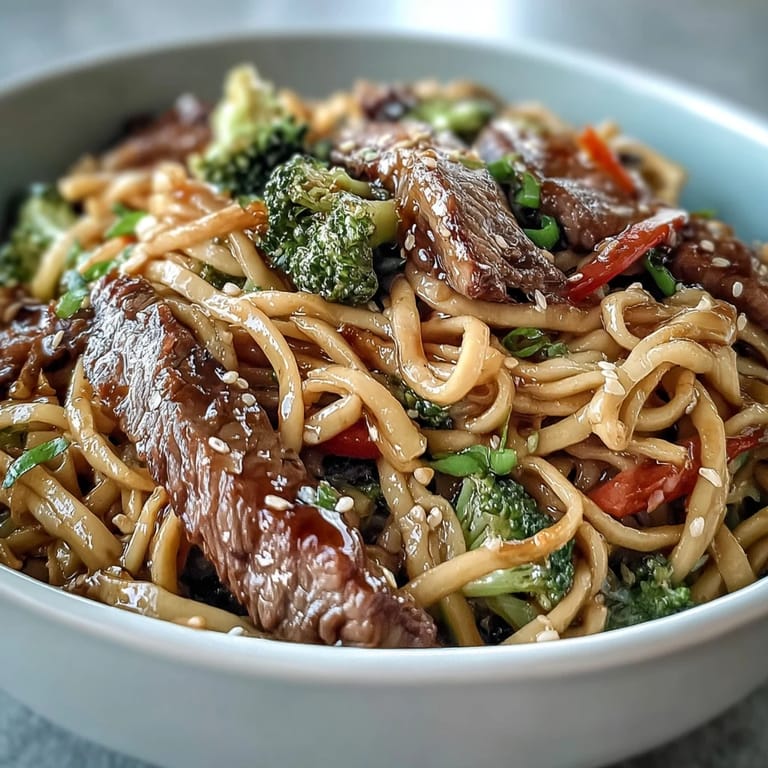
- Transfer to bowls and sprinkle with chopped green onions and sesame seeds. Serve immediately while everything is hot and the noodles are at their silkiest.
 Save
Save One rainy Saturday, I made a double batch of this and invited a few friends over without much planning. We ended up sitting on the floor around my coffee table, passing bowls and laughing about how much better homemade tastes than the usual delivery routine. Someone said it felt like the kind of meal that makes a regular night memorable, and I have thought about that ever since. It is funny how a simple skillet of noodles and beef can turn into a moment you want to recreate.
Customizing Your Bowl
I have swapped in snap peas, zucchini, and even thinly sliced cabbage depending on what looked good at the market, and every version has worked. If you want heat, a spoonful of gochujang or a drizzle of sriracha stirred into the sauce transforms this into something with a serious kick. Chicken thighs or firm tofu can replace the flank steak without changing the technique, and both soak up the sauce just as well.
Storing and Reheating
Leftovers keep in an airtight container in the fridge for up to three days, and I actually prefer reheating them in a hot skillet with a splash of water rather than the microwave. The noodles regain their texture, and the sauce redistributes evenly instead of pooling at the bottom. Sometimes I crack an egg into the skillet while reheating and stir it through for an entirely new meal.
Essential Tools and Tips
A large skillet or wok is non-negotiable because you need the surface area to get a good sear on the beef and keep the vegetables from steaming. I use a sharp chef's knife to slice the beef and julienne the carrot, and a microplane for the ginger because it breaks down into a paste that disappears into the sauce. Tongs make tossing the noodles so much easier than a spoon, and a small mixing bowl for the sauce keeps everything organized.
- Make sure your skillet is fully heated before adding the beef, or it will steam instead of sear.
- Taste the sauce before adding it to the skillet and adjust the sugar or soy sauce to your preference.
- Keep a damp towel nearby to wipe down your cutting board between ingredients and prevent cross-contamination.
 Save
Save This dish has become my answer to the question of what to make when I want something comforting but do not want to spend an hour in the kitchen. It reminds me that the best meals are not always the most complicated ones, just the ones made with good ingredients and a little attention to timing.
Recipe FAQs
- → How do I slice flank steak properly?
Slice the flank steak thinly against the grain. This means cutting perpendicular to the muscle fibers, which makes the meat more tender and easier to chew when stir-fried quickly.
- → Can I prepare this dish ahead of time?
Yes, you can slice the beef and chop vegetables up to a day in advance. Store them separately in airtight containers in the refrigerator. Cook everything just before serving for best texture and flavor.
- → What type of noodles work best?
Rice noodles are traditional and absorb the sauce beautifully. You can also use soba noodles, udon, or even spaghetti in a pinch. Just adjust cooking time according to package directions.
- → How can I add more heat to this dish?
Stir in sriracha, gochujang (Korean chili paste), or crushed red pepper flakes into the sauce mixture. Start with one teaspoon and adjust to your preferred spice level.
- → What other proteins can I use?
Thinly sliced chicken breast, shrimp, or firm tofu work wonderfully as alternatives. Adjust cooking times accordingly—chicken takes about 5-6 minutes, shrimp needs 2-3 minutes, and tofu absorbs flavors quickly.
- → How do I store leftovers?
Keep leftovers in an airtight container in the refrigerator for up to 3 days. Reheat gently in a skillet over medium heat, adding a splash of water or extra soy sauce to refresh the sauce.