 Save
Save There's something about assembling a bowl from separate components that makes you feel like you're doing something special, even on a weeknight. I stumbled onto this sesame turkey version while trying to recreate the energy of a Korean restaurant meal at home, and what started as an experiment became our go-to when we wanted something that felt indulgent but wasn't complicated. The magic happens when you taste how the spiced turkey plays against the cool, crisp vegetables, all tied together by that nutty sesame oil backbone.
My friend Sarah came over complaining she was tired of salads, and I threw together these bowls on a Thursday night without any fanfare. She went back for seconds and started asking questions about the sauce, which made me realize this wasn't just another weeknight dinner—it was something worth sharing. Now when she texts asking what I'm making, she's usually hoping it's this.
Ingredients
- Ground turkey: The lean protein that stays tender even when you're not paying close attention, and it absorbs these bold flavors without disappearing into the background.
- Sesame oil: Just two tablespoons creates that haunting, nutty aroma that fills your kitchen and makes everyone ask what you're cooking.
- Garlic and ginger: The aromatic foundation that wakes up your palate before the turkey even hits the pan—don't skip the mincing step because texture matters here.
- Gochujang: This Korean chili paste brings a depth that regular hot sauce can't touch, with a sweetness hidden underneath the heat.
- Soy sauce and rice vinegar: These two work together like they planned it, balancing salt with brightness so nothing tastes one-dimensional.
- Honey: A single tablespoon rounds out the sharp edges and helps the sauce cling to the turkey instead of sliding off.
- Butter lettuce or romaine: The crisp, cool counterpoint that makes these bowls feel fresh rather than heavy.
- Cucumber and carrot ribbons: These aren't just decoration—they add texture contrast and a hydrating crunch that keeps your mouth happy between bites of turkey.
- Sesame seeds: Toast these yourself if you can, because the difference between toasted and raw is the difference between a good bowl and one people remember.
- Green onions and cilantro: The final flourish that adds color and a sharp, green note that cuts through the richness.
Tired of Takeout? 🥡
Get 10 meals you can make faster than delivery arrives. Seriously.
One email. No spam. Unsubscribe anytime.
Instructions
- Toast and warm the sesame oil:
- Pour that sesame oil into your skillet and let it heat until you can smell it properly—that nutty, almost toasted aroma means it's ready. This is when you add the garlic, ginger, and onion, letting them soften and become fragrant before the turkey even touches the pan.
- Brown the turkey gently:
- Add your ground turkey and break it apart as it cooks, letting it brown in patches rather than stirring constantly. This takes about five to seven minutes and creates little bits of caramelized turkey that taste infinitely better than a uniform gray mass.
- Build the sauce slowly:
- Once the turkey is cooked through, stir in the soy sauce, gochujang, honey, and rice vinegar, watching as the sauce thickens and coats each piece. The kitchen will smell incredible at this point, and you'll understand why this came together so easily.
- Finish with toasted goodness:
- Remove from heat and stir in your toasted sesame seeds and sliced green onions, letting the residual heat warm them just enough to release their flavors without cooking them away.
- Assemble with intention:
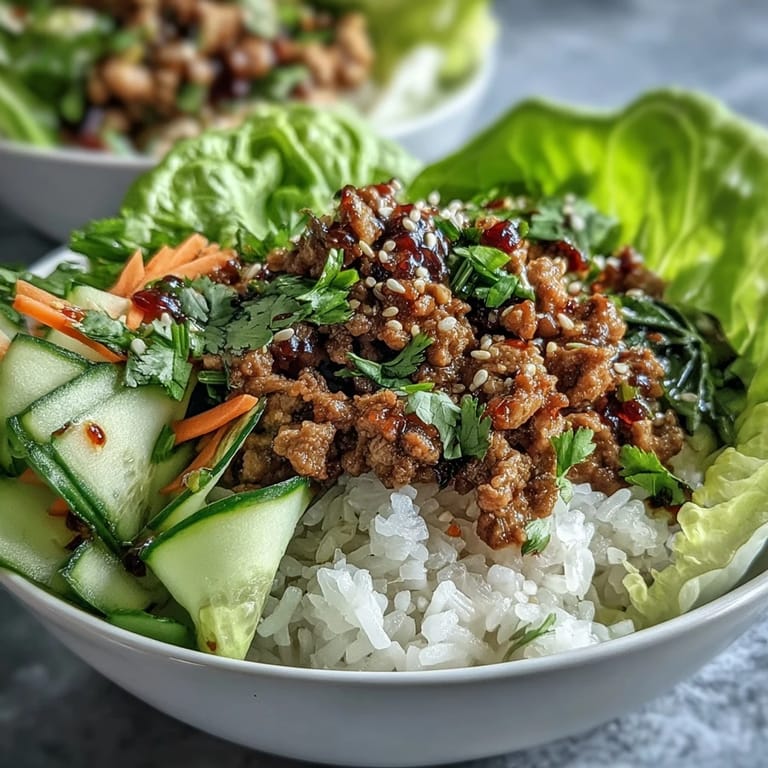
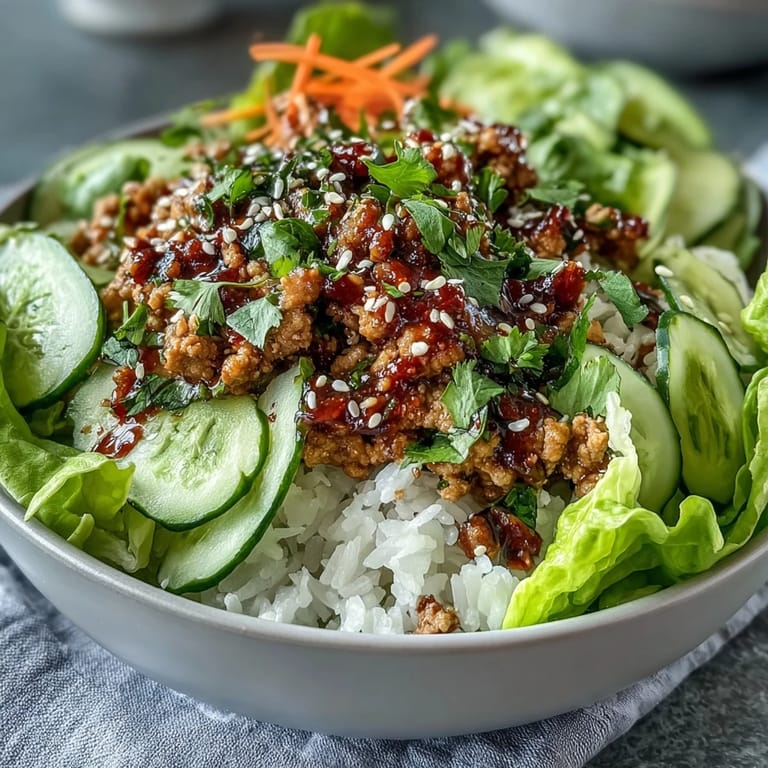
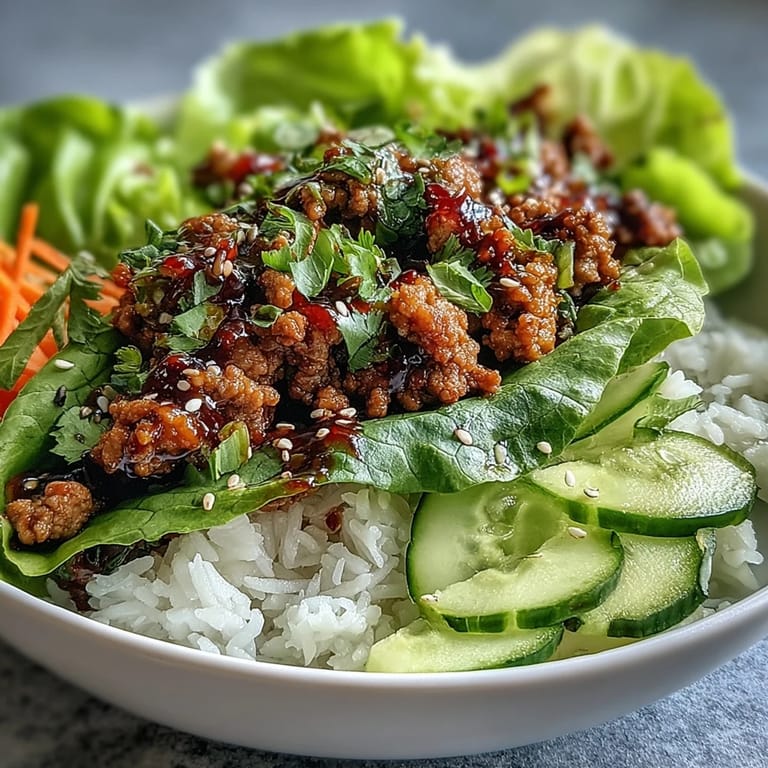
- Divide your rice among four bowls, top each with a generous scoop of the sesame turkey, then arrange the lettuce, cucumber, and carrot ribbons around it like you're creating something worth admiring. This step takes barely any time but transforms the experience from eating to actually enjoying.
- Garnish and serve:
- Sprinkle extra sesame seeds and cilantro on top, and hand each person a few lettuce leaves so they can decide whether to eat this as a bowl or wrap components in the cool, crisp leaves like little edible vessels.
 Save
Save There was a moment while eating these bowls with my family when someone remarked that it felt like we were eating something from a restaurant, not from our own kitchen on a random Tuesday. That's when I knew this recipe had crossed over from something I made to something that actually meant something to us.
The Beauty of Build-Your-Own Bowls
One of the reasons I keep coming back to this format is that everyone gets to customize their experience without creating multiple dishes. My partner douses his with extra gochujang while my niece prefers hers milder, and the same pot of turkey works for everyone. It's the kind of cooking that feels generous without being demanding.
Why Sesame Oil Changes Everything
That initial hit of sesame oil sets the entire tone for this dish in a way that regular cooking oil never could. It's not just about flavor—it's about the aroma that fills your kitchen and signals to everyone around you that something intentional is being prepared. I've learned that sesame oil doesn't like high heat for long periods, which is why we use it to start and finish rather than cook in it throughout, keeping that toasted quality intact.
Customizing Your Bowls for Your Mood
This recipe has a wonderful flexibility that I've exploited dozens of times depending on what's in my refrigerator or what my body is asking for on any given day. I've swapped the rice for cauliflower rice when I wanted something lighter, added crispy shallots for extra crunch, and even thrown in quick-pickled red onions when I felt like adding brightness. The core turkey mixture stays reliable while everything else can shift and adapt.
- Keep extra gochujang on the side for people who discover they want more heat after the first bite.
- Shave your vegetables right before assembling so they stay crisp and don't have time to weep liquid into your rice.
- If you make this ahead, store the turkey separately from the vegetables and rice, then assemble fresh when you're ready to eat.
 Save
Save This bowl has quietly become one of those recipes that doesn't need a special occasion to justify making it. It's just become part of how we eat on ordinary nights when we want something that feels a little bit special.
Recipe FAQs
- → Can I make these bowls spicy?
Yes! Adjust the gochujang amount to your preferred heat level. Start with 1 tablespoon and add more if you enjoy spicier dishes. You can also add sriracha or Korean red pepper flakes for extra kick.
- → What can I substitute for ground turkey?
Ground chicken, lean beef, or pork all work well with these bold Korean flavors. For a vegetarian version, use crumbled tofu or tempeh, adjusting cooking time accordingly.
- → How do I store leftovers?
Keep the cooked turkey mixture and rice separately in airtight containers in the refrigerator for up to 4 days. Store fresh vegetables separately to maintain crispness. Reheat the turkey gently and assemble fresh bowls when ready to eat.
- → Can I meal prep these bowls?
Absolutely! Portion cooked rice, turkey mixture, and prepped vegetables into individual containers. Keep lettuce leaves whole and wrap in damp paper towels to stay fresh. Everything stays delicious for 3-4 days when properly stored.
- → Is gochujang necessary?
Gochujang provides authentic Korean flavor with its fermented chili paste taste. If unavailable, substitute with sriracha mixed with a small amount of miso paste, or use red pepper flakes with extra soy sauce for similar depth.
- → How do I eat lettuce wrap bowls?
Scoop the turkey and rice mixture onto individual lettuce leaves and wrap them like tacos, or enjoy everything bowl-style with the lettuce as a fresh, crunchy element mixed throughout. Both ways deliver the same delicious experience.