 Save
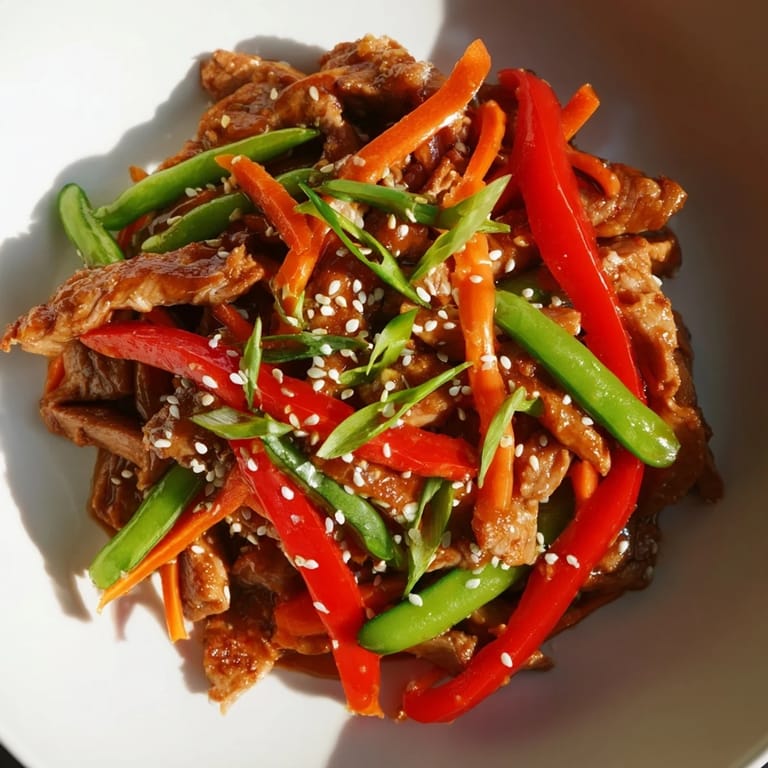
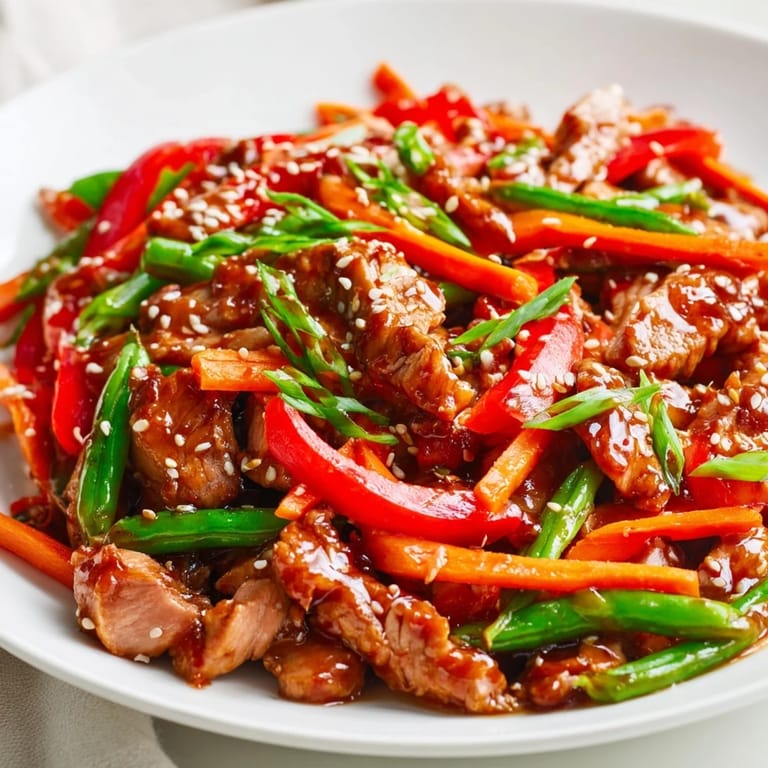
Save There's this moment right before a stir-fry hits the pan when everything smells like possibility—garlic and ginger steaming up from the heat, the pork glistening with oil, ready to sear. I stumbled into this teriyaki version on a weeknight when I had twenty minutes and a hungry kitchen staring me down. The sauce came together so quickly, glossy and balanced, that I've been making it ever since for people who show up when I'm too busy to fuss.
I made this for my neighbor one rainy Tuesday when she brought over groceries after I'd sprained my wrist, and watching her face light up when she tasted the glaze made me realize how much comfort lives in a really good stir-fry. She asked for the recipe before she left, and now she makes it for her kids on Thursdays.
Ingredients
- Pork tenderloin, thinly sliced (450 g): The thinner you slice it, the faster it cooks and the more tender it stays—I learned to freeze it for fifteen minutes first so the knife glides through cleanly.
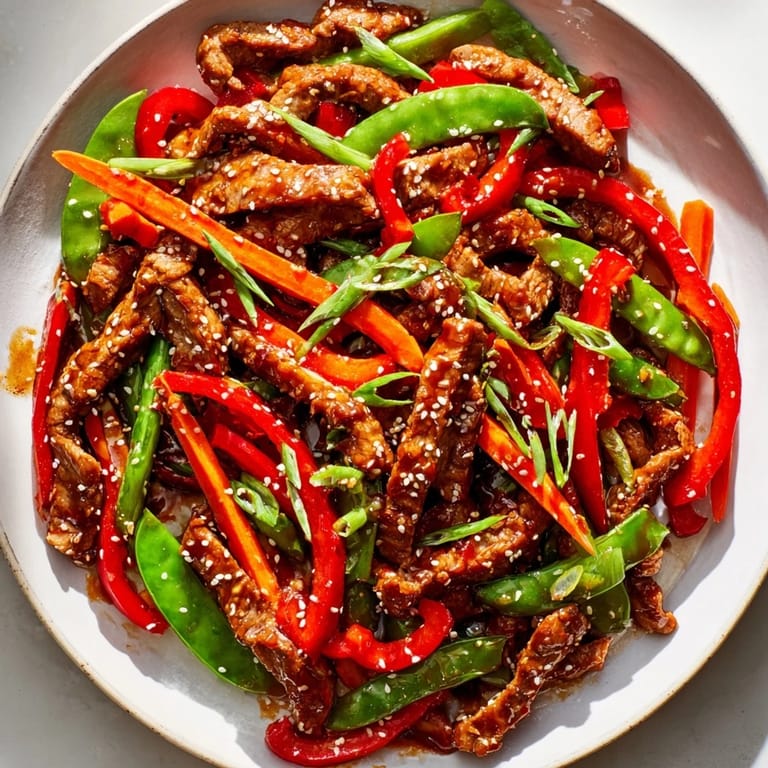
- Red bell pepper, sliced into strips (1): The color matters as much as the taste here, that bright sweetness comes through especially well when they're still a little crisp.
- Snap peas, trimmed (1 cup): These stay snappy if you don't abandon them in the pan—they need just a quick turn over heat to stay true to their name.
- Carrot, julienned (1 medium): The thin cut means they cook in the same time as everything else, no pre-steaming needed.
- Green onions, sliced (3): I always split the white and green parts, cooking the whites with the aromatics and scattering the greens at the end for that fresh bite.
- Garlic, minced (2 cloves): Fresh garlic is non-negotiable here—it blooms when it hits the hot pan and fills the whole kitchen.
- Fresh ginger, grated (1 tsp): The spicy warmth underneath everything, a small amount goes such a long way.
- Low-sodium soy sauce (60 ml): Low-sodium lets you taste the actual sauce instead of just salt.
- Mirin or sweet rice wine (60 ml): This is the backbone of the glaze, that honeyed sweetness that balances the soy.
- Brown sugar or honey (2 tbsp): A touch more sweetness to round out the sauce and help it caramelize slightly.
- Rice vinegar (1 tbsp): Just enough acid to keep everything from feeling cloying and heavy.
- Cornstarch (1 tbsp): Whisked with cold water, this is your secret to that glossy, clinging sauce instead of a runny one.
- Cold water (60 ml): Room temperature water breaks up the cornstarch without clumping.
- Sesame oil (1 tsp): A small amount of the toasted kind gives the whole dish a fragrant finish.
- Vegetable oil for cooking (2 tbsp): Use something neutral like peanut or canola so it won't smoke at high heat.
- Toasted sesame seeds and extra green onions for garnish (optional): These additions taste like you were thinking about the final bite even as you were cooking.
Tired of Takeout? 🥡
Get 10 meals you can make faster than delivery arrives. Seriously.
One email. No spam. Unsubscribe anytime.
Instructions
- Make the glaze first:
- In a small bowl, whisk soy sauce, mirin, brown sugar, rice vinegar, cornstarch, water, and sesame oil until the cornstarch dissolves. Set it aside—this step takes the stress out of cooking because everything's ready when you need it.
- Sear the pork:
- Heat one tablespoon of oil in a large wok or skillet over medium-high heat until it shimmers slightly. Add pork slices in a single layer and don't touch them for a minute—let them brown and build flavor before stirring. Cook for three to four minutes total until they're browned outside and cooked through, then slide them onto a plate.
- Cook the vegetables:
- Add the remaining oil to the pan and immediately add the bell pepper, snap peas, and carrot. You'll hear them hit the heat with a satisfying sizzle. Stir-fry for two to three minutes until they soften slightly but still have a snap when you bite into them.
- Bloom the aromatics:
- Push the vegetables to the sides and add the garlic, ginger, and white parts of the green onions to the center of the pan. The smell will hit you right away—that's how you know it's working. Stir everything together for about thirty seconds.
- Bring it all together:
- Return the pork to the pan, give the teriyaki sauce a quick stir to make sure the cornstarch is fully incorporated, then pour it over everything. Toss everything constantly for one to two minutes, watching as the sauce thickens and coats every piece in that glossy amber color.
- Finish and serve:
- Take it off the heat, scatter the sesame seeds and green onion tops over everything if you're using them, and serve immediately over steamed rice or noodles while it's still steaming.
 Save
Save This dish became part of my regular rotation the moment I realized I could make something restaurant-quality faster than ordering takeout, and it's stayed there because it never feels like a compromise. The kind of meal that makes people ask what's for dinner, not because they're hungry, but because they hope it's this.
The Technique That Changes Everything
High heat and constant movement—that's where the magic lives in a stir-fry. Too many people cook on medium heat waiting for nothing to burn, but you actually want a bit of color on everything, a little caramelization on the pork, a slight char on the vegetables. The sauce hits all that heat and thickens instantly, coating everything in that glossy finish that makes people think you've been cooking all day.
Customizing Without Losing the Plot
I've made this with chicken when pork felt too heavy, with tofu when I wanted something lighter, and once I was out of snap peas so I used frozen broccoli and nobody noticed the difference. The teriyaki sauce is what makes it sing, so keep that consistent and swap the proteins and vegetables based on what you have. The only thing I've never changed is the soy-to-mirin ratio, because that's the balance that actually works.
Rice, Noodles, and Other Anchors
This dish needs something underneath it to catch all that glossy sauce—plain steamed rice is traditional and lets the stir-fry be the star, but I've used sticky jasmine rice when I wanted something richer, or rice noodles when I was in the mood for something with more texture. Cold soba noodles work too if you're serving it room temperature the next day. Any of these choices feel right because they all let the sauce shine.
- Jasmine rice stays fluffy and absorbs sauce without getting mushy if you don't overcook it.
- Rice noodles cook in boiling water for three minutes and have a silky bite that plays well with teriyaki.
- If you're using leftover rice, break it up gently before serving so it doesn't clump.
 Save
Save This is one of those recipes that teaches you something new every time you make it, whether it's how to read your ingredients or when your pan is hot enough. It's never the same twice, but it's always right.
Recipe FAQs
- → What cut of pork works best for this dish?
Pork tenderloin is ideal due to its tenderness and quick cooking time, but thinly sliced pork shoulder can also work well.
- → Can I use other vegetables besides bell pepper and snap peas?
Yes, broccoli, mushrooms, or bok choy are great alternatives to add variety and extra nutrition.
- → How do I thicken the teriyaki sauce properly?
Mix cornstarch with cold water before adding to the sauce and cook it while stirring until it thickens and becomes glossy.
- → Is it possible to make this dish gluten-free?
Use tamari instead of soy sauce to make the sauce gluten-free without sacrificing flavor.
- → What is a good garnish to finish the dish?
Toasted sesame seeds and extra sliced green onions add a nutty crunch and fresh aroma to the finished dish.
- → Can I substitute the protein in this stir-fry?
Chicken or firm tofu can be used in place of pork for different protein preferences while maintaining the dish's flavor profile.